Welcome to the Edge of the World
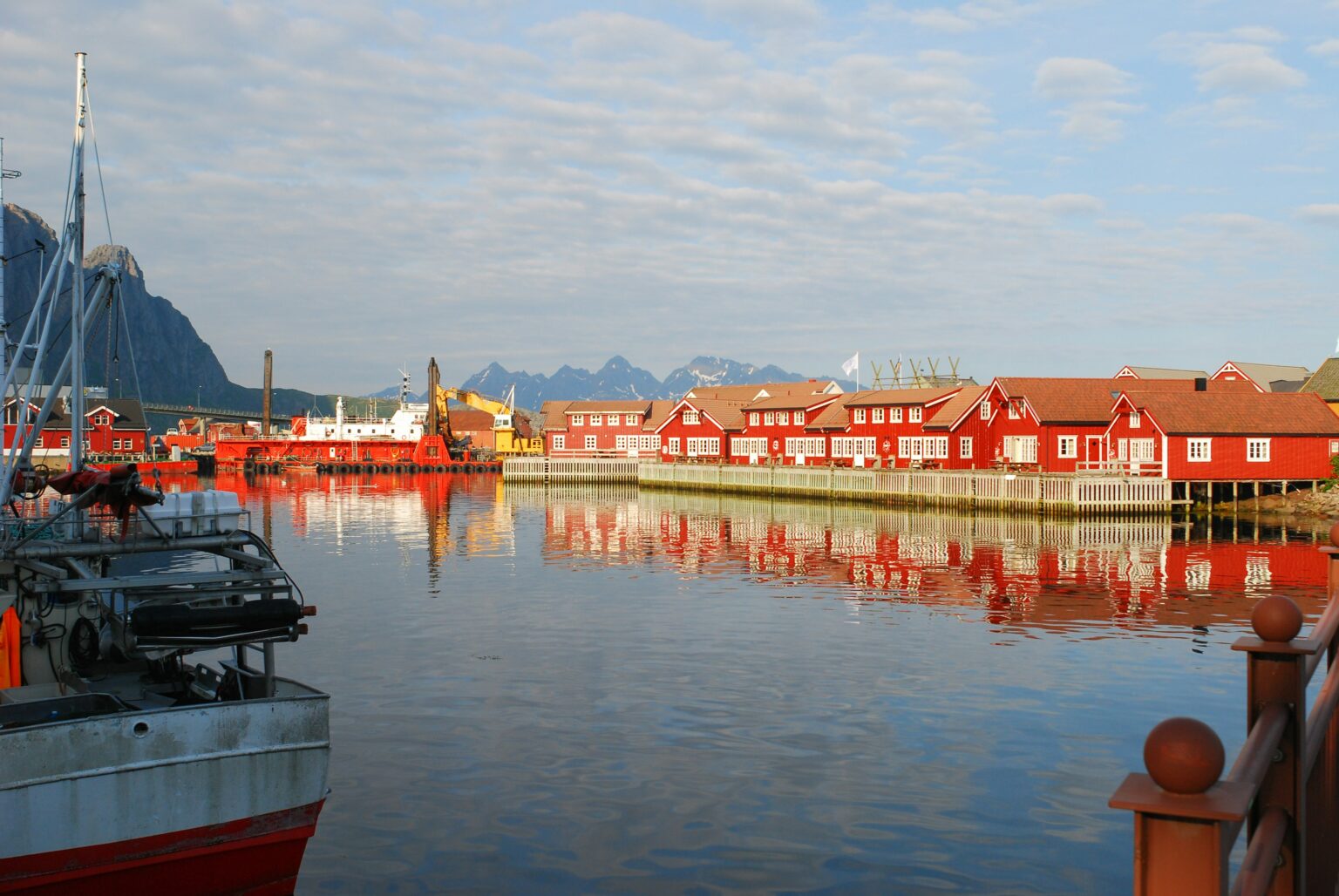
The Lofoten Islands sit above the Arctic Circle in northern Norway, a dramatic chain of mountains, fjords, and fishing villages connected by bridges and tunnels. Despite their remote location, they’re surprisingly accessible by car, ferry, or plane from the mainland. What makes Lofoten unlike anywhere else is the contrast: turquoise waters that rival the Caribbean, set against jagged peaks and wild Arctic weather. I drove there from Estonia with my partner, a packed car, and a SUP board that almost didn’t make the journey. Here’s what it was really like.
I dragged a SUP board all the way from Estonia to the Lofoten Islands. It barely fit in our car, which was already packed to the ceiling. At one point, we had to build a DIY rooftop rack out of random wood, tape, and rope just to keep it strapped on. For most of the trip, I kept thinking: why did I even bring this thing?
Then, on our very last evening, I finally took it out. I paddled onto a still fjord, the mountains reflecting in the water around me, and a minke whale surfaced about 10 meters away.
So yeah. Always pack too much.
What It Feels Like to Drive to the End of the World
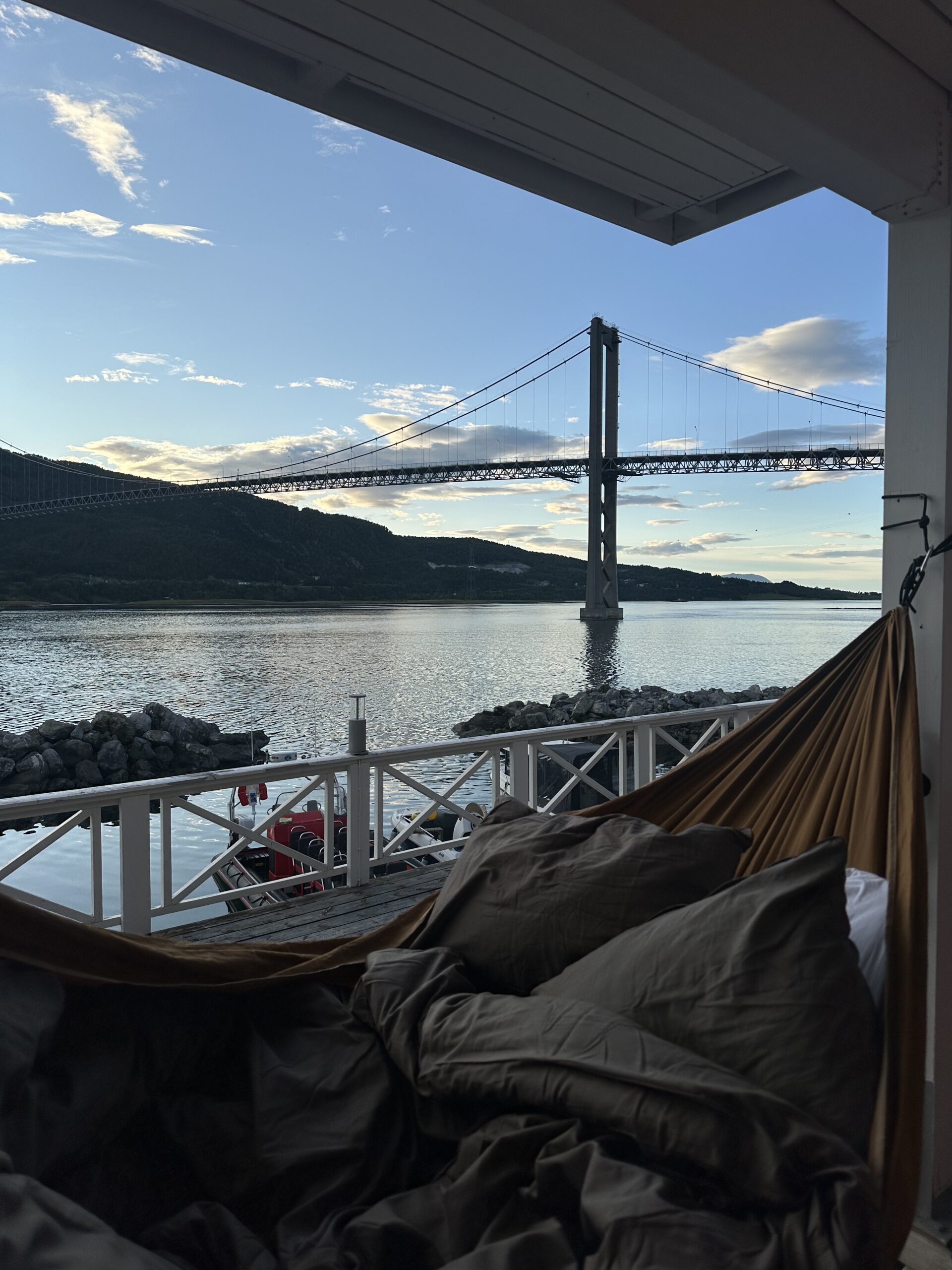
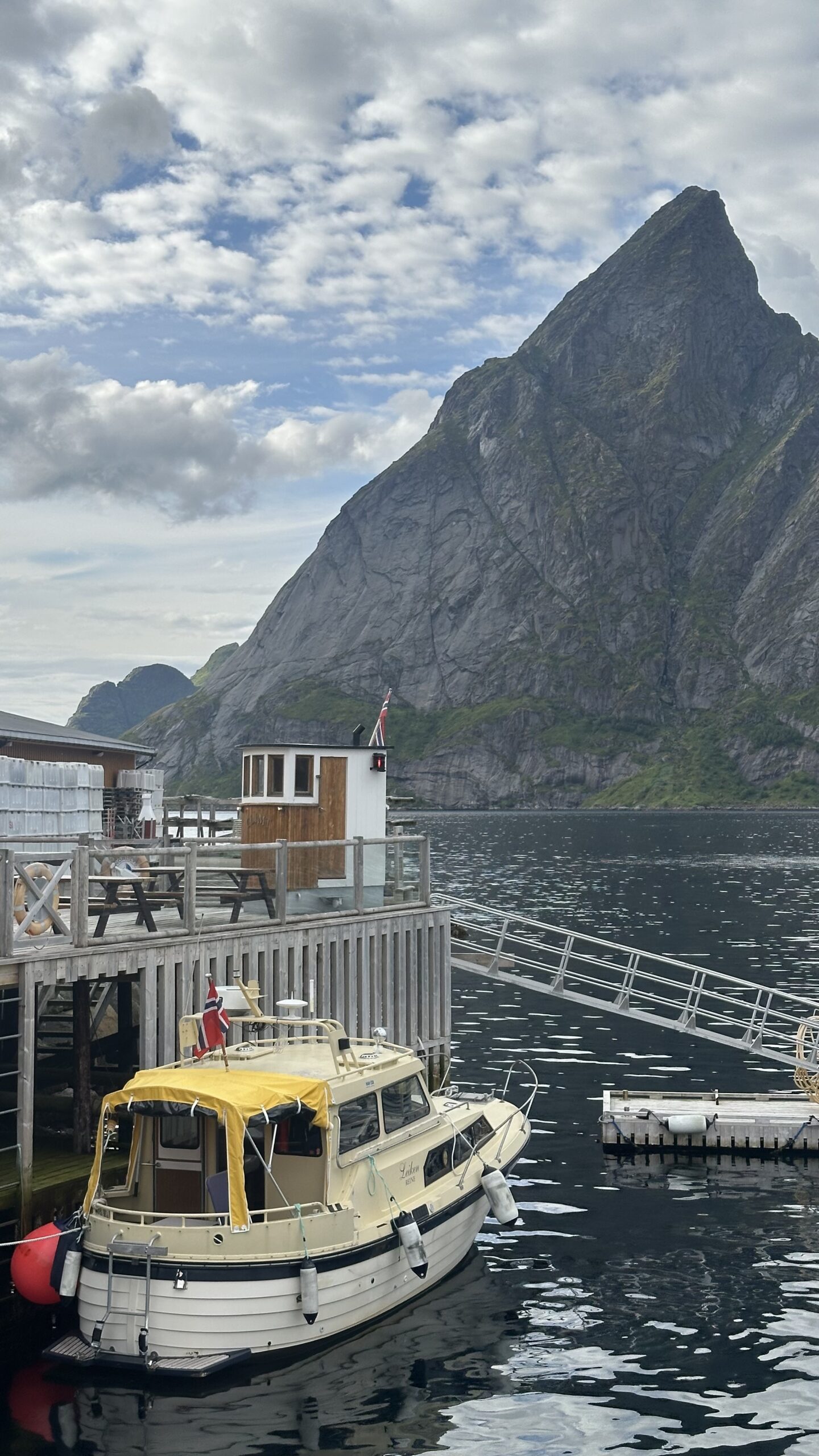
There’s a moment on the drive through Lofoten when the road narrows between mountains and sea, and you get this strange, quiet feeling: you’re heading somewhere the map runs out. Bridges connect islands to islands, tunnels cut through rock, and with every turn the landscape gets more dramatic, until you reach the very tip, where the road simply ends.
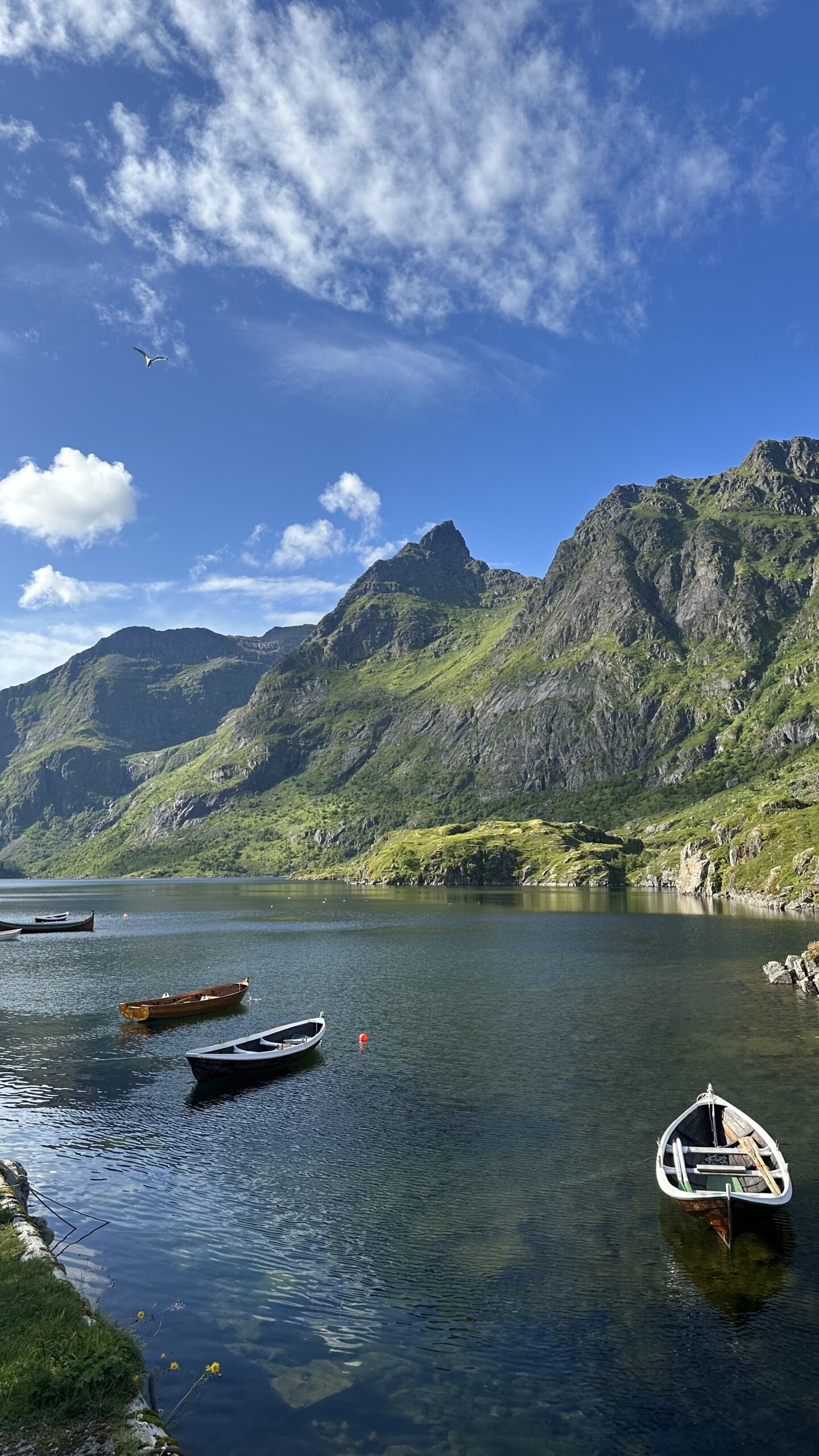
That feeling stayed with me the entire trip. Not in a dramatic, Instagram-caption way, but as this constant background hum of I can’t believe this place is real. The mountains are impossibly steep and green, the water between them shifts from deep navy to milky turquoise, and every few minutes you round a bend and the whole scene rearranges itself into something even better.
This is not a place you visit. It’s a place that gets under your skin.
The Wool Sweater You’ll Buy on Day One
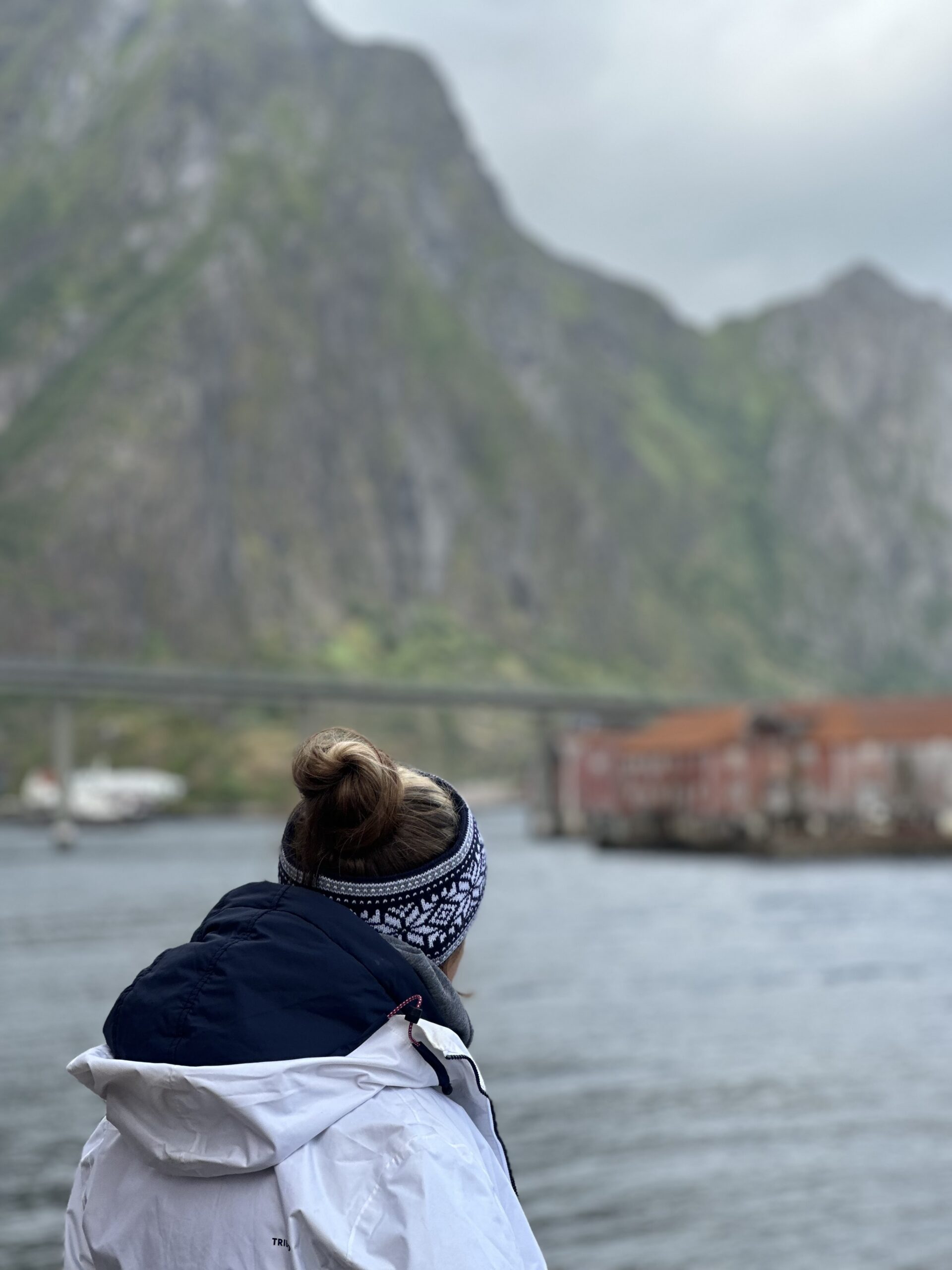
Let me save you some time: you will buy a wool sweater in Lofoten. It doesn’t matter what the weather app said before you left. It doesn’t matter that it’s technically summer. The moment you step out of the car and that Arctic wind hits your face, you’ll walk into the nearest shop and come out with a sweater and a headband.
I did exactly that. First shop, first village.
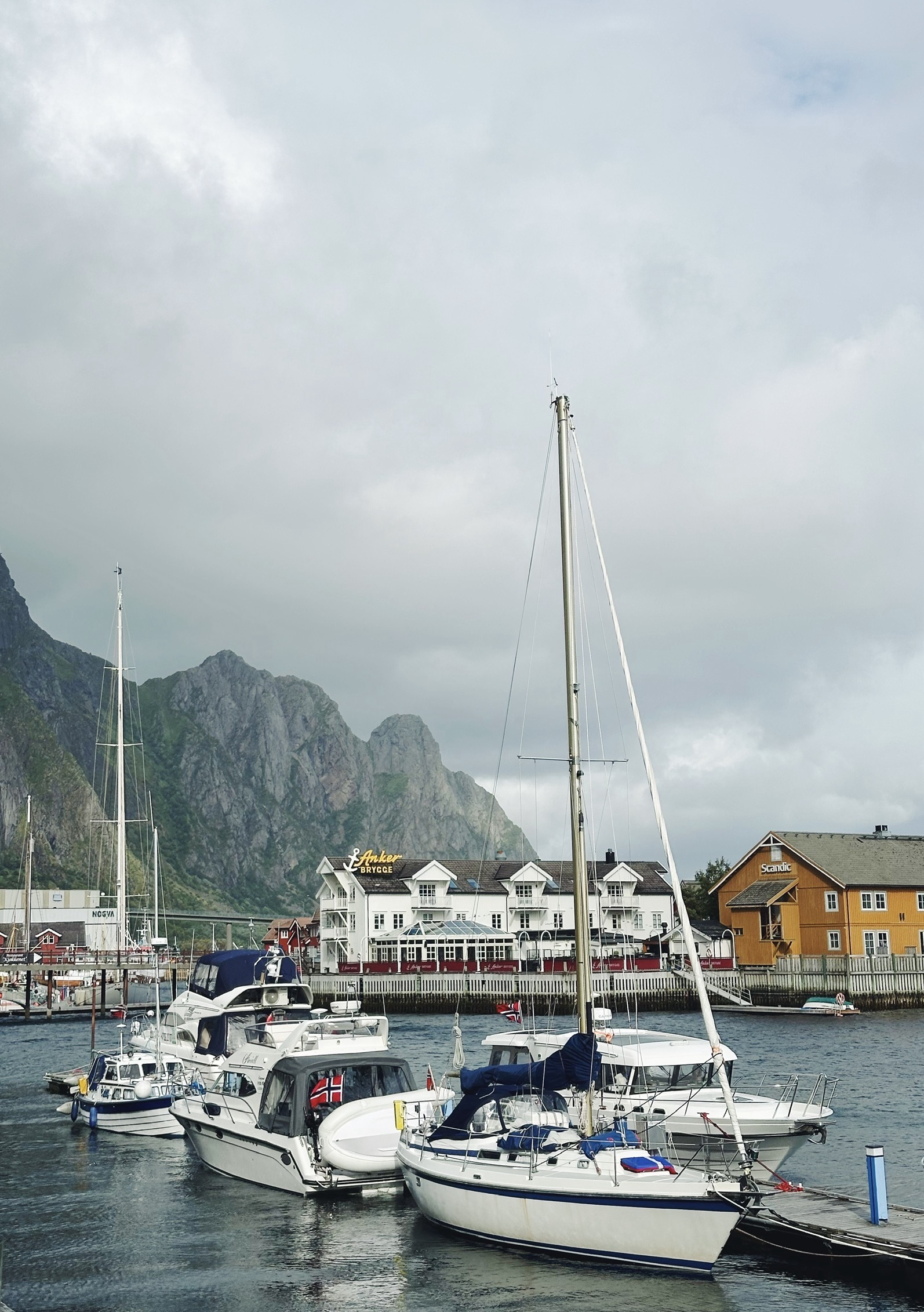
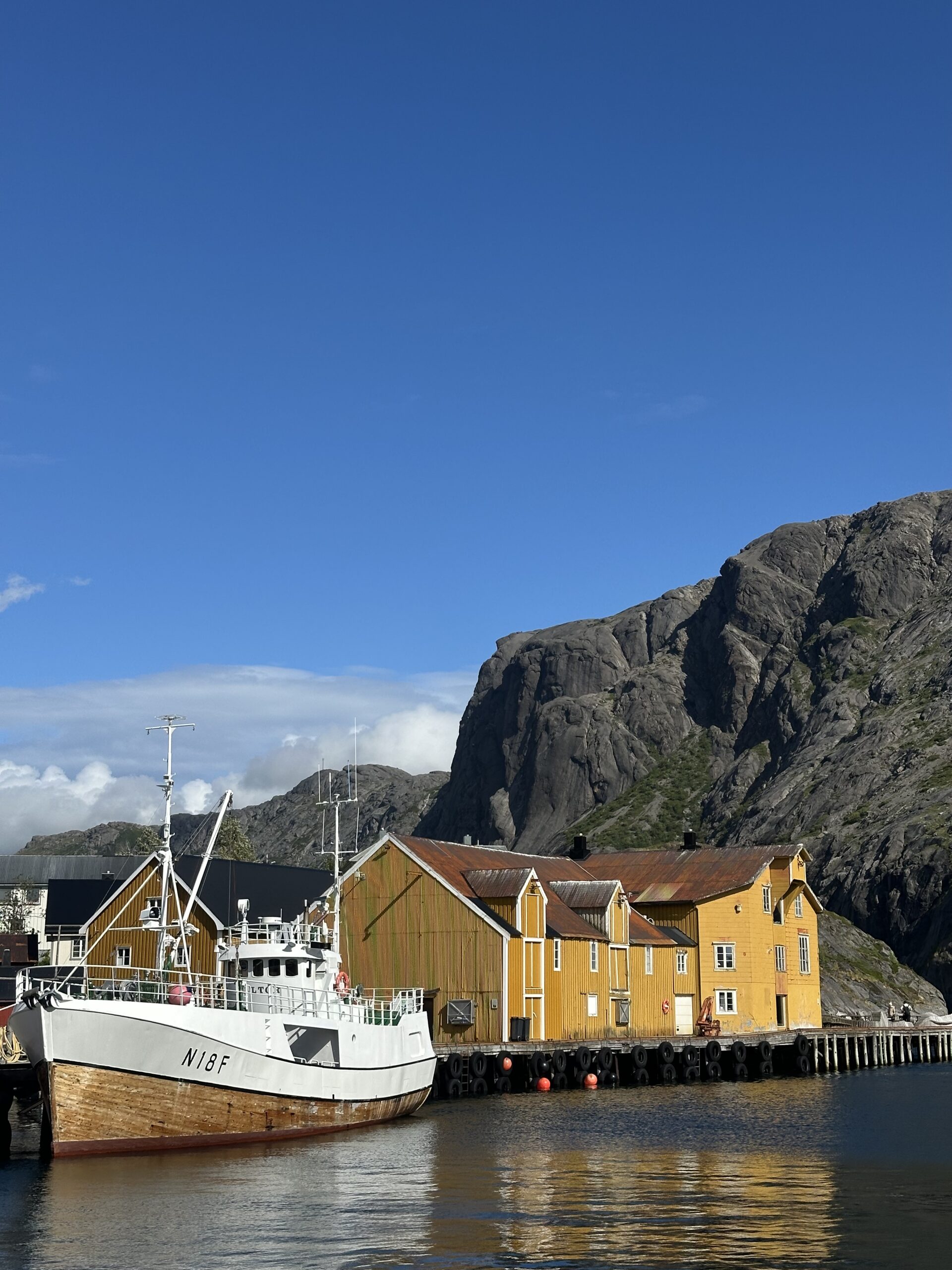
Summer in Lofoten means 10-15 degrees Celsius, which sounds fine until you add the wind. The weather changes constantly: clouds rolling in, a sudden burst of sunshine, then sideways drizzle, sometimes all within an hour. But here’s the thing: it never ruined anything. If anything, the moody skies made the scenery more dramatic. A fjord under grey clouds with mist hanging between the peaks is arguably more beautiful than the same view on a postcard-perfect day.
Pack layers. Trust the wool.
Turquoise Water, Stormy Skies
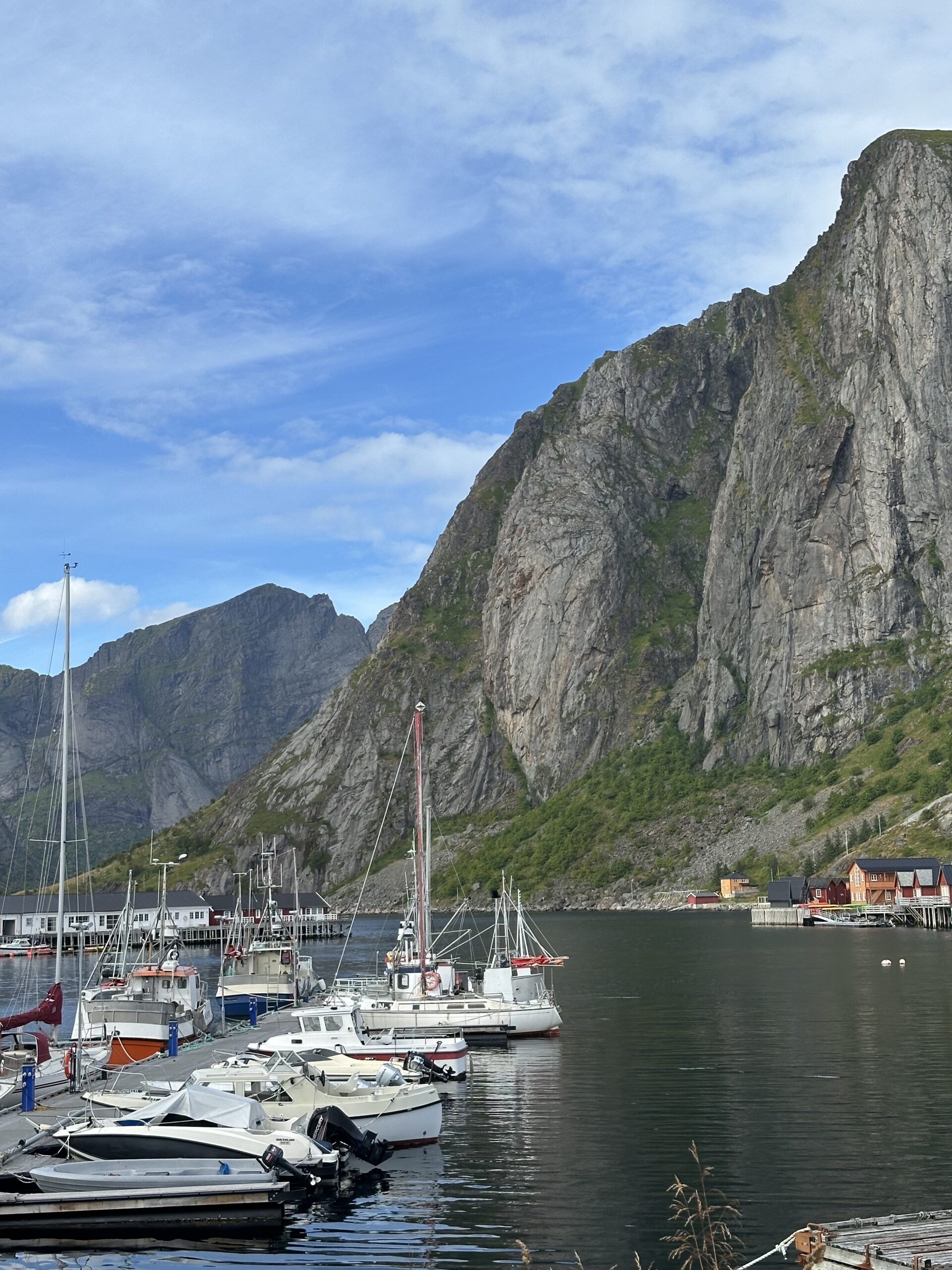
One of the most surreal things about Lofoten is the water. You expect dark, cold, Nordic seas, and yes, the outer coast delivers exactly that, with waves crashing against ancient rock. But turn a corner into a sheltered bay and suddenly you’re looking at water so turquoise it could pass for the Caribbean. Except the mountains behind it are covered in green moss, not palm trees, and the air is about 30 degrees cooler.
I went swimming. Once. In that turquoise water.
It was absolutely freezing. The kind of cold that makes your body forget how to breathe for a second. But also the kind of cold that makes you feel completely, ridiculously alive. I’d recommend it at least once, just don’t expect to stay in long.
The contrast is what makes Lofoten so unusual: restless open seas on one side, calm turquoise bays on the other. Stormy skies above, peaceful silence below. Even the sound fits: mostly wind and waves, but somehow it all adds up to a feeling of deep calm.
The SUP Board, the Whale, and Why You Should Always Pack Too Much
Back to that SUP board.
Getting it to Lofoten was an adventure in itself. Our car was packed to the brim with clothes, camping gear, food, and camera equipment, and the SUP bag is enormous. We tried every possible Tetris configuration. Nothing worked. So somewhere along the way, we pulled over and improvised a rooftop rack from scrap wood, industrial tape, and rope. It looked ridiculous. It held.
For nine days, that board sat in its bag. Every morning I’d look at it and think: this was a mistake. There was always too much to see, too many places to drive to, too many things competing for our time. The SUP never made the cut.
Until the last evening.
The sky had calmed down, the fjord near our cabin was glassy, and I thought: now or never. I inflated the board, paddled out, and within minutes I was alone on the water, surrounded by mountains on every side.
Then, about 10 meters from my board, a minke whale broke the surface. Just like that. No warning. It exhaled, I saw its dark back roll through the water, and then it was gone. I sat on my board in total silence, heart racing, staring at the spot where it had been.
That single moment made every kilometer of awkward car packing worth it. Sometimes the things you almost didn’t bring end up giving you the story of a lifetime.
Reindeer on the Road and Fish Soup at the Edge
Lofoten has this wonderful habit of catching you off guard. You’ll be driving along, thinking about where to stop for lunch, and suddenly there are reindeer standing in the middle of the road, completely unbothered by your existence. This happened more than once.
The wildlife isn’t curated or fenced off. It’s just there, part of the landscape. Reindeer grazing by the roadside. Sea eagles circling overhead. And apparently, whales surfacing next to confused SUP boarders.
And then there’s the food. Drive all the way to the end of Lofoten, literally to where the road stops, and find yourself a bowl of fish soup. I’m not going to tell you which restaurant because discovering it is part of the fun, but I will tell you this: it might be the best fish soup you’ll ever have. Fresh, rich, and served at what genuinely feels like the edge of the world.
What I’d Do Differently Next Time
Two things.
Book accommodation early. I left it too late and ended up taking whatever was left. Lofoten in summer is popular (just like the Basque Country and Mallorca), and the good Airbnbs and cabins get snapped up months in advance. If you know you’re going, book as early as you can. You’ll have better options and better locations.
Rent a car for flexibility. Lofoten is best explored by car. We compared prices through Discover Cars and found a great deal for our road trip. They compare all the major rental companies so you can pick the best option for your budget.
For an alternative, GetRentacar.com also offers competitive car rental rates in Norway with a generous 90-day cookie window, so you can take your time deciding.
Stay longer. We didn’t have enough time. There was always that tension between wanting to explore a place properly and needing to move on to the next one. Ideally, I’d say plan for at least 10 days. That gives you room to slow down, wait out bad weather, take detours, and actually use the SUP board before the last evening.
Get travel insurance. The Arctic weather in Lofoten can be unpredictable, and remote areas mean expensive rescues. We recommend EKTA travel insurance for solid coverage at a fair price.
Stay connected. Mobile coverage in Lofoten is surprisingly decent, but if you are traveling from outside Europe, grab a Saily eSIM for Norway before you go. It works right out of the box with no physical SIM swap needed.
Compare flight prices. The fastest way to reach Lofoten is to fly into Bodø and take the ferry or a connecting flight to Leknes. We like using Kiwi.com to compare flight prices across airlines.
Explore Lofoten Activities
Discover guided tours, fjord cruises, fishing trips, and more in the Lofoten Islands.
Browse Lofoten Tours →You can also browse Lofoten experiences on Klook, find attraction tickets on Tiqets, or download self-guided audio tours from WeGoTrip to explore at your own pace.
Flights: Lofoten is reached via Leknes (LKN) or Svolvær (SVJ); the bigger airports are Harstad/Narvik Evenes (EVE) and Bodø (BOO), with a ferry from Bodø. You can compare routes on Kiwi.com.
If you are planning more than one stop, read these next: Best Restaurants in Buenos Aires: My Friend Dani’s Recommendations, Direct Flights From Tallinn: 9 City Breaks for Autumn 2026 and Lima’s Best Restaurants: My Peruvian Friend Adriana’s List. From the same series: Sagres & Lagos: Portugal’s End of the World.
Is Lofoten Worth It?
I’d recommend Lofoten to literally everyone. It’s not just a place for hardcore hikers or nature photographers. It’s for anyone who wants to feel something bigger than their daily routine.
The drive alone is worth it. The water is worth it. The food is worth it. And if you’re lucky enough to see a whale from a paddleboard at sunset… that’s the kind of thing that rewrites your entire understanding of what travel can be.
Go in summer for the mildest weather and the midnight sun. Give yourself at least 10 days. Buy the wool sweater. And if you have a SUP board, bring it (and if you prefer waves, check out our beginner surfing guide).
You might just need it on the last night.

Disclosure: this article may contain affiliate links. If you book or buy through them, we may earn a small commission at no extra cost to you. We only recommend what we believe in.