In This Guide
- Why autumn
- The practical setup before you go
- Day 1: Bilbao & Guggenheim
- Day 2: Gaztelugatxe
- Day 3-4: San Sebastián
- Day 5: Hendaye, St Jean de Luz & Bayonne
- Day 6: Biarritz, Bidart & Ainhoa
- Day 7: Back via Bilbao
- Bonus: Bardenas Reales
- What I wish I’d known
- To sum up
The Basque Country is one of those places where it’s genuinely hard to tell where one country ends and another begins. You’ll spend half a day going from Spanish pintxo bars to French surf towns. In the morning, you’re standing in front of Bilbao’s titanium Guggenheim. By evening, you’re at a beachside café on the Atlantic. And somewhere in between, you’ve stumbled into a village in Espelette with red shutters, white facades, and people speaking a language that resembles nothing you’ve ever heard.
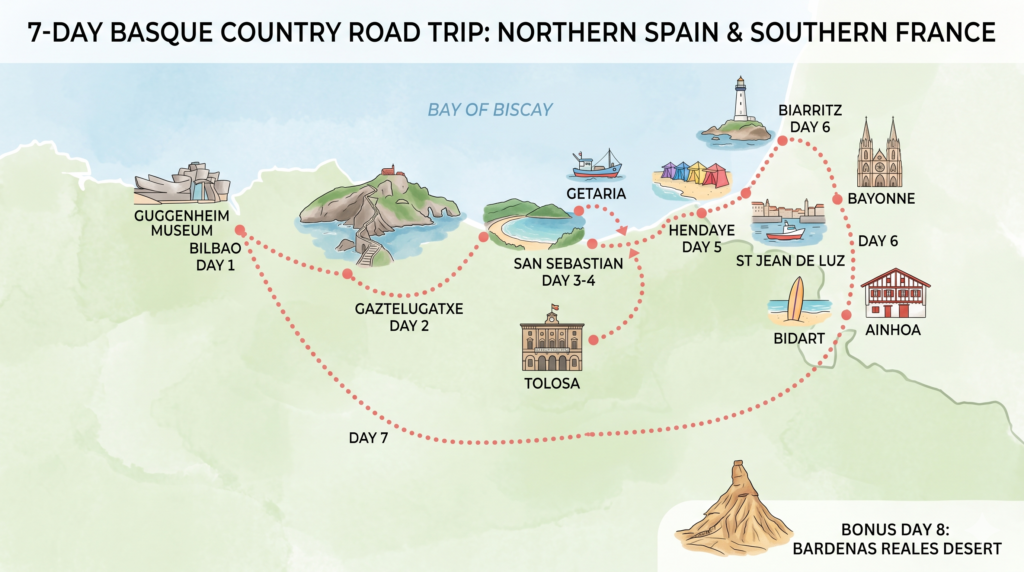
I’ve spent a lot of time here and poked around in all sorts of corners. When friends call and ask, “Where do we even start in the Basque Country?”, this is the itinerary I send them. Seven days, one rental car picked up at Bilbao airport, and the best time to go is September through November. And if you’ve got an extra day, I’m taking you to a desert.
Why autumn
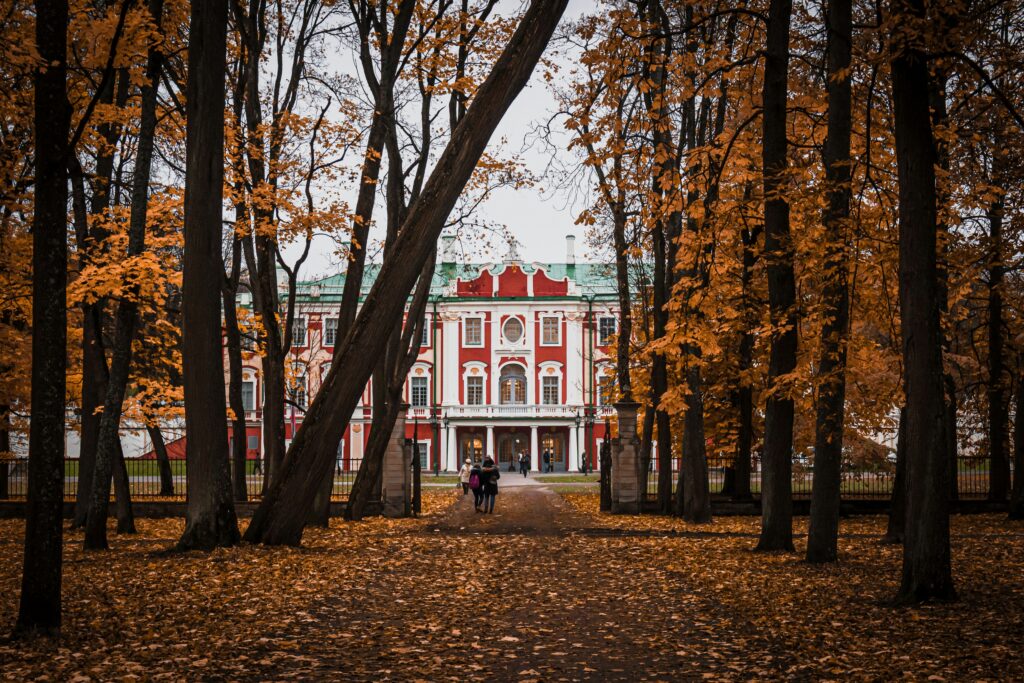
Summer is beautiful here, but tourists are everywhere, restaurants are full, and parking is a nightmare. September to November is that golden window where the heat hasn’t fully left, the ocean is still warm enough to swim in, grape harvest is on, and the cafés belong to locals again. The sun shines for three days, then there’s an hour of rain, then sun again. Pack layers.
Winter is actually quite lovely: Bilbao’s Guggenheim in the mist, quiet pintxos bars, prices down. But you won’t be hitting the beach. Summer is high season, fine if you want that buzz, but be ready for the crowds. Spring works too, especially April and May, when the inland villages start to bloom.
The practical setup before you go
Flights: Bilbao airport is the natural start and end point for this itinerary. Most European cities have direct flights; from anywhere further afield, expect one stopover. Flights from the rest of Europe start around €100-250 round-trip if you book a couple of months ahead.
Car rental: rent your car at Bilbao airport, not later in the city center. Airport rentals are the best deal, and you avoid wrestling with buses and trains while dragging luggage. The Spanish side is also significantly cheaper for car rentals than the French side, so it makes sense to start in Bilbao.
Parking: the bane of Basque life. Every city center (Bilbao, San Sebastián, Biarritz) is metered, and free spots are rare. Download a parking app (EasyPark, Telpark, ApparkB) before you go. Street parking and parking garages are mostly reasonably priced, so don’t stress. But factor in €2-4 per hour at each stop.
Accommodation: book early, especially in San Sebastián. Prices drop from summer to autumn, but the good places still go fast. Budget €70-120 per night for a decent double room in a central location.
Day 1 in Bilbao: Guggenheim, Artxanda and your first pintxos
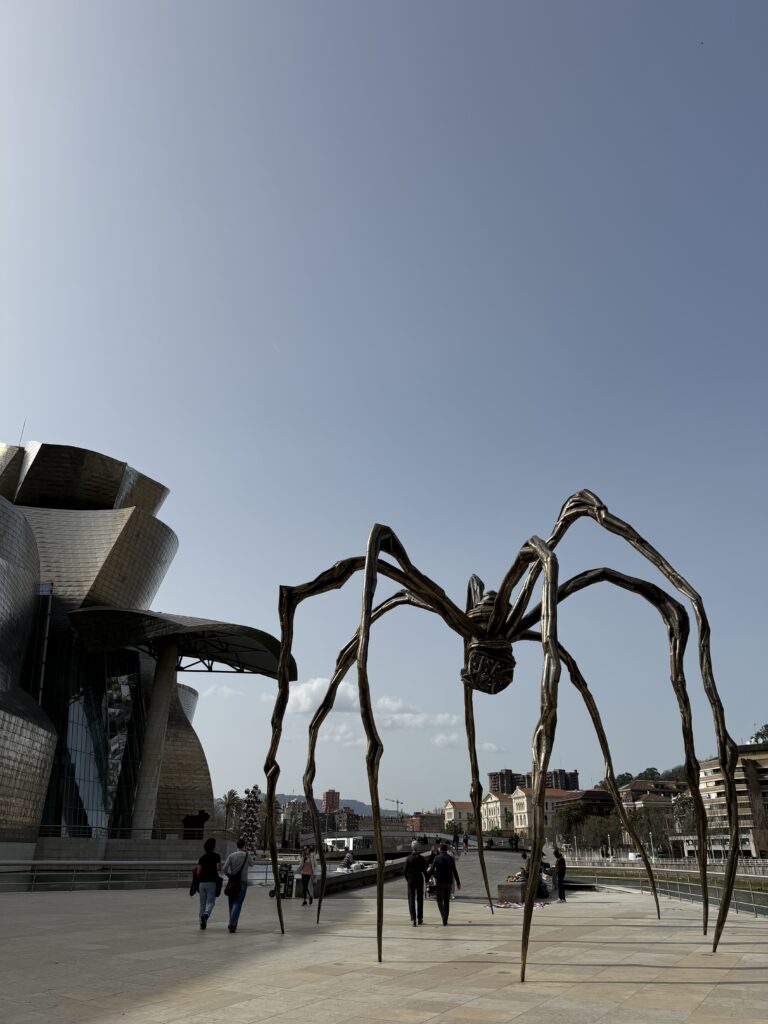
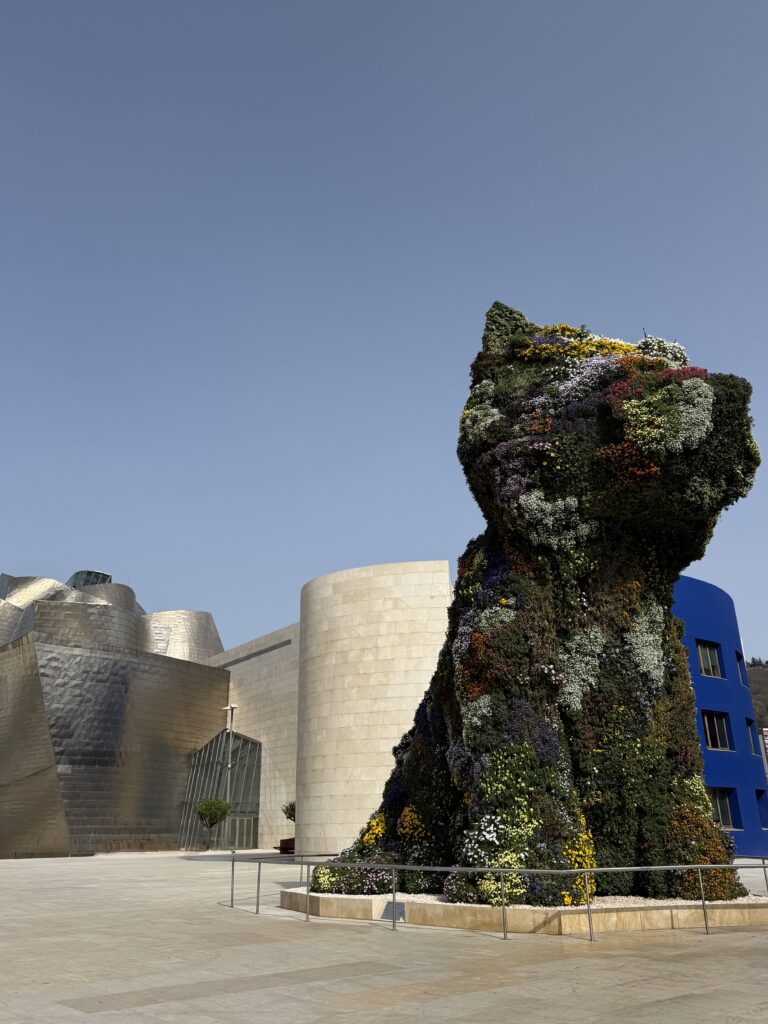
Hit the Guggenheim first thing in the morning. I know that sounds like a cliché, but there’s nothing you can do about it. If you haven’t seen this building, you haven’t been to Bilbao. Frank Gehry’s titanium spaceship that looks completely different from every angle. The art inside is hit-or-miss depending on what’s running, but even if you don’t care about art, spend an hour outside. Walk around the building, look at Puppy (the giant flower-covered dog), Maman (the bronze spider), and how Jeff Koons’s tulips catch the light through the rain.
Lunchtime, take the Artxanda funicular up. It’s a little blue cable car that gets you to the top of the hill in three minutes. There are a couple of bars and restaurants up there if you want to eat, but the point is the view. Sunshine? Beautiful. Misty? Also beautiful, in a different way.
In the afternoon, head into the old town or Casco Viejo. This is Bilbao’s beating heart: Siete Calles (“seven streets”), the Mercado de la Ribera market by the river, and countless pintxos bars stacked next to each other. Plaza Nueva is the spine of it all: a big square ringed by bars and restaurants, alive from morning until late. Calle del Perro is the pintxos street. Show up around 7 PM, order a txakoli (the local sparkling wine), point at what you want from the counter, eat, pay, walk to the next bar. One night, three bars, and you’ve figured out Bilbao.
Day 2: Gaztelugatxe, the islet that doesn’t quite feel of this world
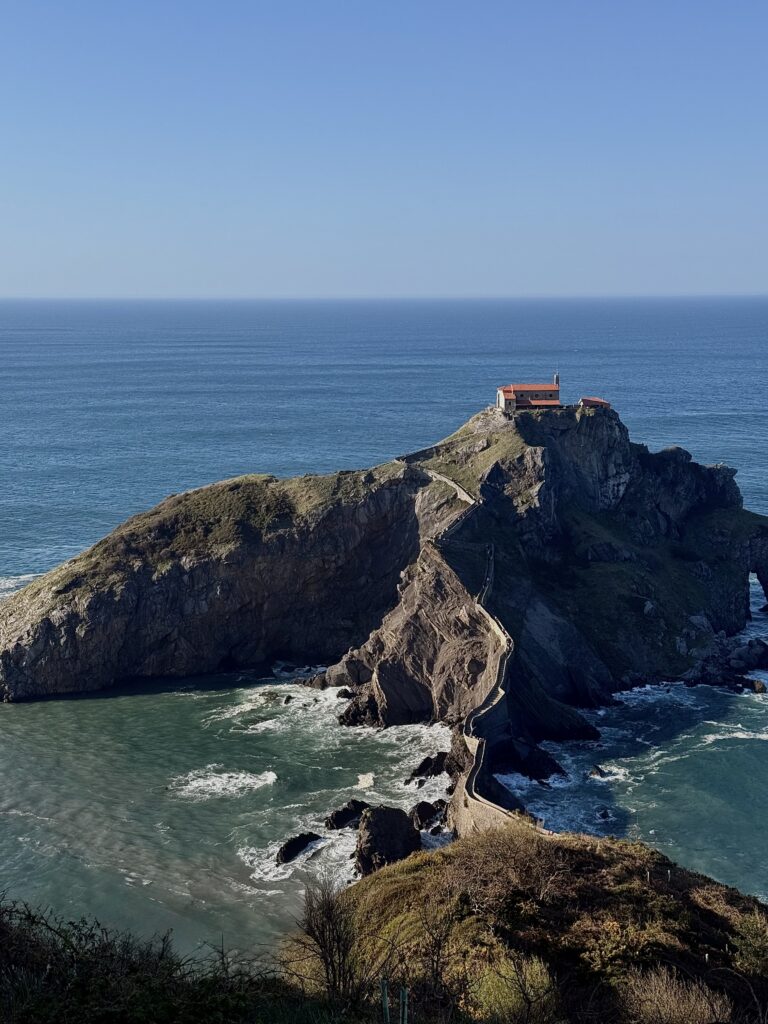
Out early. Gaztelugatxe is about an hour and a half from Bilbao, near Bermeo, and it’s the visual peak of this trip. A tiny rocky islet with a 10th-century hermitage on top, connected to the mainland by a 241-step stone staircase that snakes across the sea.
Game of Thrones fans know this as Dragonstone, and honestly, after a couple of hours here, you understand why. The Atlantic crashes against the cliffs below, the wind pulls at you from every direction, and when you finally reach the top by the hermitage, there’s a moment of silence that makes you stop and breathe. If you’re the kind of person who lives for those wow-moments in nature, Gaztelugatxe is the highlight of this trip.
Practical: in summer, booking is required. It’s free, but you have to reserve a slot on the Visit Vizcaya website in advance. In autumn things are usually more relaxed, but check before you go in case rules have changed. Parking is a couple of kilometers away from Bermeo, and you walk down to the site, which adds a little hike to the day. Bring water, a jacket, and proper shoes. The steps get slippery after rain.
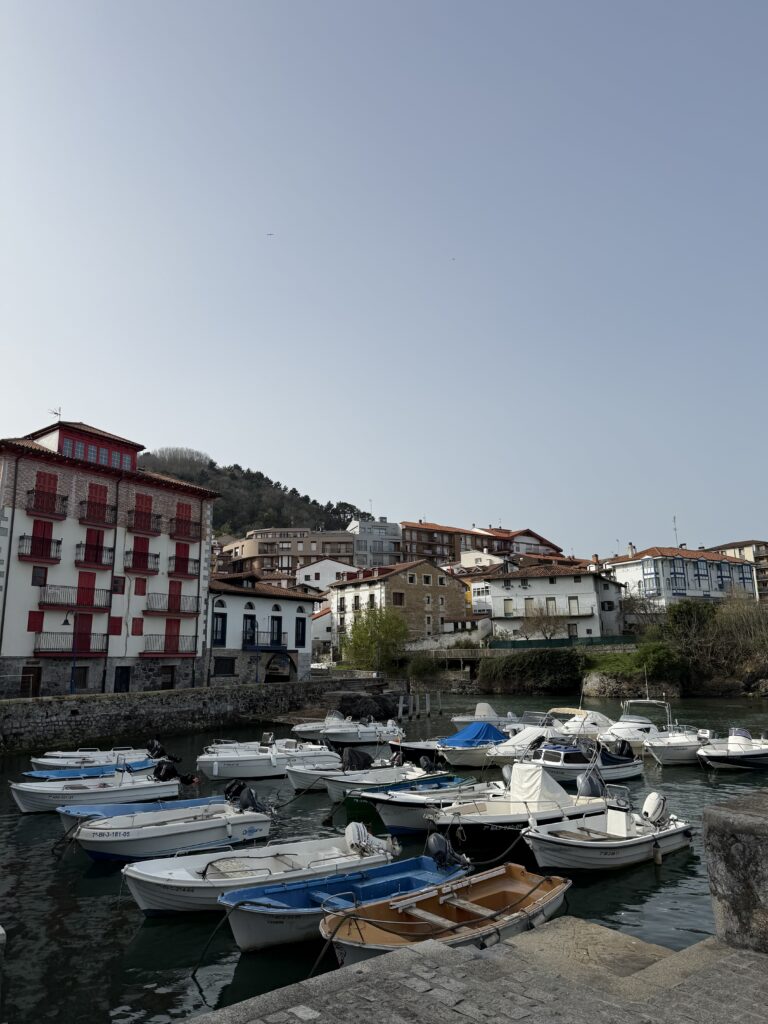
Back to Bilbao in the afternoon. You can stop in a fishing village along the way, like Mundaka, famous among surfers for one of the world’s best left-hand waves. Evening: back to the old town, light pintxos dinner, early to bed.
Day 3-4 in San Sebastián: the eating capital (+ Getaria + Tolosa)
San Sebastián, called Donostia by locals, is Europe’s food fork. A staggering concentration of two- and three-Michelin-star restaurants, plus arguably the best pintxos bars in the world. Two days is the minimum here: one is too little, three is when it becomes weight-management.
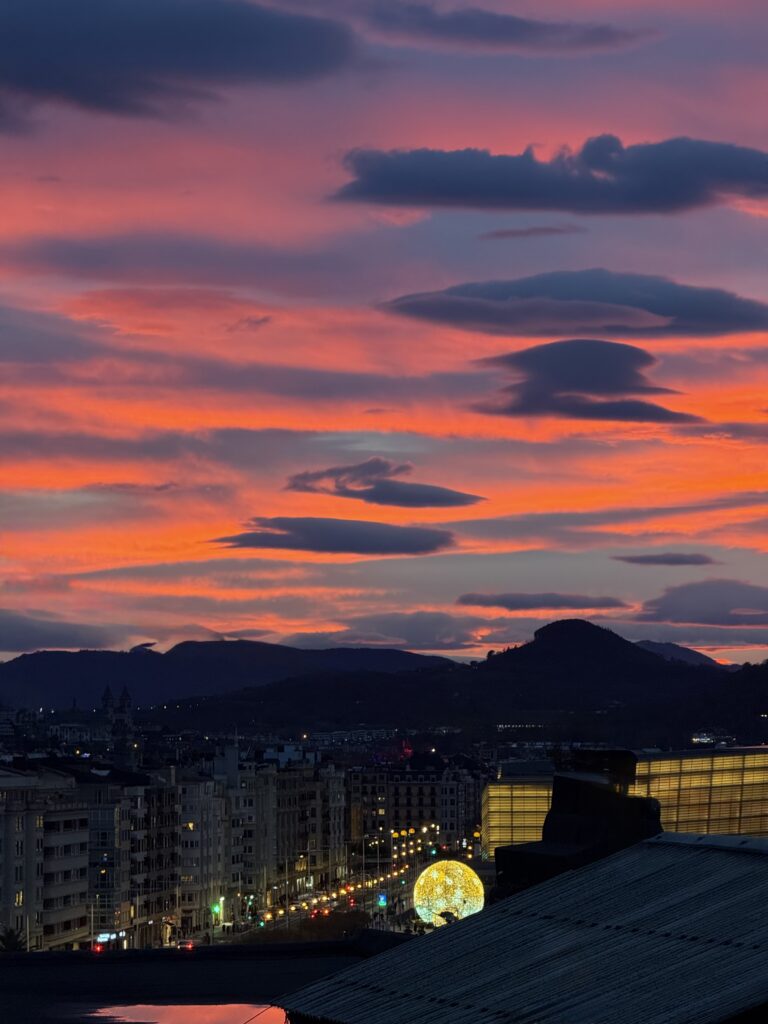
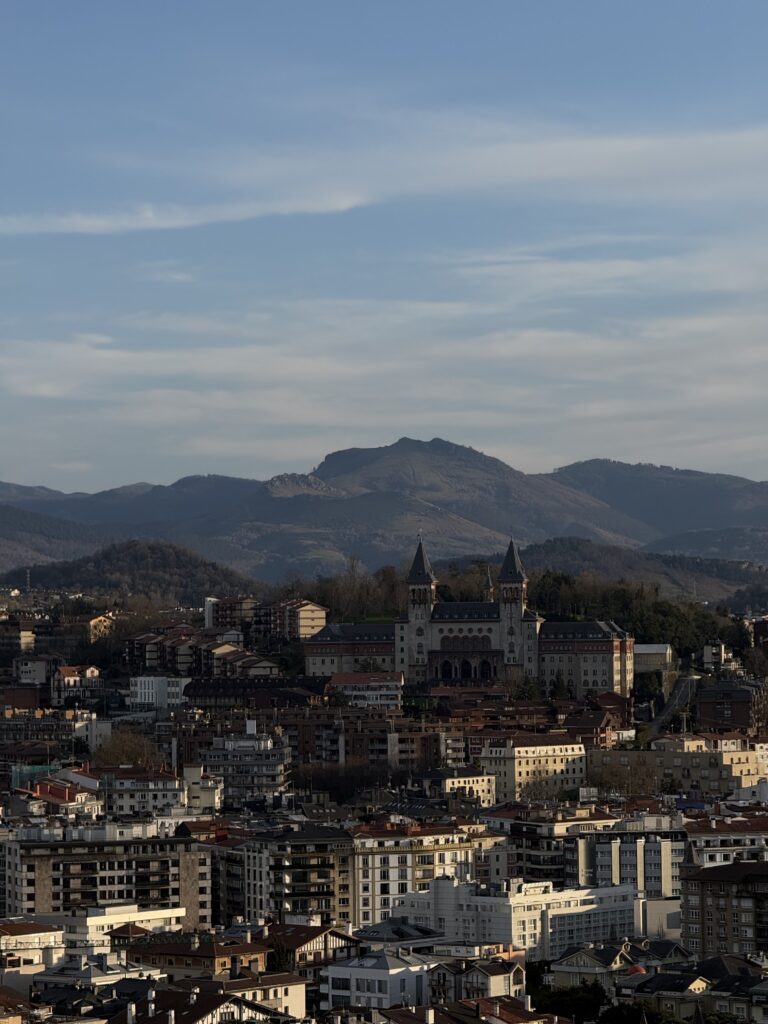
Start on La Concha beach in the morning, even if you don’t plan to swim. Walk the entire promenade end to end. It gives you the geography of the city. Around lunchtime, head into Parte Vieja (the old town) and start your pintxos crawl. Bar Nestor’s tortilla, La Viña’s cheesecake, Txepetxa’s anchovies, Casa Urola’s seasonal vegetables. By evening, you’ve eaten more than you have all week, and you start to understand why the Basques defend their food culture like a sacred inheritance.
For a detailed pintxos route: Best Restaurants in San Sebastián: A Hungry Traveller’s Tour
Second day in Donostia: a day trip. Getaria is half an hour west. A tiny fishing town with three things you should do:
- Grilled fish for lunch. Elkano is legendary (Michelin-starred, considered one of Spain’s best for grilled fish). Kaia Kaipe is also excellent. Book ahead.
- The Balenciaga Museum. Cristóbal Balenciaga was born here in 1895, and the museum is an archive of his life and work. Even if fashion isn’t your thing, it’s surprisingly good.
- Txakoli wine. Getaria is the heart of this Basque sparkling wine region. Small, fresh, sharp, and matches anything. A few wineries take visitors (book in advance).
Back to San Sebastián in the evening or, if you have the appetite, go via Tolosa (about an hour southeast). Tolosa is a TXULETA hub: Basque grilled steak, done bigger and better here than anywhere else in the region. Casa Julián is legendary; Asador Bedua is excellent too. Book ahead, and a tip: order one massive txuleta to share, not one each. It’s a slab.
Day 5 across the border: Hendaye, St Jean de Luz and Bayonne
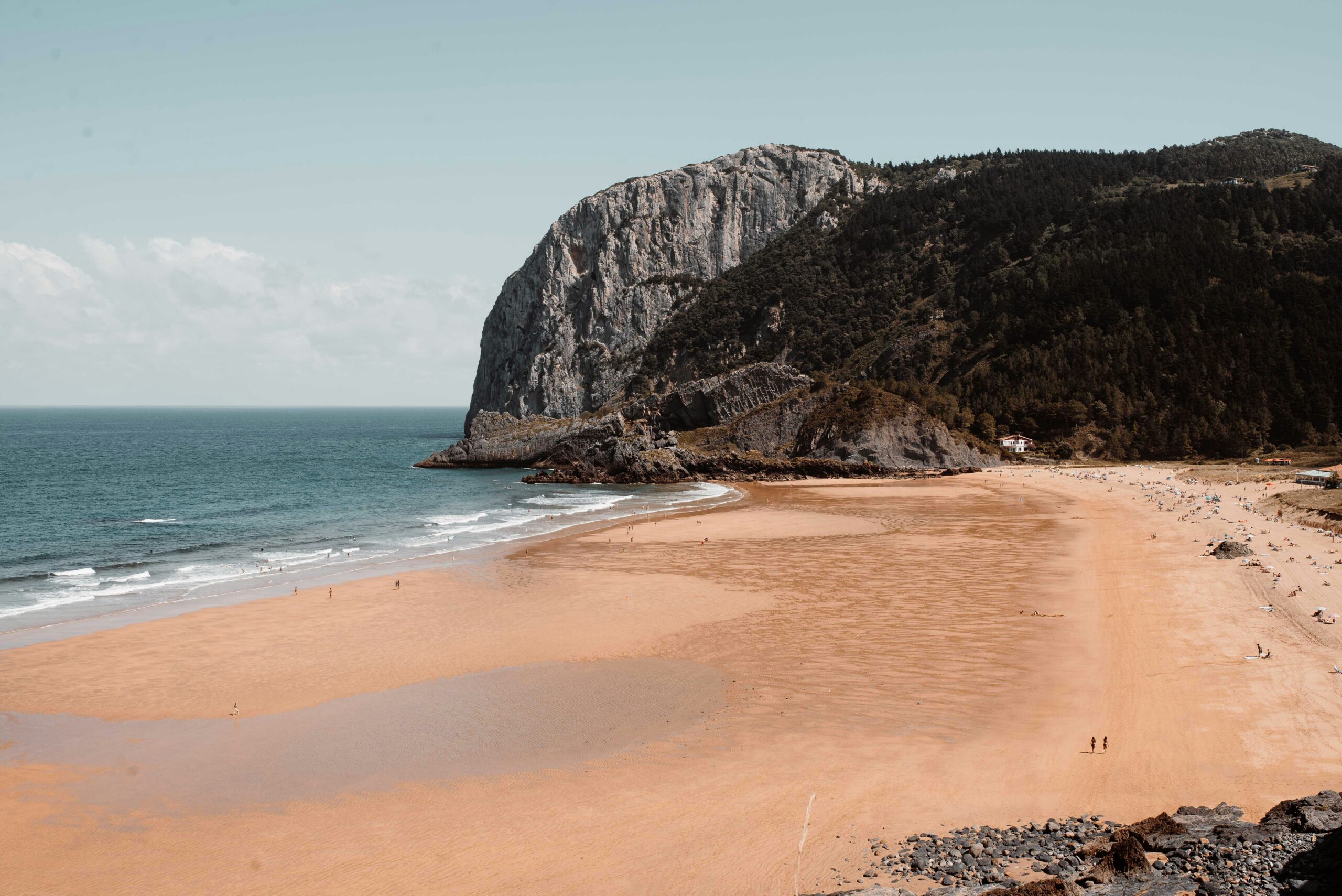
Morning border crossing into the French Basque Country. Hendaye is the first stop: a long, wide sandy beach backed by the twin peaks of Deux Jumeaux. If you’re a beginner surfer (or want to be one), Hendaye is the best Basque beach for it: gentle waves, sandy bottom, surf schools everywhere.
Read more: Surfing in Hendaye: My First Waves at the Most Beginner-Friendly Beach
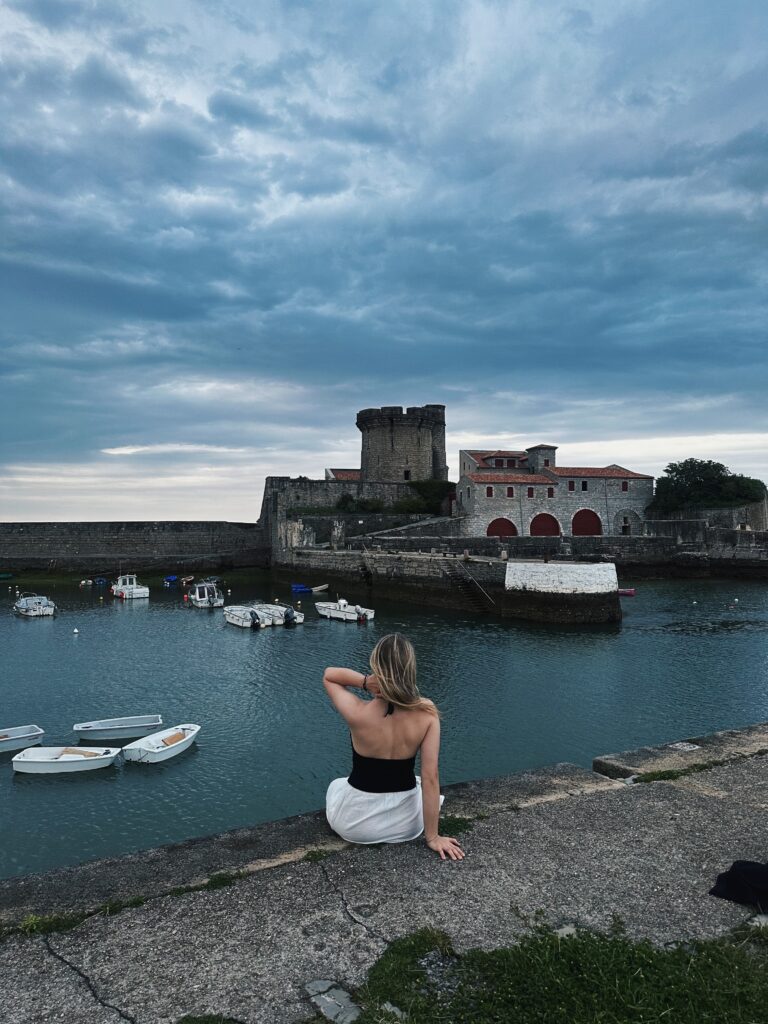
Lunch in St Jean de Luz. This is Biarritz’s little sister: smaller, quieter, more authentic. An old Basque fishing town where, back in 1660, Louis XIV came to get married. Check out Maison Louis XIV (the palace where the king stayed), walk along the beachfront. There are breakwaters here that protect the town from storms, with views across the bay to Hendaye. And don’t skip Maison Adam. Since 1660, they’ve been making the famous macarons and mouchous that are St Jean de Luz’s must-do.
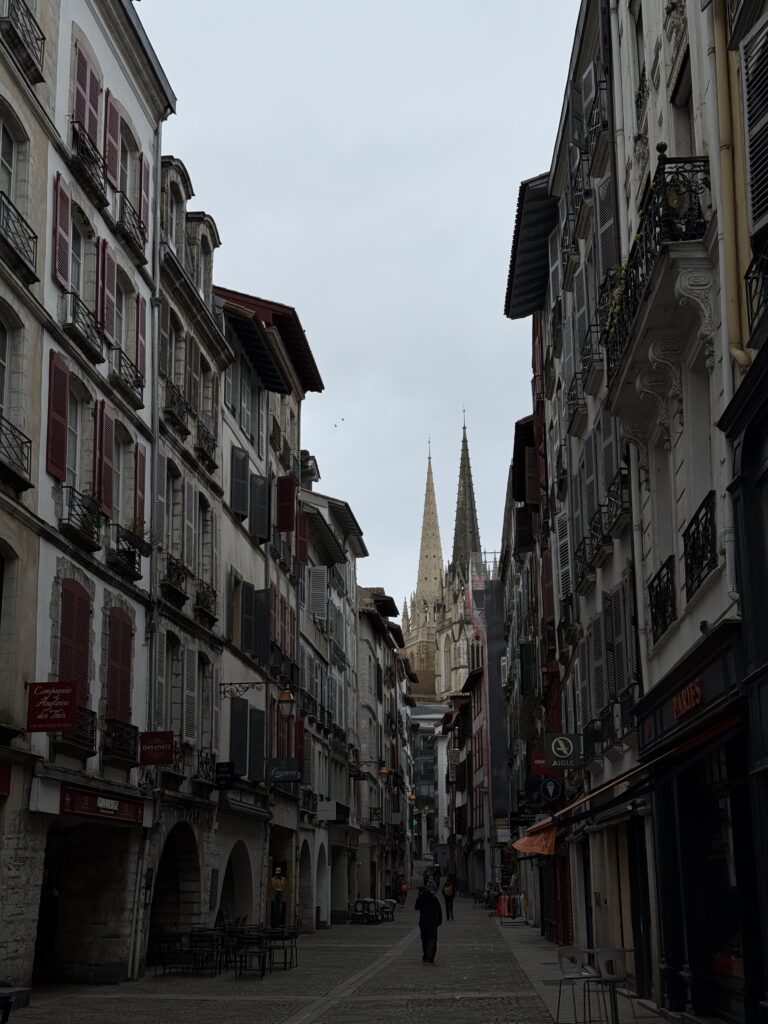
By evening, Bayonne. Bayonne is the inland capital of the French Basque Country and a joy to wander. The old town is full of red-shuttered facades and medieval streets, ringed by the Adour and Nive rivers. Two things you must try in Bayonne: jambon de Bayonne (the famous cured ham) and chocolate. Bayonne is the birthplace of French chocolate, brought here by Jewish refugees fleeing Spain in the 16th century. Cazenave and Daranatz are two historic houses.
Sleep in St Jean de Luz, or head back toward Biarritz.
Day 6: Biarritz, Bidart and Ainhoa
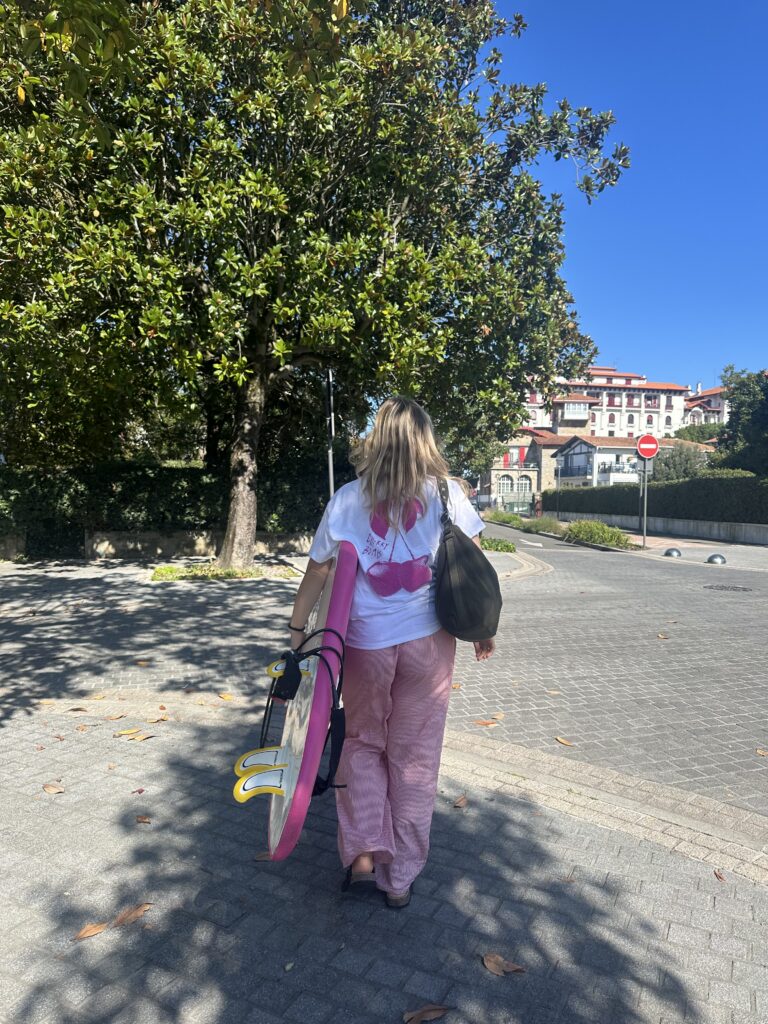
Day 6 is my favourite mix: glamour, surf town, and inland Basque. Morning in Biarritz: Les Halles market for breakfast, walk along the seafront, Rocher de la Vierge, Phare de Biarritz, lunch at Palmito Food Market or Chez BB. Biarritz is compact, one day is just right.
Read more: A Lovely Spring Saturday in Biarritz: Plan for a Perfect Day
In the afternoon, drive south to Bidart. It’s Biarritz’s neighbour: surfer-beloved, quieter, more authentic. The best spot is Plage du Centre, a small beach tucked between high cliffs, where surfing is less crowded. If surfing isn’t your thing, grab a glass of white wine at one of the beach cafés and watch other people try.
In the evening, head inland to Ainhoa. It’s one of France’s “Les Plus Beaux Villages”: a medieval village where a single long main street is lined with white houses and red-and-green shutters. But Ainhoa isn’t just a postcard. It sits in the Espelette region, home of the famous Basque red chili pepper. Every village is full of shops selling Espelette piment, ardi-gasna (Basque sheep’s milk cheese), foie gras, Basque cherry jam. Simple dinner in a village restaurant, seasoned with piment d’Espelette, a glass of Irouléguy wine.
If you’re visiting in October, check the dates for the Espelette Pepper Festival (end of October). The whole village gets covered in chili garlands. It’s an Instagram-magnet and absolutely worth it.
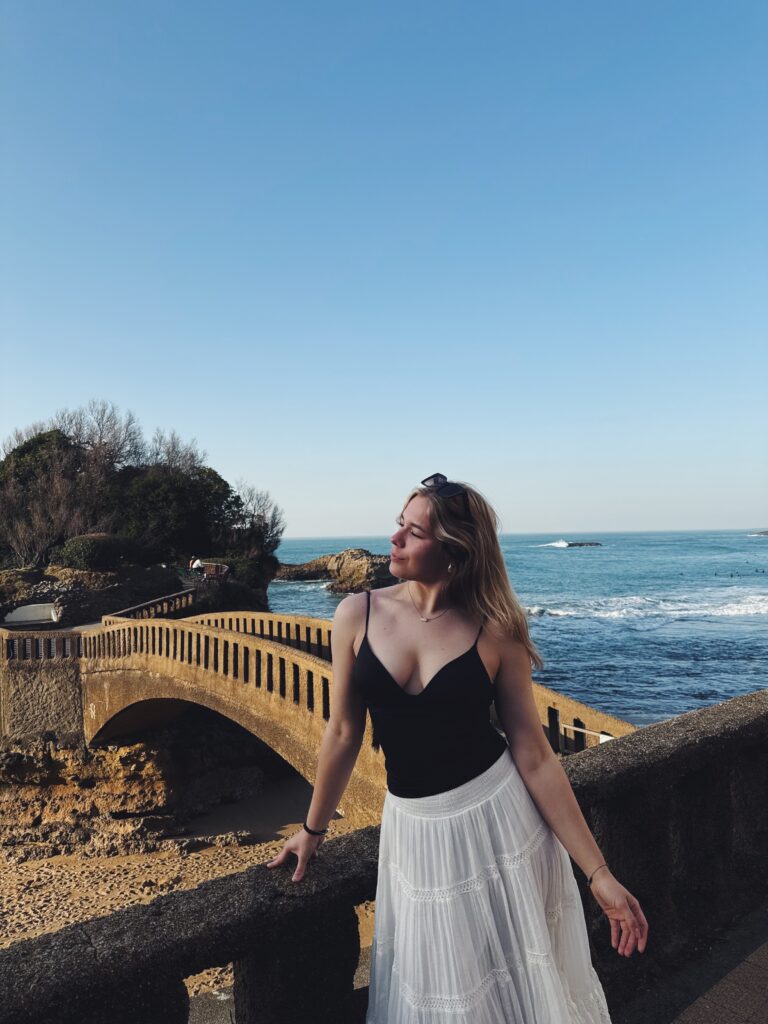 Grande Plage beach and Virgin Mary rock statue” style=”max-width:100%;height:auto;” />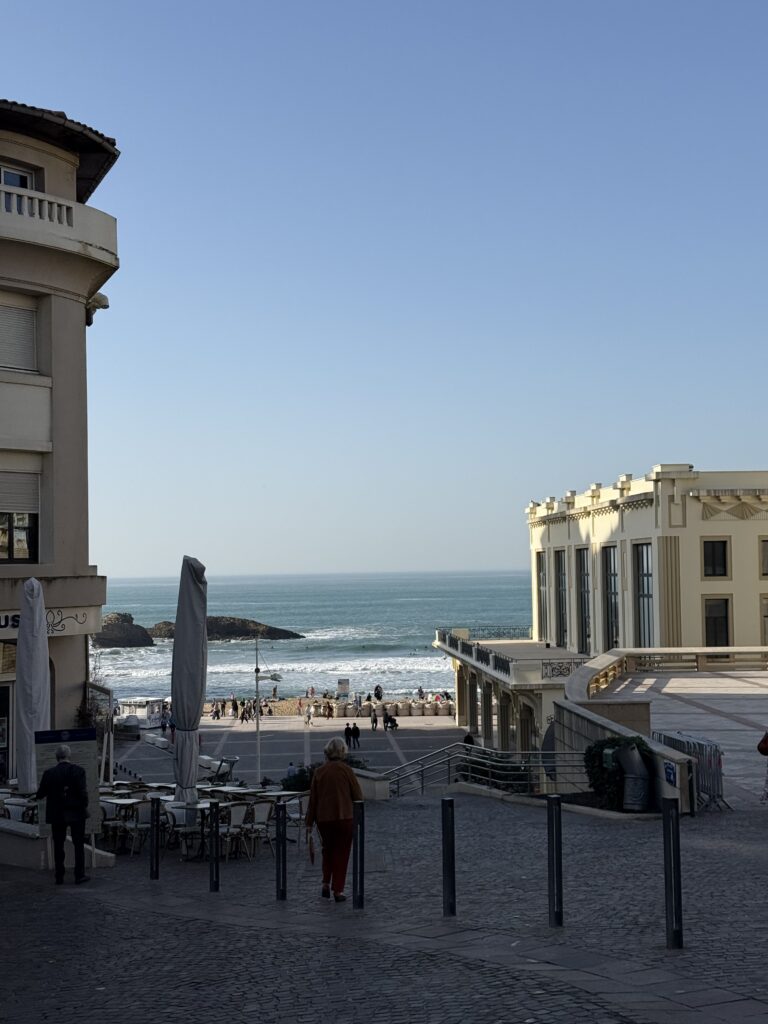
Day 7: Back via Bilbao
Easy morning back to Bilbao airport. Depending on when you fly, you might squeeze in another thing. If your flight’s late, do brunch at Mercado de la Ribera market, a light walk through Casco Viejo, and then to the airport.
If you’ve got an eighth day, here’s the bonus.
Bonus Day 8: Bardenas Reales
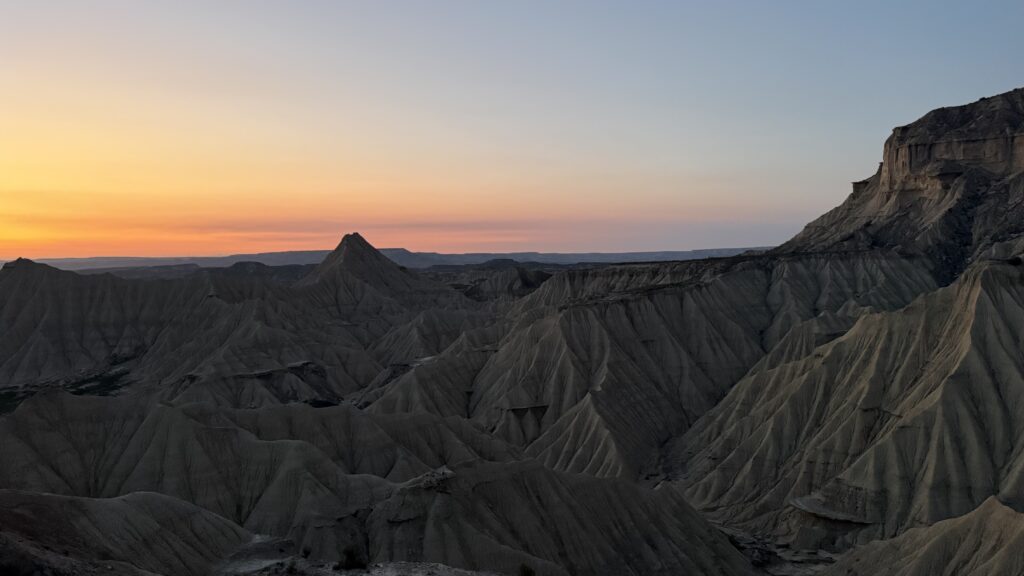
Instead of Bilbao, you can fly out via Bardenas (Near Pamplona and Zaragoza. About two hours south of Bilbao, this is Spain’s only real desert: a UNESCO biosphere reserve that looks like the surface of Mars. Day trip into Bardenas, lunch by the Cabezo de Castildetierra rock formation, sunset on the Porte des Anges hilltop. Spend the night in Tudela and fly out from Bilbao the next day.
Read more: Bardenas Reales: Spain’s Most Surprising Desert You Haven’t Heard Of
What I wish I’d known before my first trip
Budget: for two people over seven days, expect €1200-1800 (excluding flights). Food is excellent and affordable (pintxos lunch €15-25, a sit-down dinner €30-50), and accommodation is the biggest cost. Fuel for the whole route: €300-400.
Language: officially, the Spanish side speaks Spanish and the French side speaks French, but Basque (euskara) is everywhere. English will get you by, especially in touristy spots. A “kaixo” (hello) or “eskerrik asko” (thank you) in Basque always earns a smile.
Driving and parking, again: don’t assume you’ll find a street spot. City centers are metered, parking garages aren’t cheap, but they’re not crazy either (€10-20 per day). My rule: book accommodation with parking included. Saves you hours.
Is a car essential? Short answer: yes, if you want to do the full itinerary. Longer answer: there are trains and buses between Bilbao, San Sebastián, Hendaye and Biarritz, so you could do 70% of this trip on public transport. But Gaztelugatxe, Getaria, Ainhoa and Bardenas need a car.
What to avoid: Bilbao center on summer Saturdays during the city festival (packed). San Sebastián in September is the film festival (great, but prices spike). The Espelette festival in late October is amazing but the village fills up fast.
To sum up
The Basque Country isn’t really “Spain” or “France”. It’s its own thing, with its own identity, food, and rhythm. Seven days is just enough to feel it without feeling like you’re always rushing.
If you go in autumn, rent a car in Bilbao, and roughly follow this route, you won’t miss anything important. The food will surprise you every day. And if you happen to be on Gaztelugatxe alone one morning, well, you’ll know why I love this place so much.
If you have an eighth day, the desert is waiting. If not, with twelve days you could push on to Pamplona. But that’s a story for next time.
Have you been to the Basque Country, or planning to go? What’s on your itinerary? Let me know in the comments.
For car rental, also check GetRentacar.com alongside DiscoverCars. They compare local rental companies that bigger portals often miss, frequently offering lower prices with free cancellation.
Get travel insurance sorted before you go. I recommend EKTA for flexible plans covering trip cancellation, medical expenses, and lost luggage. Healthcare in Spain and France can be expensive without coverage.
For mobile data, grab a Saily eSIM before departure. You activate it before you leave and stay connected instantly without roaming charges across Spain and France.
For flights, compare prices on Aviasales. They search hundreds of airlines at once and often show cheaper fares than other search engines. Look for flights to Bilbao (BIO), the best gateway to the Basque Country.
Book Basque Country Activities
More activities and experiences available on Klook, Tiqets, and WeGoTrip for guided tours, audio guides, and attraction tickets across the Basque Country region.