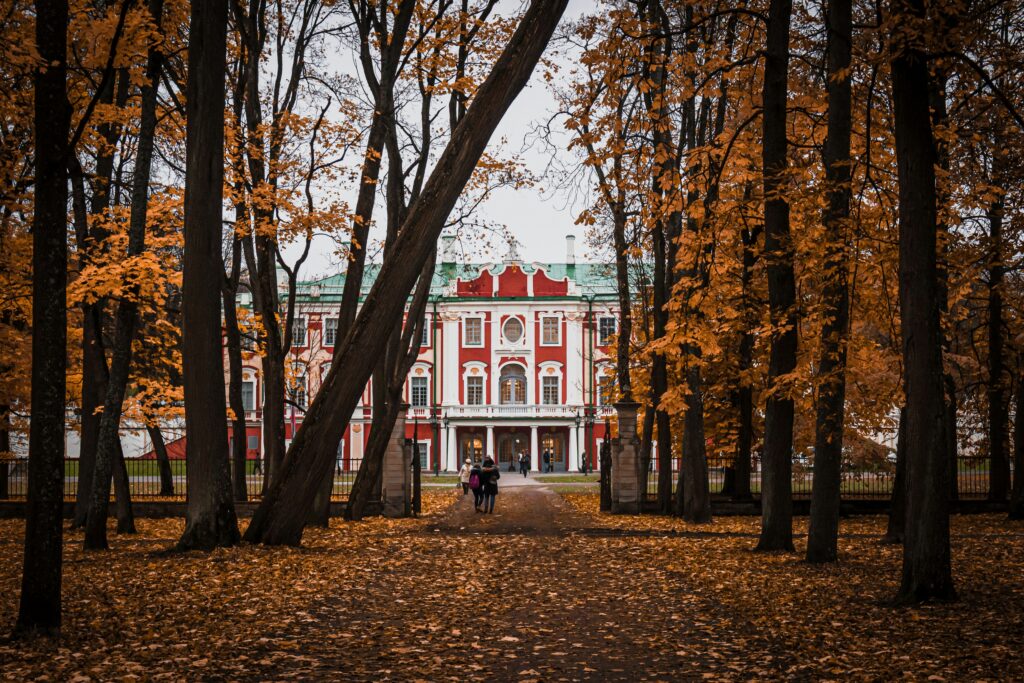
Tallinn, Amsterdam, Paris, Buenos Aires. Three flights, all very calm, and we landed around midnight. We picked up a rental car at the airport and drove into the city in the dark. Back home in Estonia, Midsummer had only just passed. Here it was Buenos Aires in winter.
Trip ABC: Buenos Aires
🏨 Where to stay
- Alvear Palace Hotel: Grand French-style palace on Avenida Alvear, Recoleta’s most elegant street.
- Magnolia Hotel Boutique: Three blocks from Plaza Armenia, surrounded by Palermo Soho’s best restaurants.
- Home Hotel: Palermo Hollywood design hotel with a garden pool and a much-loved weekend brunch.
✈️ Getting there: Flights to Buenos Aires on Kiwi.com, rental car with DiscoverCars
🎟 What to do: Tours and tickets (GetYourGuide)
🛡 Travel insurance: Heymondo, 5% off for Museumist readers
These are partner links: if you book through them, we earn a small commission at no extra cost to you.
Winter in Buenos Aires means about 12 degrees and sunshine. You need a jacket. For me it was very pleasant weather: you walk all day, you don’t sweat, and nobody forces you to the beach.
And then there was the football. We were there from 25 June to 5 July 2026, right in the middle of the World Cup, and Argentina was playing very well. Every other shop window was full of Messi and sky blue and white shirts. We bought some too. We were very Argentine.
This story is a summary of ten days: where to stay, what to do and eat, how to get around and how money works in 2026. Separate stories are coming on tango, the San Telmo tunnels, the estancia, the capybaras, Iguazú Falls and shopping.
Is Buenos Aires in winter worth it?
Yes, if you want the city, not the beach. June to August is low season for international tourists. We rented a very big house and paid low season prices: Airbnb and hotels were very affordable at that time.
One honest note. According to price tracking, the median hotel price in Buenos Aires in 2026 was 101 USD a night in June, 136 in July and 143 USD in August. July is the Argentine school winter break (in the city of Buenos Aires in 2026, from 20 to 31 July). If you want it cheaper, go in June or early July, like we did.
Winter weather: what to expect and what to wear
According to the long term averages of the national weather service (SMN), June has about 16 degrees by day and 8 at night, July 15.5 and 7.5. There are 7 to 8 rainy days a month. We got lucky: most days were sunny, a few gray and cloudy.
The days are short. Around the solstice the sun sets before six and by seven it’s dark. Plan outdoor things for the middle of the day and leave the evening for food.
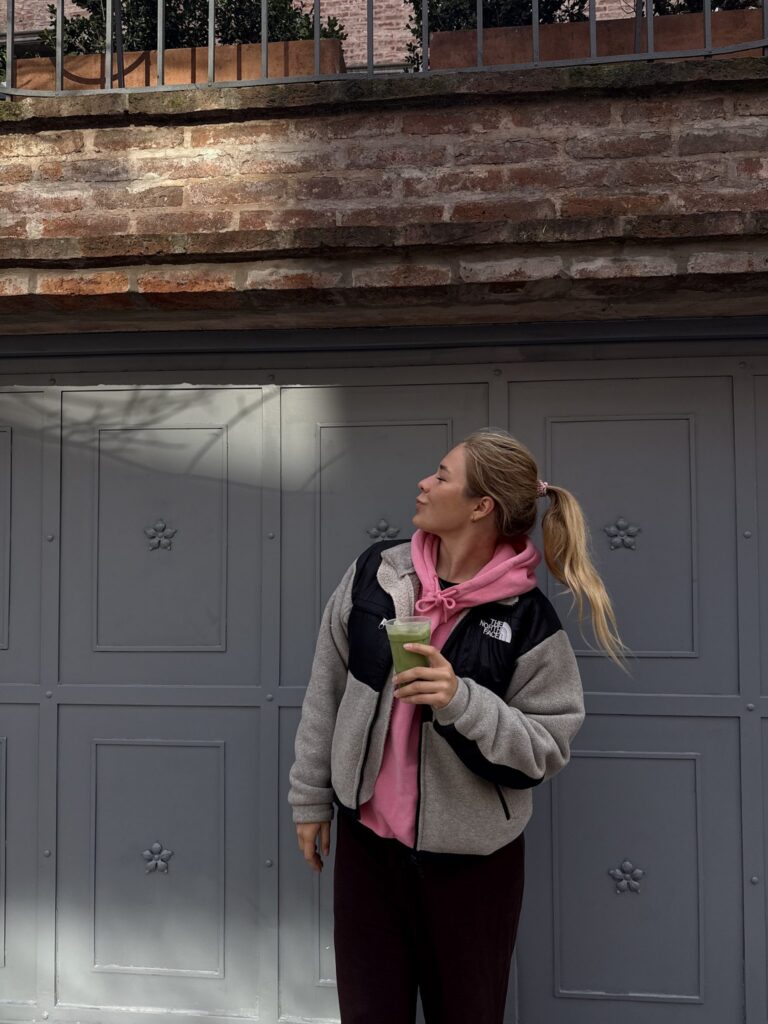
What to pack: layers. A T-shirt, a sweater or fleece and a proper jacket. I wore a fleece jacket and a hood.
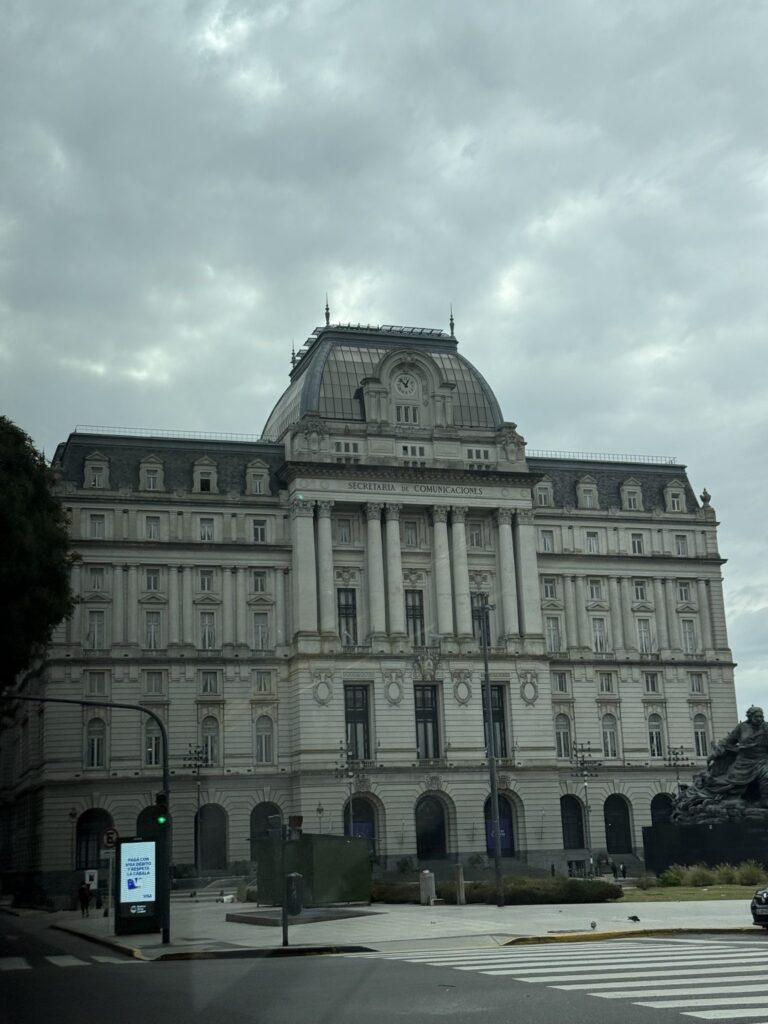
World Cup 2026 in Buenos Aires
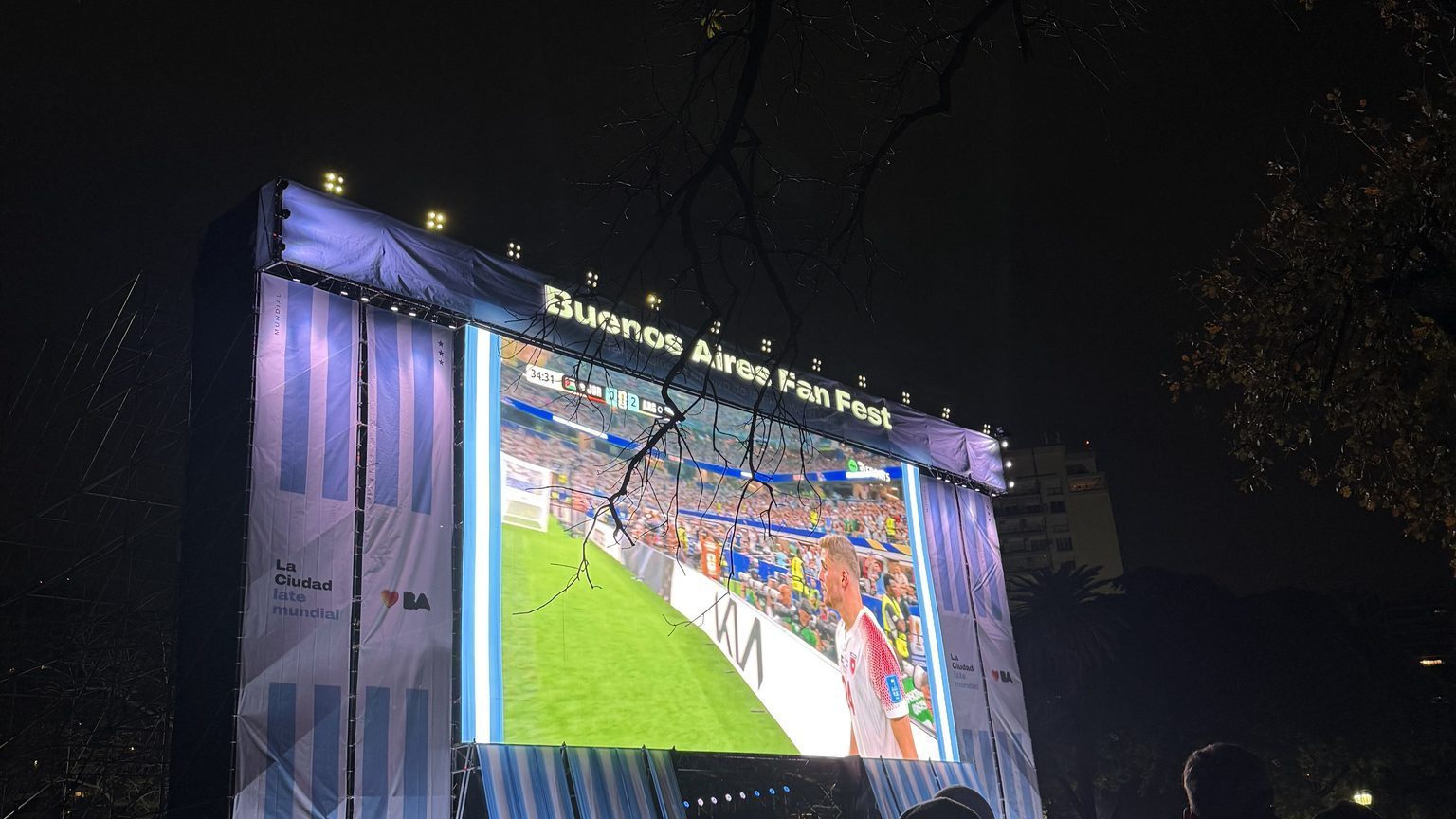
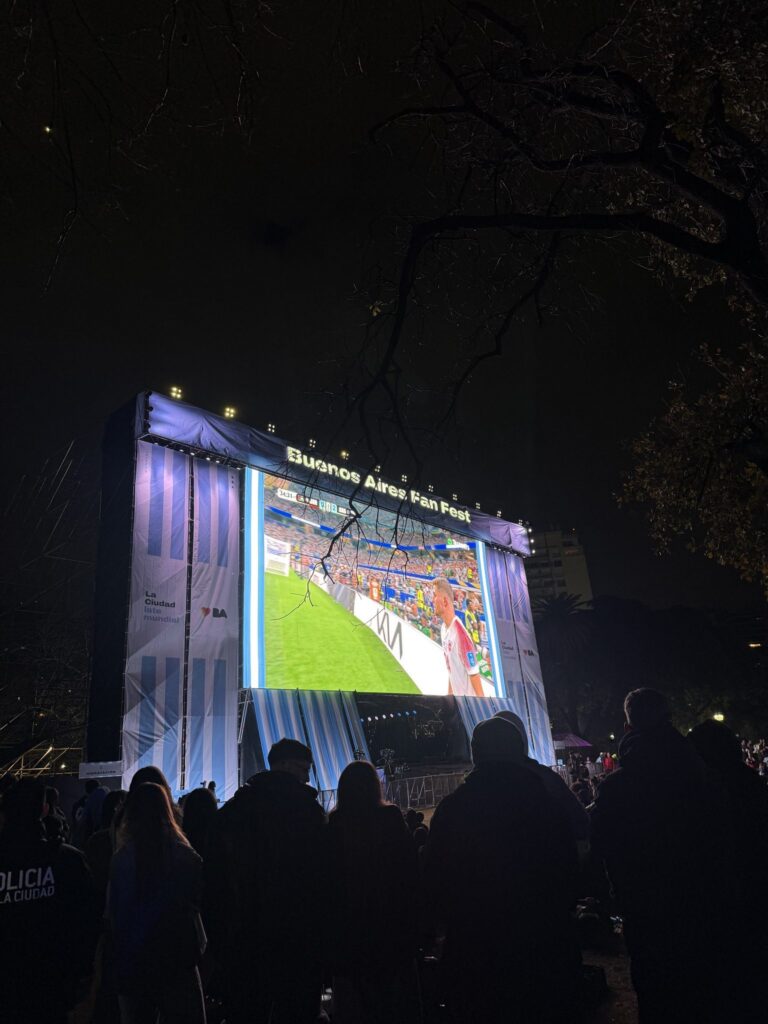
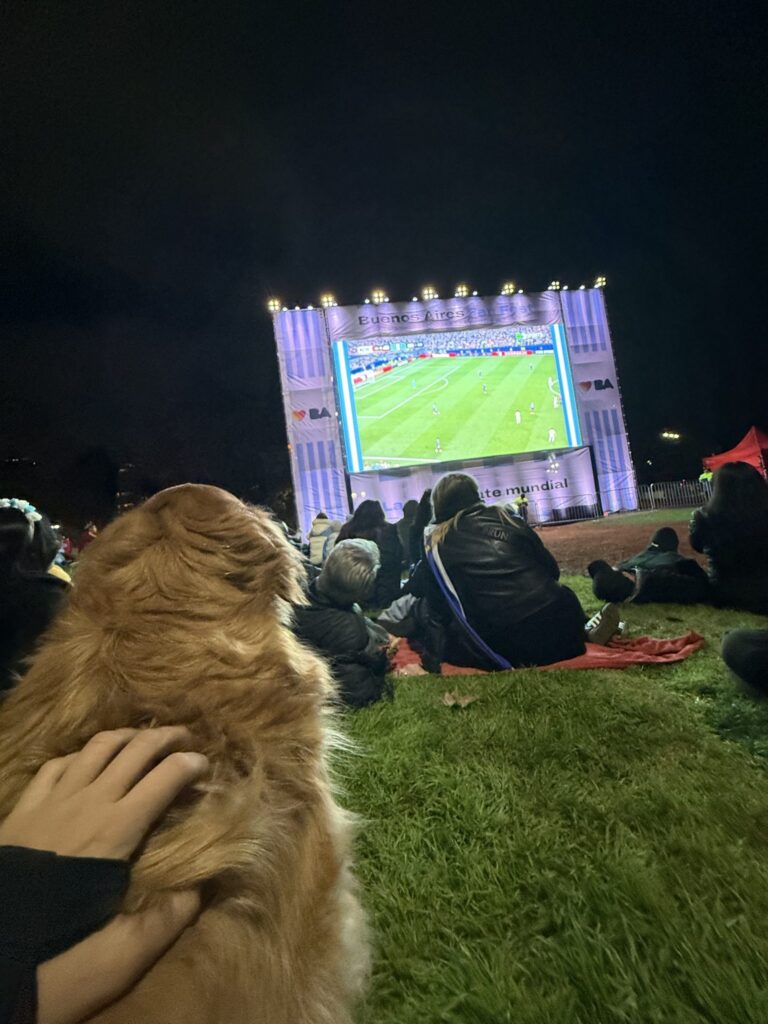
If you end up in Buenos Aires during a big tournament, the city talks about nothing else. During the 2026 World Cup the city put on free public screenings, and the main spot was the Fan Fest at Plaza Seeber in Palermo, on the corner of Avenida Sarmiento and Avenida del Libertador. According to the city, it held 15,000 people.
We went there on the evening of 27 June after a tango dinner. The match was Argentina against Jordan in Dallas, Argentina won 3-1 and Messi scored from a free kick late in the second half. It was packed, but everything was very well organized. A sweet setup. Dogs were lying on the grass.
Messi is everywhere in Buenos Aires: on billboards, on balconies, on shirts. Where to buy Messi gear and what else is worth bringing home, I cover in the shopping story.
Where to stay in Buenos Aires: Palermo
Everyone recommends staying in Palermo, not San Telmo. Now so do I. Palermo is big, green and full of cafés, the streets are alive in the evening and it’s easy to get around in both directions. San Telmo is beautiful by day, but it’s a place you go to, not a place you go to sleep.
Our house was in Palermo and a cat lived in it. That’s why my phone has more cat pictures than pictures of the Obelisk.
If you don’t need a big house, here are three vetted hotels in Palermo:
- Magnolia Hotel Boutique, Julián Álvarez 1746
- Mine Hotel, Gorriti 4770, Palermo Soho
- Home Hotel, Honduras 5860, Palermo Hollywood
You’ll find all places to stay in Palermo here. In winter, ask how the room is heated before you book.
What to do in Buenos Aires
San Telmo: vintage, market and meat
San Telmo was our first day and a good start. The streets are full of vintage shops, and Mercado de San Telmo is a cast iron market hall from 1897 that sells everything from old glass to empanadas. That’s where we ate our first Argentine meat and alfajores, and tried rogel, a traditional Argentine cake with dulce de leche between thin crispy layers and meringue on top. Very tasty. We ordered a big platter of different meats to try every style at once. I recommend the same.
On Sundays, Feria de San Telmo, the city’s most famous market, runs along Defensa street from 10 am to 5 pm. We went on Sunday, 28 June. Underneath San Telmo there’s another world: underground tunnels, which I write about separately in the El Zanjón de Granados story.
La Boca and Caminito
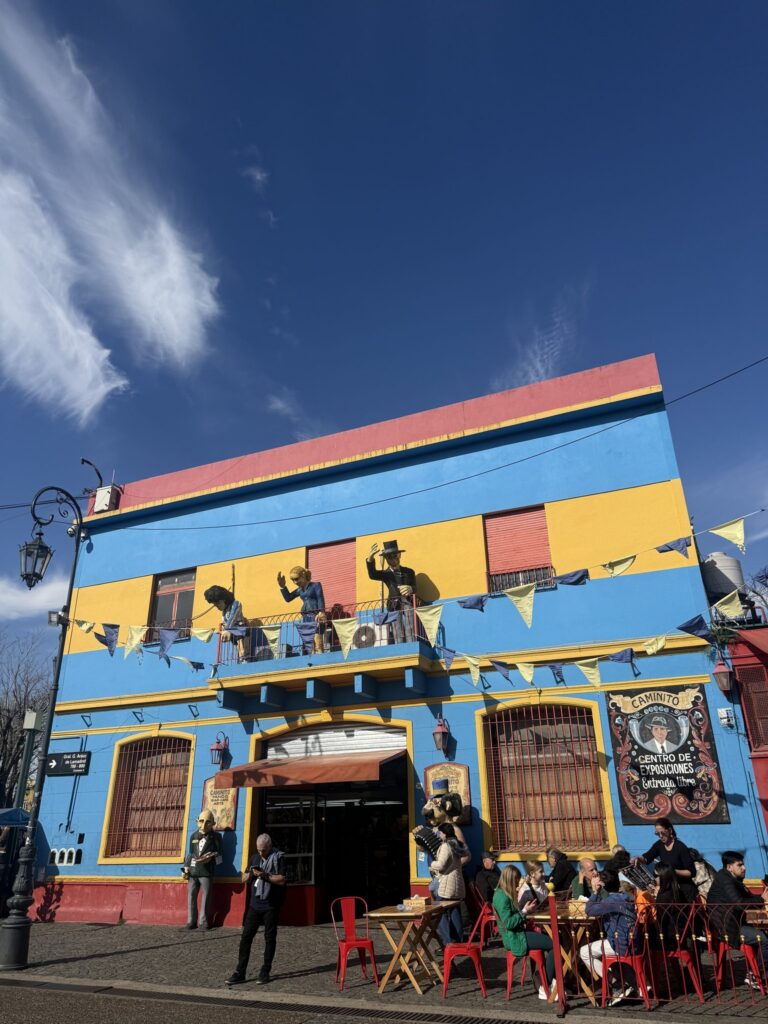
La Boca is the Buenos Aires you see on postcards: colorful tin and wooden houses on Caminito street. La Boca’s own artist Benito Quinquela Martín turned the street into an open air museum in 1959. A bit touristy, but the first time it’s very worth it.
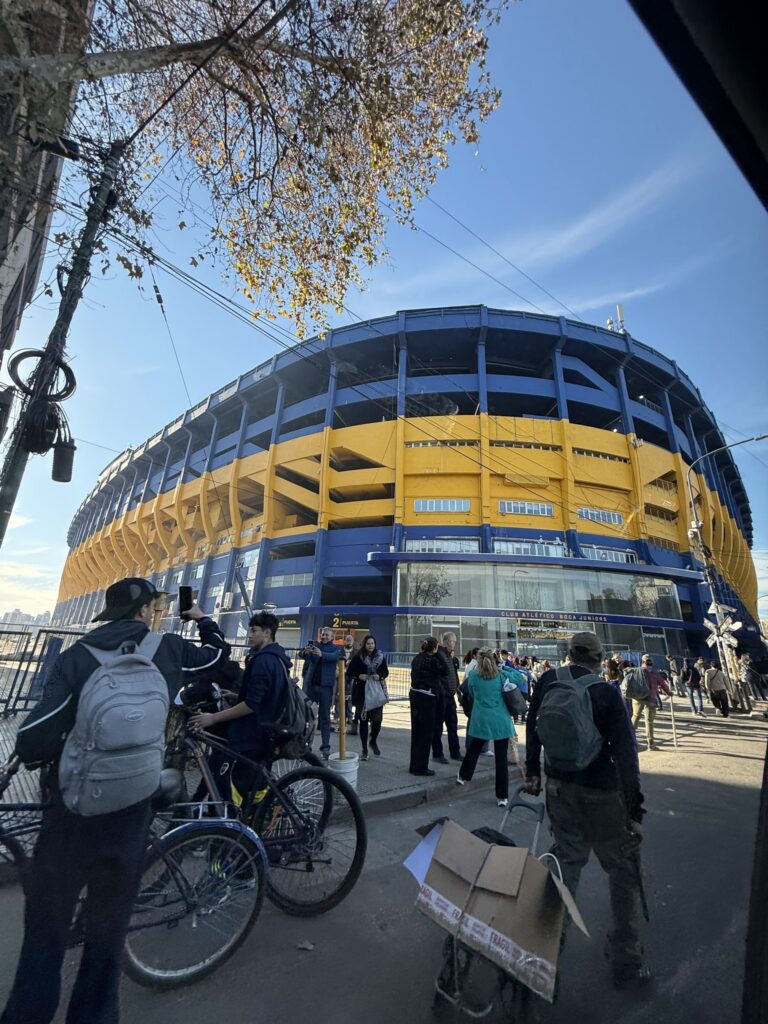
For lunch we ate empanadas and a schnitzel kind of thing that Argentines call milanesa. A cat lived in the restaurant. Very cute. After that a street market where we bought handmade jewelry, the big bridge over the river and Boca Juniors’ stadium, La Bombonera. There was no match that day, but the blue and yellow stadium is beautiful even empty.
It’s not worth going beyond the tourist streets in La Boca, and not after dark either. Go during the day and get there by car or taxi.
Recoleta: El Ateneo yes, the cemetery no
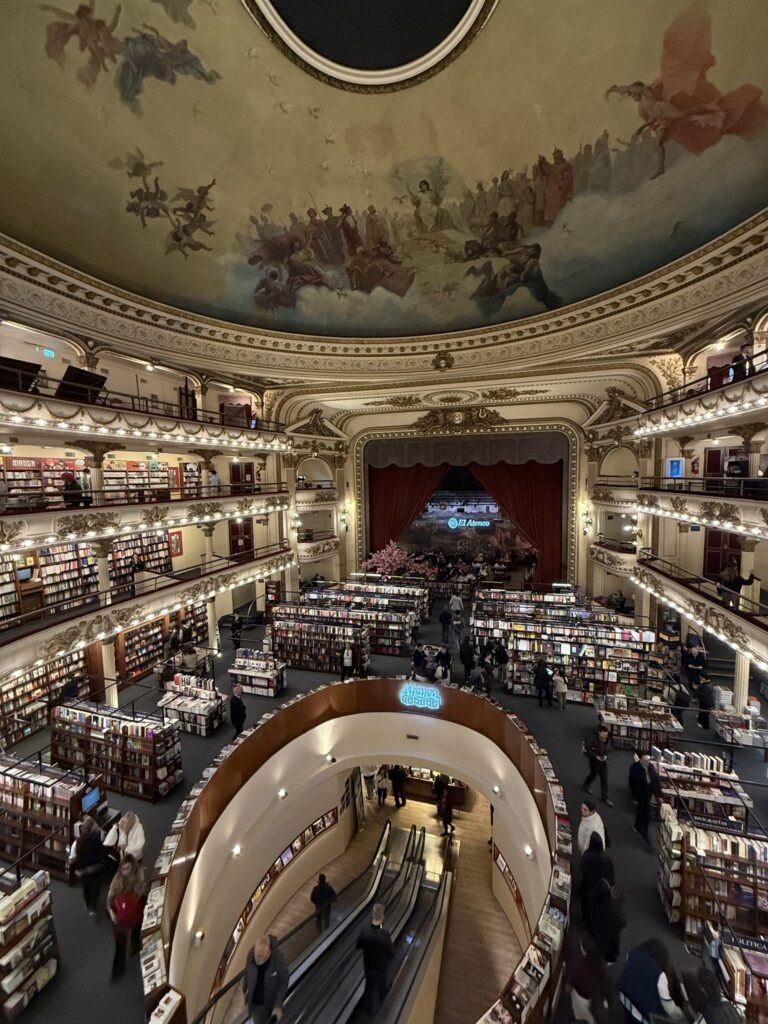
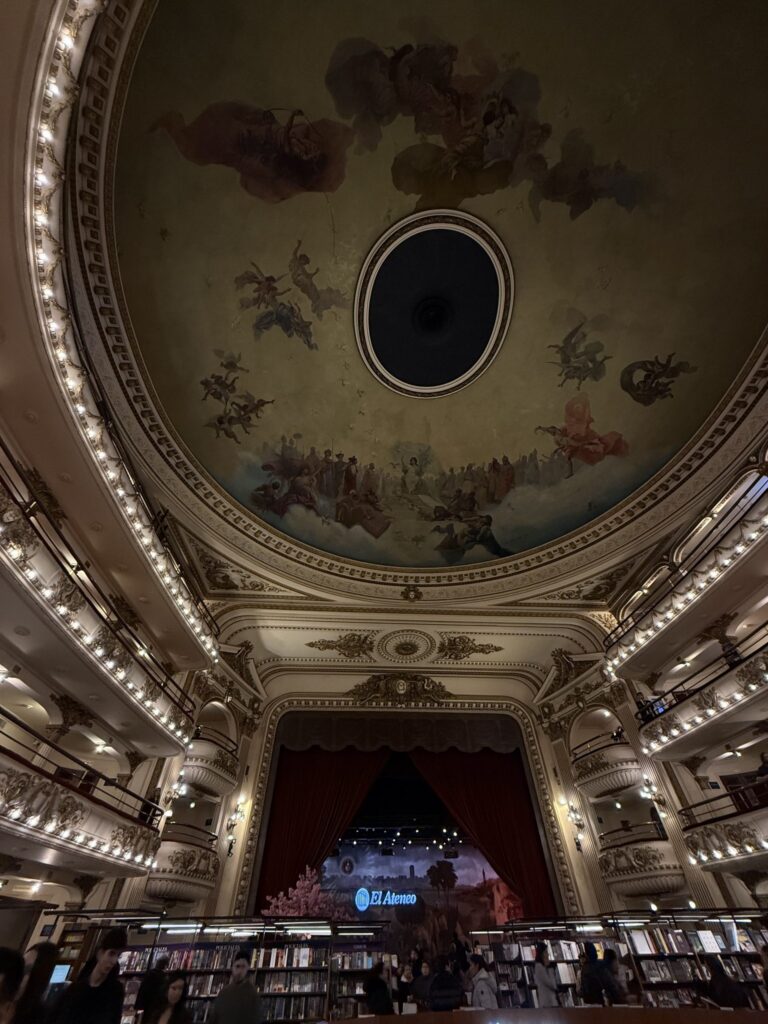
El Ateneo Grand Splendid (Av. Santa Fe 1860) is super, super beautiful. It was built as a theater in 1919, Carlos Gardel recorded here, and since 2000 it has been a bookstore with a café on the stage and frescoes by Nazareno Orlandi on the ceiling. The shelves hold about 120,000 books. We took a private tour and heard the history of the building and the area. If you only have time for one thing in Recoleta, make it this.
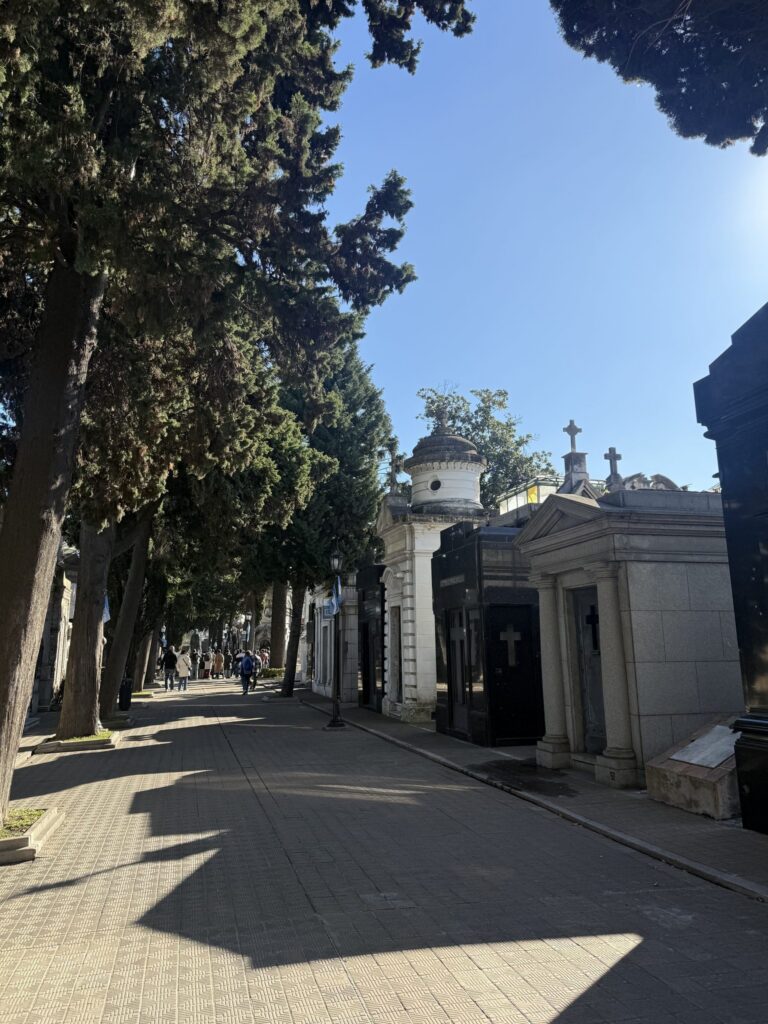
Recoleta Cemetery was very strange for me. I don’t understand why people go there. The vibe is very wrong and creepy, and some of the tombs had been broken into. In mid 2026 a ticket for foreign tourists costs 24,030 pesos (about 15 USD), card only. I wouldn’t pay for it and I wouldn’t go back.
On the plus side, the area around the cemetery has lots of good places to eat.
Downtown and sunset at the Obelisk
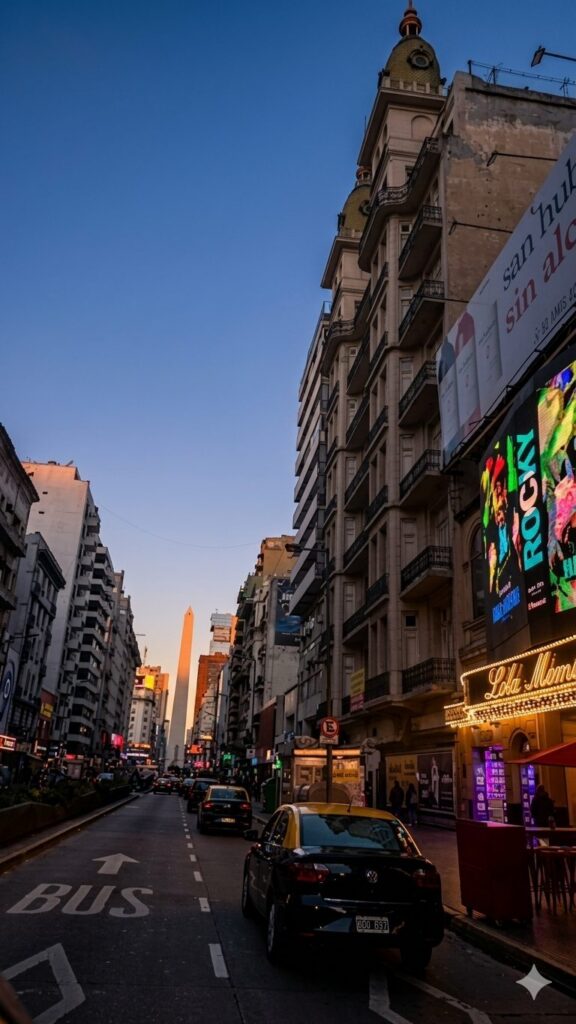
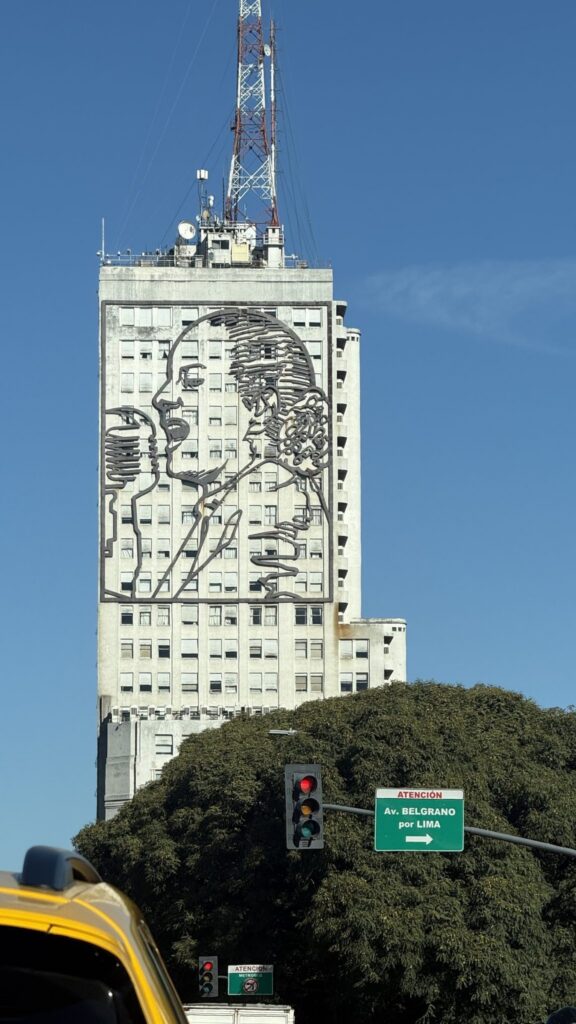
On the first evening we walked the streets of San Nicolás and watched the sunset at the Obelisk on Avenida Corrientes. On 9 de Julio avenue, Evita Perón looks back at you from a portrait on the wall of a high rise, and on Corrientes, Messi does the same from a giant billboard.
Puerto Madero
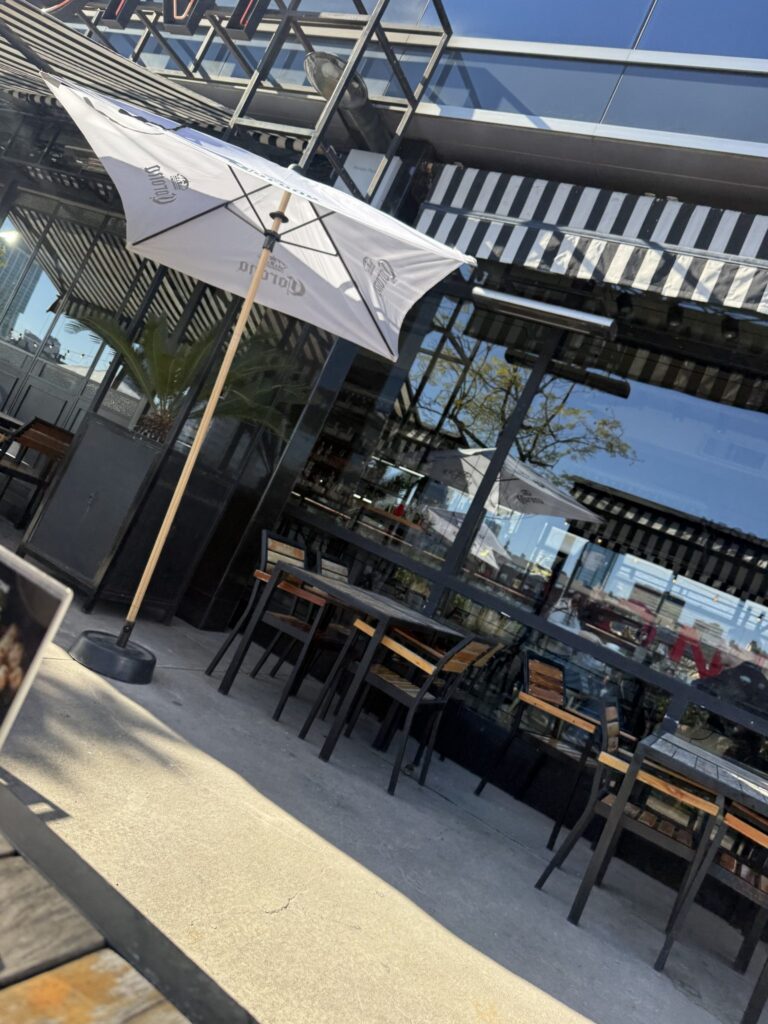
The old port district, with glass towers and docks. After Iguazú, on our last full day, we walked around San Telmo and then went for lunch at Negroni, a bistro and sushi bar on Olga Cossettini street right on the water. A terrace, sunshine, July. Puerto Madero is quiet and safe, but there’s no street life there in the evening.
Tango, estancia, Tigre and Iguazú
The tango night with dinner was at Café de los Angelitos and it got its own story. A day in the countryside, asado and a gaucho show was at Estancia Santa Susana. In Tigre and Nordelta we watched capybaras sleeping on the lawns of a residential area like they own the houses: the capybara story.
We booked Iguazú on the spot. We weighed Patagonia against Iguazú and picked Iguazú, because it was closer and we were short on time. Morning flight, rental car, the Argentine side of the national park, a night in Brazil in Foz do Iguaçu. The falls are insane. It’s all in the Iguazú story.
What to eat in Buenos Aires
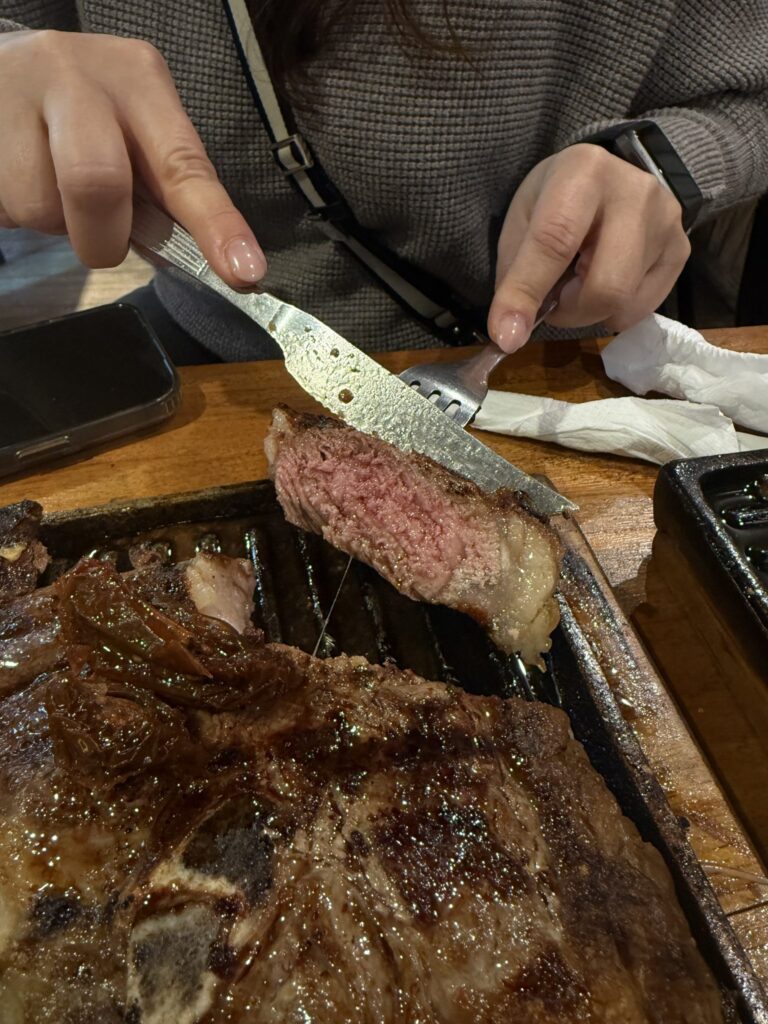
Meat. A parrilla is a grill restaurant, and there you order meat, not salad. If you don’t know what to pick, order a big mixed platter to share.
Empanadas and milanesa. A cheap, solid lunch, especially in La Boca.
Alfajores and dulce de leche. Dulce de leche is everywhere: in cakes, in cookies, in ice cream.
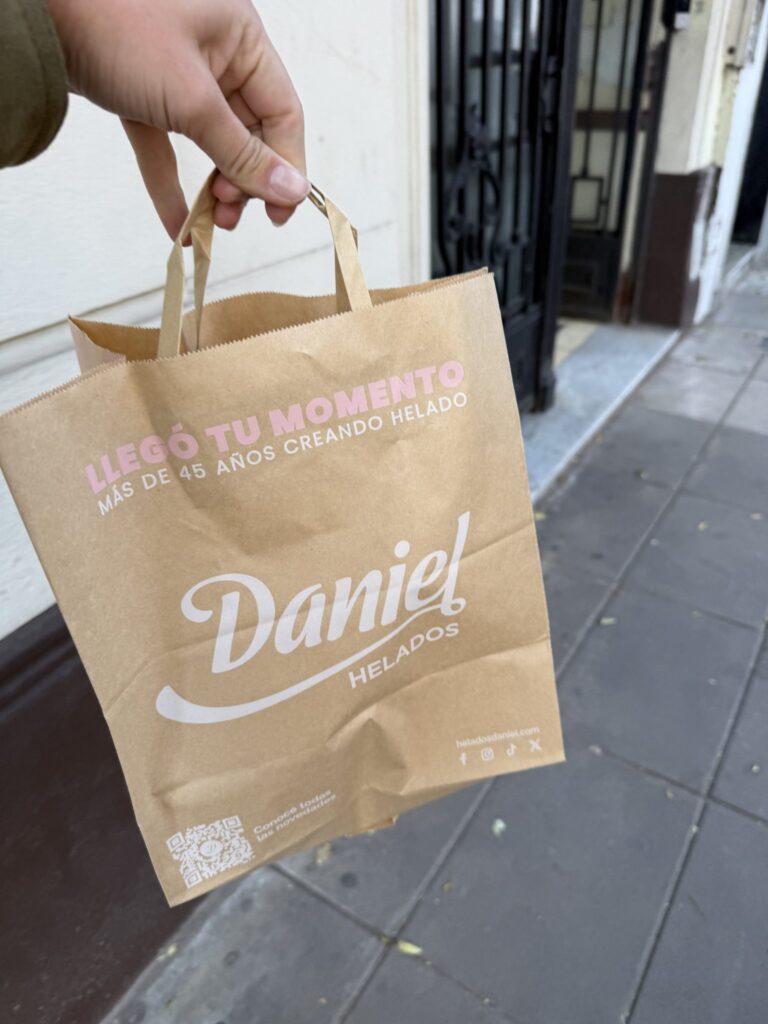
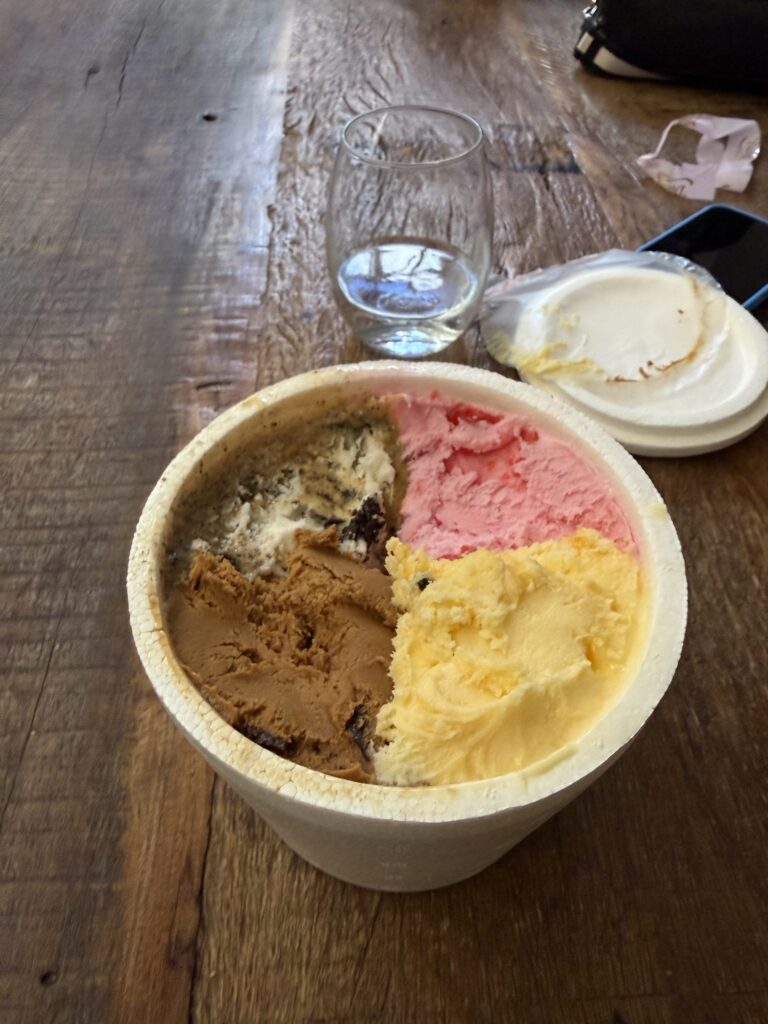
Ice cream. Argentine ice cream is a serious thing, even in winter. Driving through Monserrat we bought ice cream from Helados Daniel, four flavors in one cup. Daniel is an Argentine chain: Daniel Paradiso opened his first ice cream shop in 1978 in his home garage in Victoria, and in 1991 he invented the flavor súper dulce de leche. The hype is worth it.
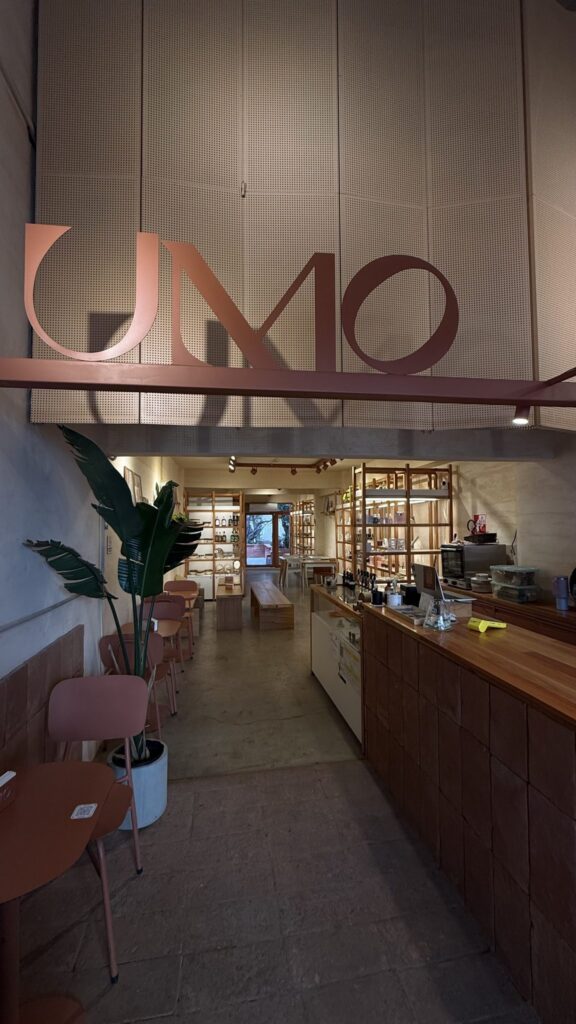
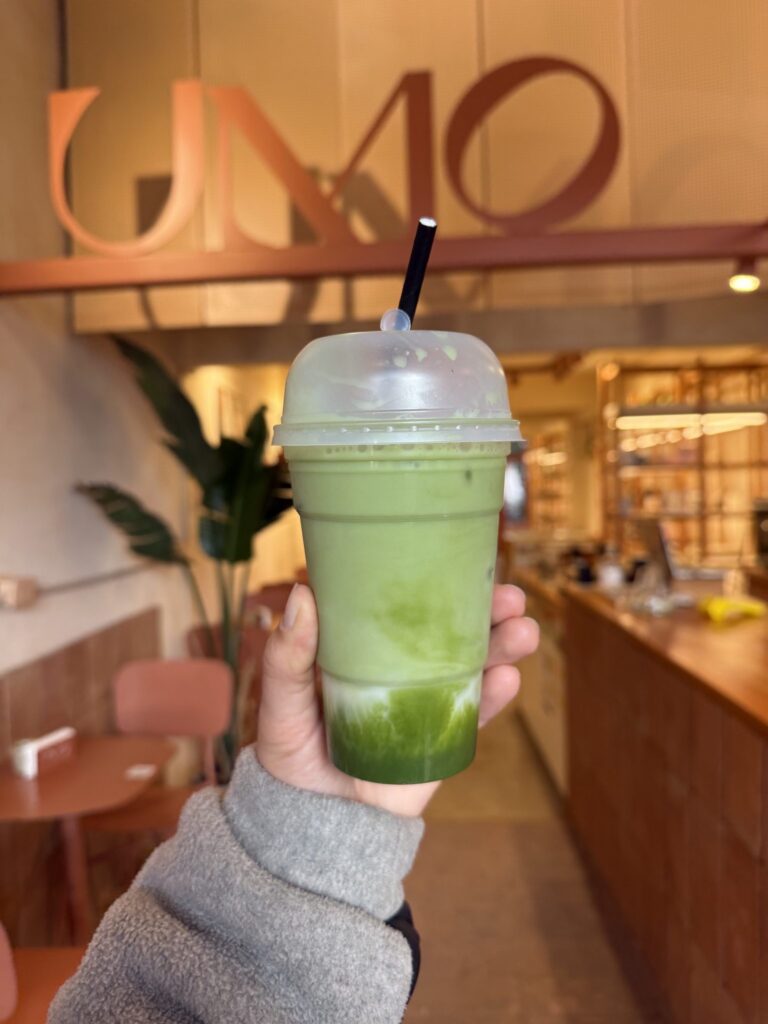
Açaí and matcha. Palermo has lots of new wave cafés. At one açaí place you add the toppings yourself, very tasty. We drank our matcha at Humo.
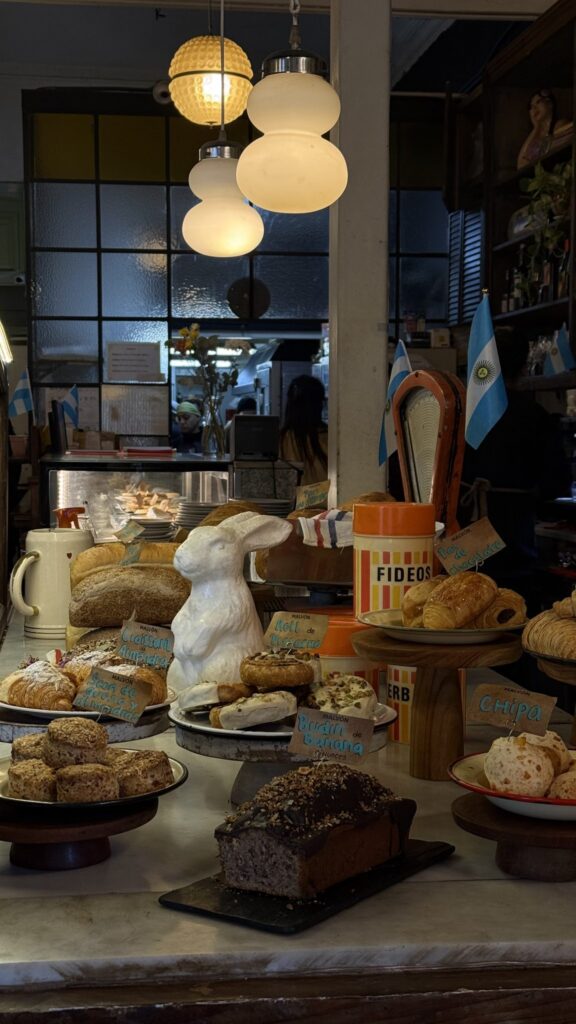
Medialunas. Small sweet croissants for breakfast.
The locals’ favorite restaurants, with recommendations from my friend Dani, are in the Buenos Aires restaurant story. Remember that Argentines eat dinner late, often not until after nine.
How to get to Buenos Aires and get around
Flights
There are no direct flights from Tallinn or Helsinki. We flew via Amsterdam and Paris. Ezeiza International Airport is about 22 km from the city center. You can compare flights on Kiwi.
Rental car
We picked up a car straight at the airport, and arriving at midnight it was the easiest solution. A car is good for day trips: Tigre, Nordelta and the estancia are all outside the city. You don’t need one to get around town. According to the Estonian Ministry of Foreign Affairs, you need an International Driving Permit in addition to your Estonian license to drive in Argentina. You’ll find rental cars in Buenos Aires and Iguazú on DiscoverCars.
Colectivo and subte
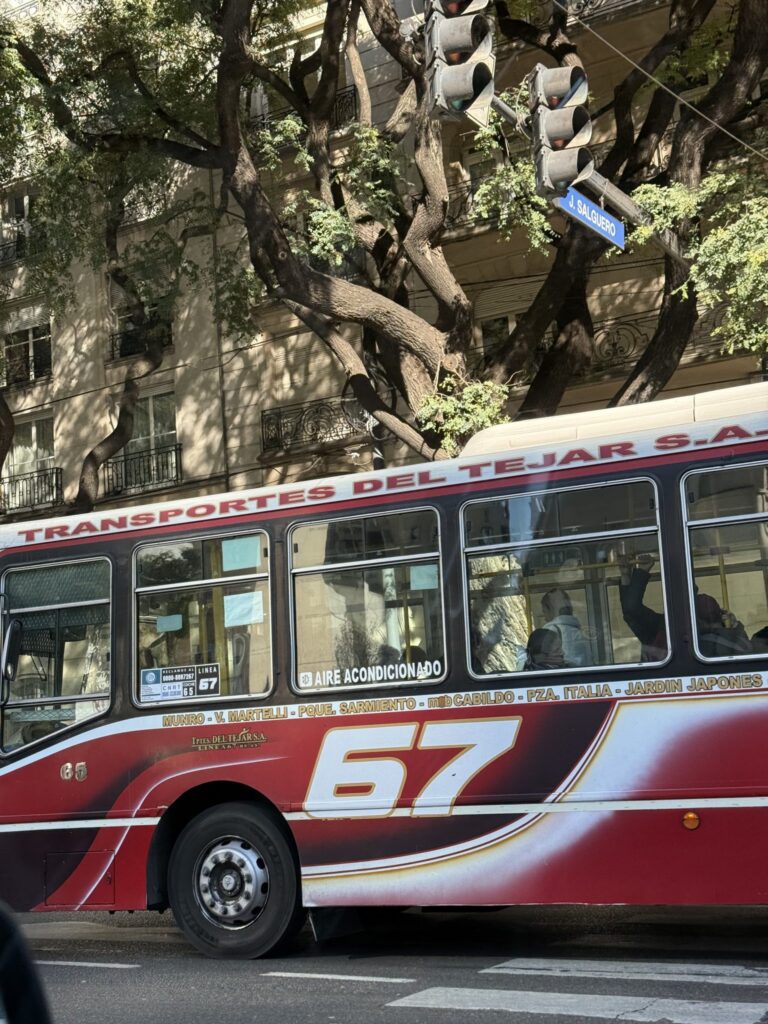
City buses, the colectivos, go everywhere. As of June 2026 you can pay with a contactless Visa or Mastercard on all lines that run only within the city, so you don’t necessarily need a SUBE card. On the subway, the subte, every station has at least one gate that takes bank cards. Since October 2026 a subte ride with a registered SUBE card costs 1,817 pesos.
Uber and Cabify
Uber, Cabify and DiDi work in Buenos Aires and people use them a lot, but the city still has no specific law for them. In May 2026 a city court ruled that app drivers must meet the same requirements as taxi drivers. You need internet for the app: Argentina is outside the EU, so put a Saily eSIM on your phone before you fly.
Money in Argentina 2026
Old blogs that tell you to bring a stack of dollars and change them on the street at the “blue” rate are out of date. Since currency controls were lifted in April 2025, the official, MEP and street rates have moved to within 2 to 3 percent of each other. Foreign Visa and Mastercard cards settle at the MEP rate, which on 5 November 2026 was about 1,587 pesos to the dollar.
- Pay by card almost everywhere: restaurants, shops, museums.
- Always choose pesos when the terminal offers euros or dollars. Dynamic currency conversion adds 3 to 8 percent.
- Cash you need little of: street taxis, market stalls, tips. About 30 to 50 USD worth of pesos is enough.
- At your hotel, pay with a foreign card: that way you get the 21 percent VAT back. With cash, you don’t.
- In certain shops in Argentina you can get the VAT back on your purchases as a tourist. How that works in 2026 is in the shopping story.
Is Buenos Aires safe?
The Finnish Ministry for Foreign Affairs advises normal caution in Argentina and warns especially about pickpockets at tourist sites and near bus, train and subway stations. The main risk for a tourist is theft, not violence. Thieves on motorbikes snatch phones, so don’t stand on a street corner with your phone in your hand. Keep your bag in front at markets and in La Boca, and don’t walk alone down quiet side streets at night.
Are 10 days the right amount?
We had ten days and it was good. It was enough for the city including the San Telmo tunnels and a tango night, two day trips (Tigre and Nordelta, the estancia) and a two day trip to Iguazú. Patagonia didn’t make the cut, because it’s far and we were short on time. If you want both Iguazú and Patagonia, you need more than ten days.
Practical info
- When we went: 25 June to 5 July 2026
- Weather in June and July: 15 to 16 °C by day, 7 to 8 °C at night (SMN averages)
- Visa: Estonian citizens can stay in Argentina visa free as tourists for up to 90 days
- Time difference: Argentina is UTC minus 3; during Estonian summer time the difference is 6 hours
- Where to stay: Palermo
- Money: card, pesos, a little cash; MEP rate on 5 November 2026 about 1,587 ARS = 1 USD
- Transport: rental car for day trips, colectivo and subte with a contactless card, Uber and Cabify
- El Ateneo Grand Splendid: Av. Santa Fe 1860, Mon to Thu 9 am to 10 pm, Fri and Sat 9 am to midnight, Sun noon to 10 pm
- Recoleta Cemetery: 24,030 ARS for foreign tourists (mid 2026), card only
- Feria de San Telmo: Sundays 10 am to 5 pm, Defensa street and Plaza Dorrego
- Travel insurance: Argentina is outside the EU, and the European Health Insurance Card is not valid there. Heymondo gives Museumist readers a 5% discount.
- To read on the trip: Lonely Planet Argentina
Frequently asked questions
July is the coldest month of the year: on average 15.5 °C during the day and 7.5 °C at night. We mostly had about 12 degrees and sunshine, and we needed a jacket.
Palermo. It’s green, full of cafés and lively in the evening. San Telmo is beautiful by day, but for sleeping the locals recommend Palermo.
No. In 2026 foreign Visa and Mastercard cards settle at the favorable MEP rate if you pay in pesos. You mainly need cash for taxis, markets and tips.
Yes. As of June 2026, all colectivo lines that run only within the city accept contactless Visa and Mastercard cards. Every subway station has a gate where you can pay by card.
In my opinion, no. A ticket for foreign tourists costs 24,030 pesos and the atmosphere was creepy. The El Ateneo bookstore in the same neighborhood is a much better choice.
Not if you also do day trips. Ten days is enough for the city, Tigre, an estancia and a two day trip to Iguazú.
This article contains partner links. If you book through them, I earn a small commission and your price does not change. As an Amazon Associate we earn from qualifying purchases.
Disclosure: this article may contain affiliate links. If you book or buy through them, we may earn a small commission at no extra cost to you. We only recommend what we believe in.