We had time for one big thing outside Buenos Aires. On the table: Patagonia, or the Argentina side of Iguazu Falls. Patagonia lost for a simple reason: Iguazu is closer and we were short on time. We booked the trip on the spot, while we were already in Buenos Aires.
Trip ABC: Iguazú
🏨 Where to stay
- Gran Meliá Iguazú: The only hotel inside the Argentine national park, some rooms look at the falls.
- Loi Suites Iguazú: Set in the rainforest on the edge of Puerto Iguazú, with pools and hanging bridges.
- Viale Cataratas: On the Brazilian side in Foz do Iguaçu, handy for the Brazilian park next morning.
✈️ Getting there: Flights to Iguazú on Kiwi.com, rental car with DiscoverCars
🎟 What to do: Tours and tickets (GetYourGuide)
🛡 Travel insurance: Heymondo, 5% off for Museumist readers
These are partner links: if you book through them, we earn a small commission at no extra cost to you.
The falls are insane. I don’t know how to say it more politely. If you’re wondering whether Iguazu is worth squeezing into an Argentina trip, my answer is yes, highly recommended.
Our Iguazu lasted a day and a half. On the morning of 2 July, a flight from Buenos Aires, a rental car, the national park on the Argentine side, across the border in the evening and a night in Foz do Iguaçu, Brazil. The next day the Güirá Oga rescue animal refuge, lunch at the Triple Frontier and a flight back the same day. We had spent the day before at Estancia Santa Susana, so the pace was serious. We didn’t see the Brazilian national park. There’s a short fact section about it at the end, but I can’t give you any impressions of it.
Iguazu is a chain of about 275 waterfalls on the border of Argentina and Brazil, roughly 2.7 km wide in total. The most famous part, Garganta del Diablo (Devil’s Throat), drops about 80 meters. The national park on the Argentine side has been on the UNESCO World Heritage List since 1984.
The Argentina side of Iguazu Falls: by train and on foot
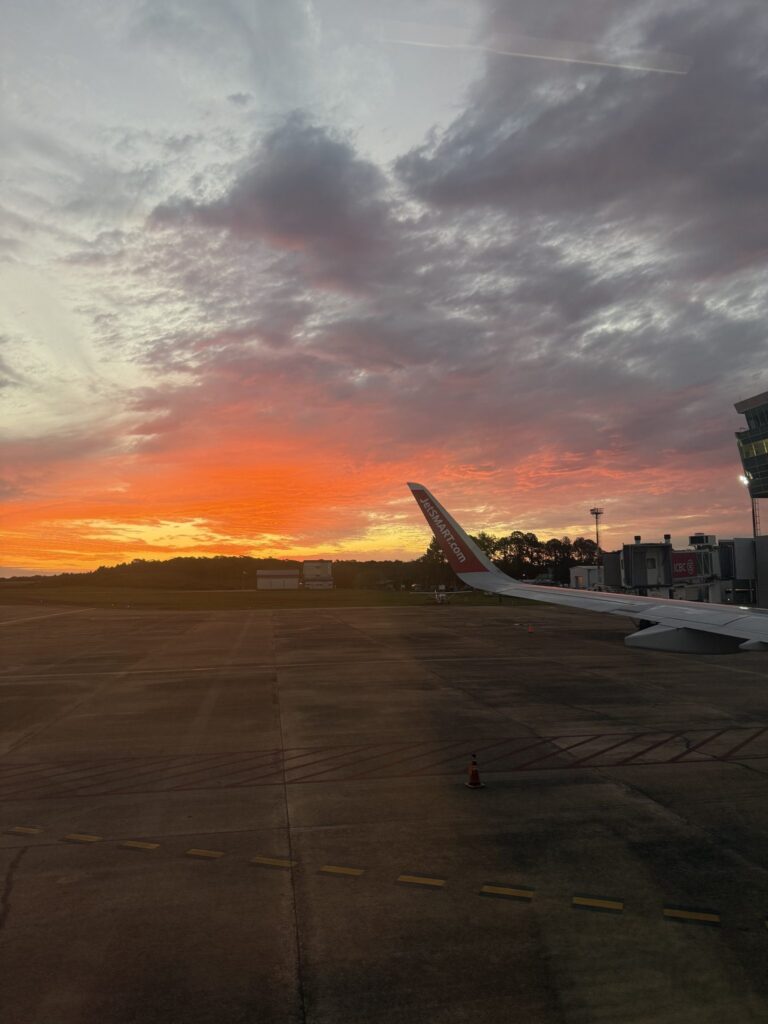
The flight from Buenos Aires to Iguazú takes about 1 hour 50 minutes, and the route is flown by Aerolíneas Argentinas, Flybondi and JetSMART. We flew in the morning, picked up a car at the airport, had breakfast and drove straight to Parque Nacional Iguazú. You can compare flights from Buenos Aires to Iguazú on Kiwi.
There are two ways to get around the park: the jungle train, Tren Ecológico de la Selva, which is included in your ticket, and on foot along the boardwalks. We did both. The train saves your legs, walking gives the falls time. You need both.
The whole point of the Argentine side is that you don’t look at the falls from a distance, you walk above them and right next to them. Circuito Superior is 1,850 meters of boardwalk along the edge of the falls, about two hours. Circuito Inferior is 1,750 meters, about an hour and a half, and takes you down to the lower falls. There’s also the short Sendero Verde, 650 meters. Most of the trails are wheelchair accessible.
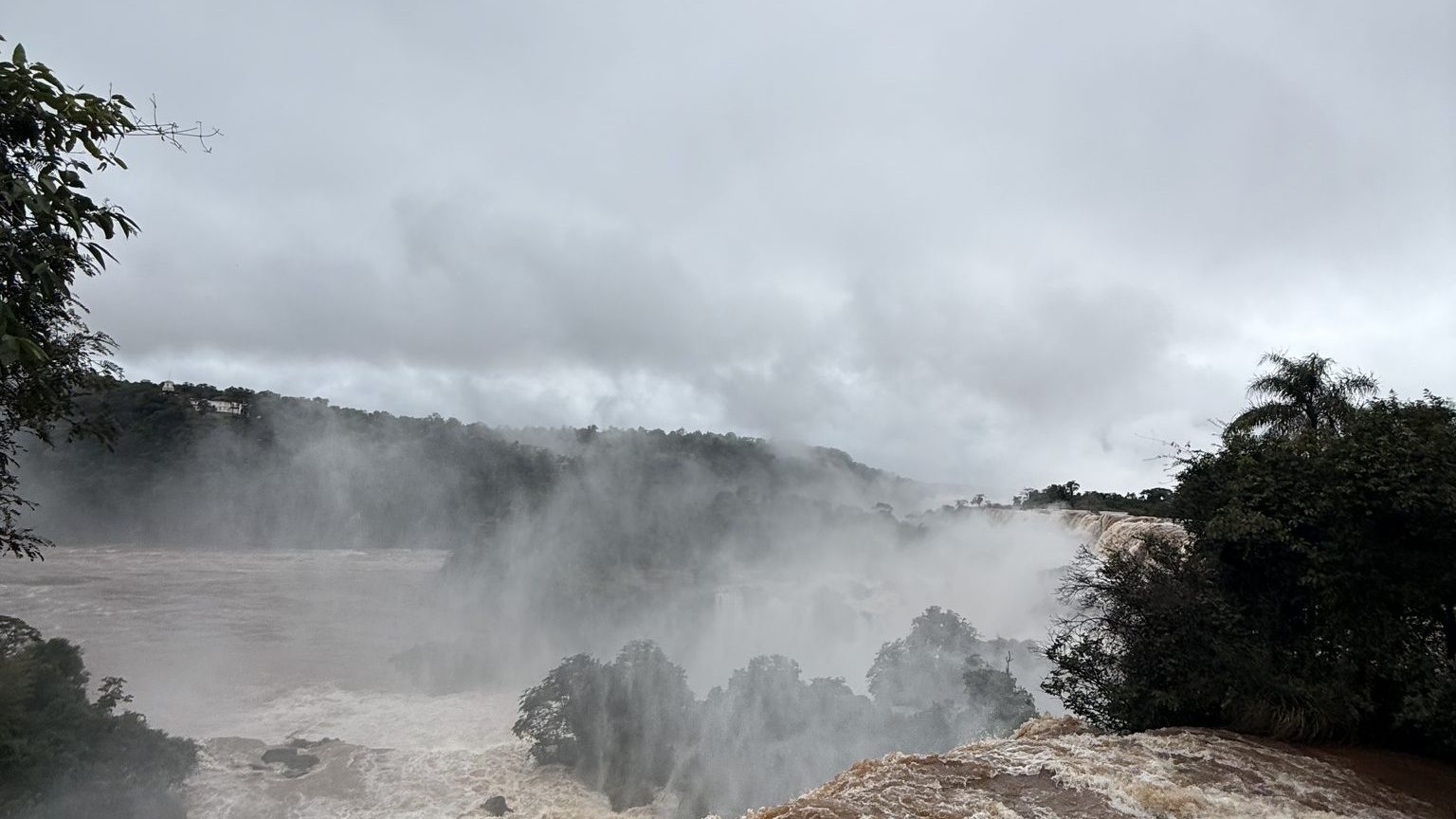
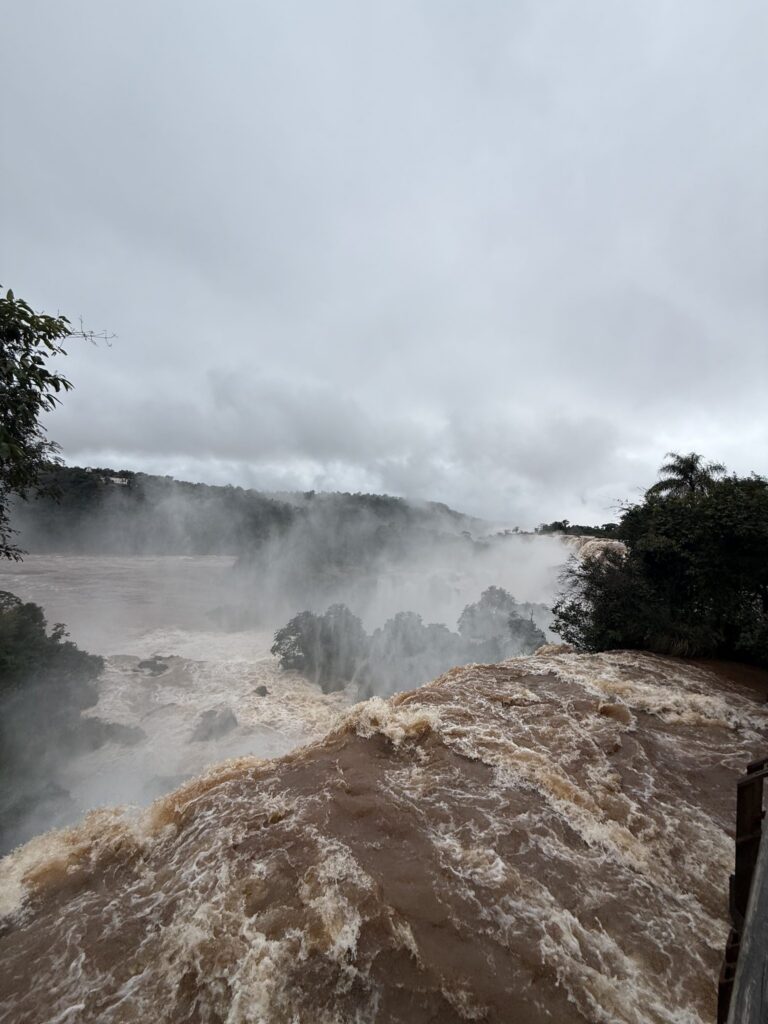
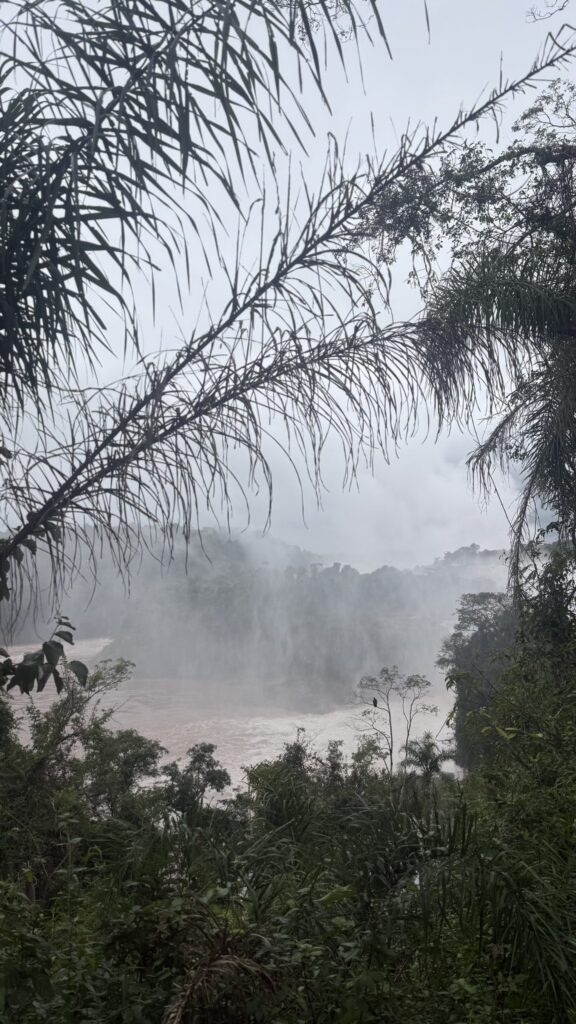
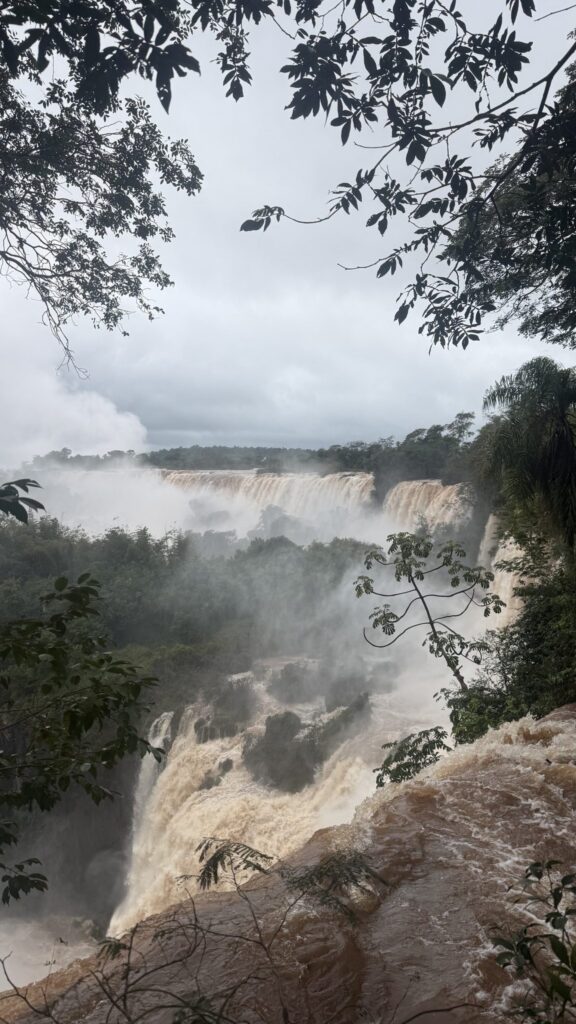
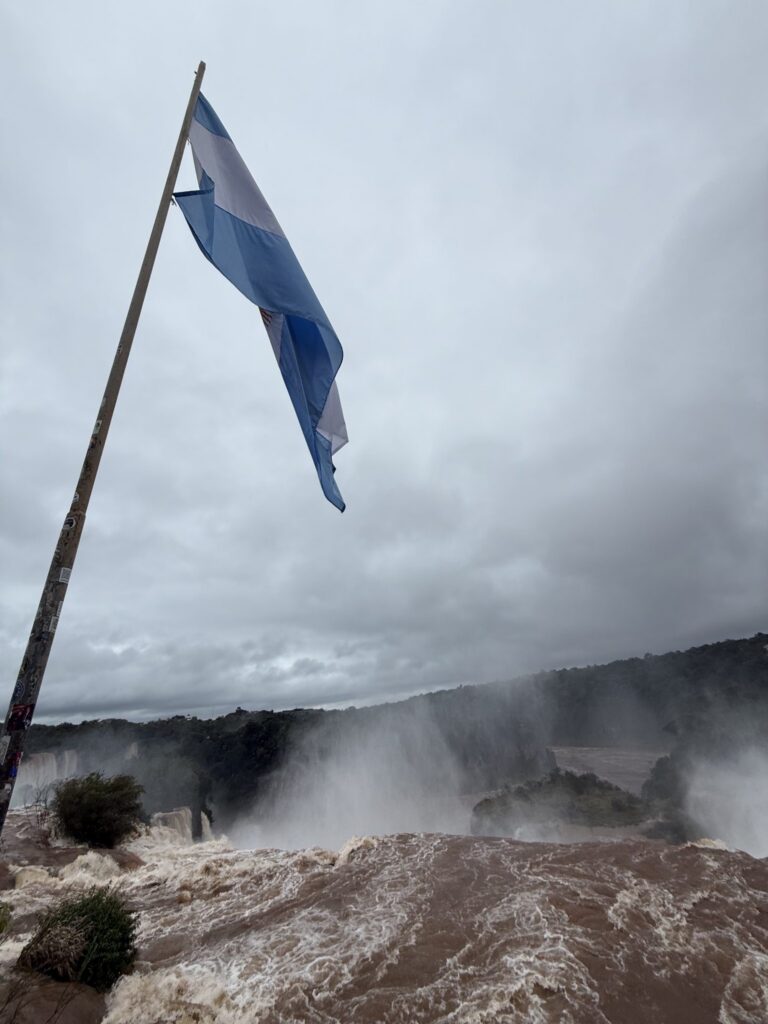
In early July the water was high and brown. A thick, chocolate-colored river throws itself over the cliff and the mist rises so high that the far bank disappears.
Coatis
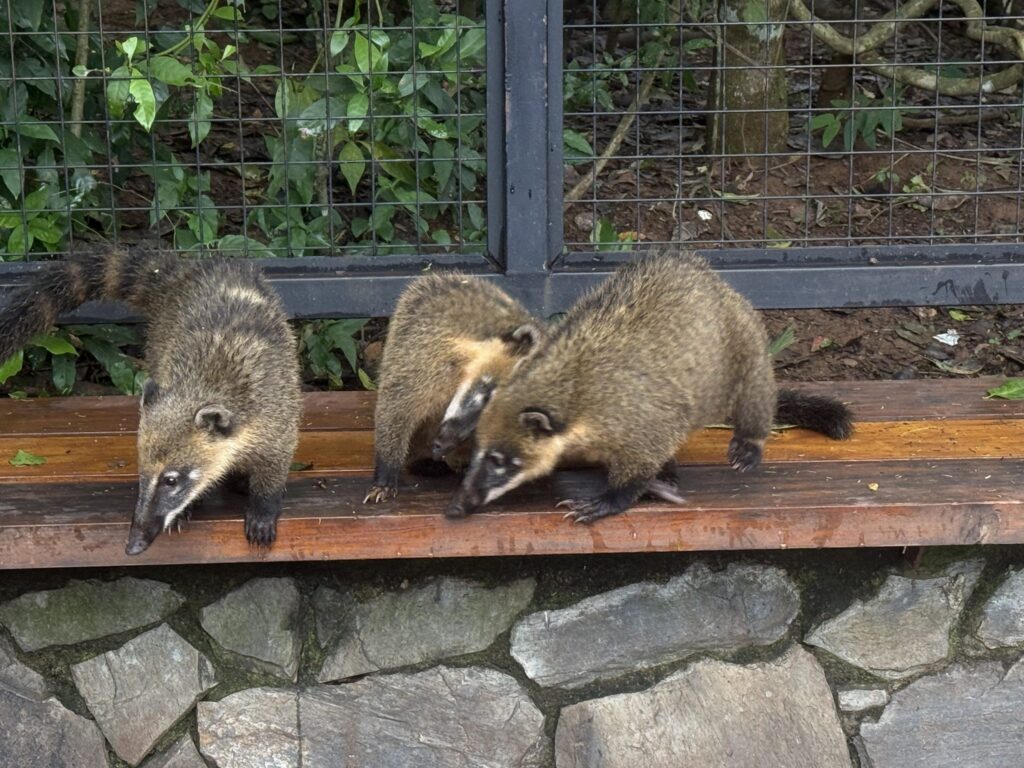
In the park we saw coatis (coatí): long-tailed, long-nosed animals that stroll along the trail like they own it. To be honest, they do. Park rules forbid feeding the animals, so keep your sandwich in your bag and eat where the coatis aren’t.
Garganta del Diablo in 2026: check before you go
We never made it to Garganta del Diablo. In early July the trail was already closed because of the rain, there was simply too much water. Since 3 August 2026 it has been officially closed on the Argentine side: El Niño rains pushed the flow of the Iguazu River to historic levels, and the park concessionaire removed the boardwalk decking and handrails as a precaution so the flood wouldn’t destroy them. The work was expected to take at least 40 days, and the boardwalks only go back once it’s safe. As of 5 November 2026 there was no reopening date. So if the Devil’s Throat is the reason for your trip, check before you buy your plane ticket.
The park itself is open. Circuito Superior, Circuito Inferior and Sendero Verde (weather permitting) are open, and the train runs to Estación Cataratas. Sendero Macuco was closed in early November. If you’re going in the coming months, check the trail status on the official site iguazuargentina.com the day before.
A boat under the falls
If you want to get under the falls and soaked to the bone, on the Argentine side that’s done by the park concessionaire Iguazú Jungle. Gran Aventura takes about two hours: an off-road truck through the jungle, then a boat right under the falls. In April 2026 it cost 90,000 pesos per person, park ticket not included. Departure times depend on the river level, so when the water is high, check whether the boats are running at all.
Across the border into Brazil, by rental car
In the evening we drove to our Airbnb on the Brazilian side. The border crossing was really nice and easy. Between Puerto Iguazú and Foz do Iguaçu runs the Tancredo Neves Bridge over the Iguazu River, 489 meters long and open since 1985. There’s border control at both ends.
What you need to know:
- Passport. EU citizens, Estonians and Finns included, don’t need a tourist visa for Brazil. Since March 2026, under the agreement between the EU and Brazil, the rule is 90 days in any 180-day period. Bring your passport.
- Stamps. Argentina hasn’t stamped passports since 2022, registration is digital.
- Lines. It was easy for us, but that’s no guarantee. In June 2026 the local association of tourism businesses complained that at peak times cars wait on the bridge for up to three hours. Leave yourself time, especially during Argentine school holidays and on weekends.
- Rental car. This is where people get it wrong most often. You may only cross the border in a rental car with the rental company’s permission. Budget Argentina’s terms, for example, only allow you to drive from Iguazú to Foz do Iguaçu and no more than 50 km into Brazil, the car has to be returned in Argentina, and a booking with a border crossing has to be made at least 7 business days in advance by phone or email. Say you’re driving to Brazil when you book, and get the permission in writing. Also ask whether the insurance and roadside assistance are valid in Brazil.
You can compare rental cars on DiscoverCars (Argentina). If you’re staying in Brazil and want to pick up the car there, there’s also DiscoverCars Brazil. With two countries and a rental car in the mix, travel insurance is worth thinking about too: Heymondo gives Museumist readers a 5% discount.
If you don’t want to drive yourself, group tours take you from Puerto Iguazú to the Brazilian side and back, and they handle the border too.
Foz do Iguaçu: Havaianas and a cheap supermarket
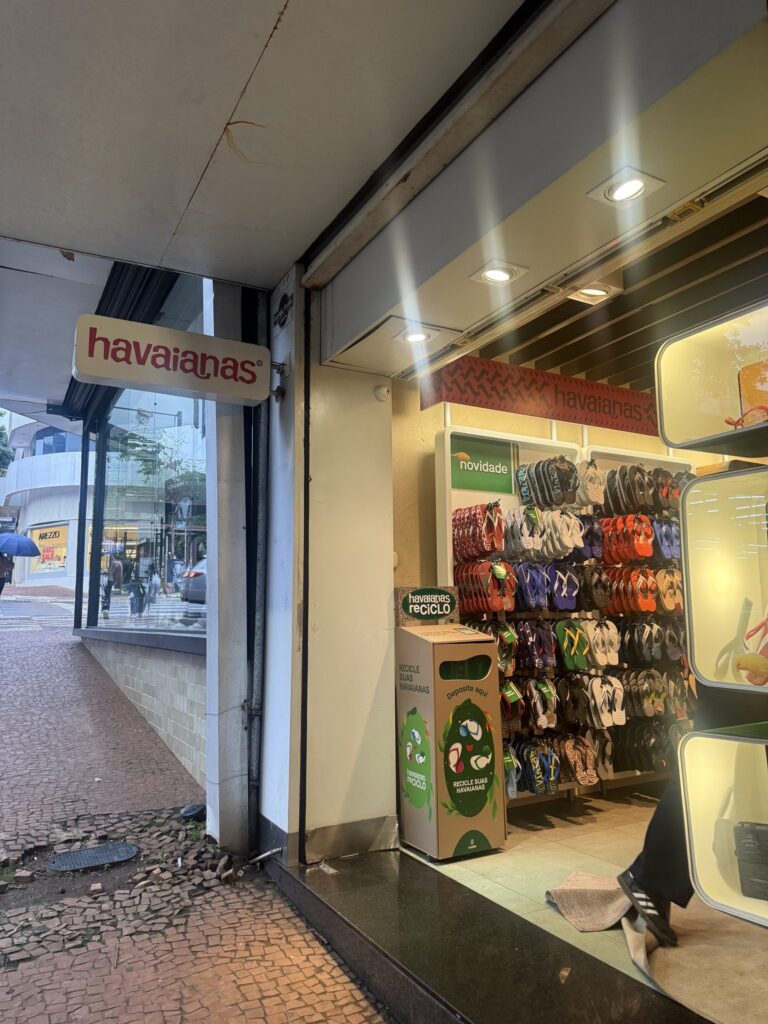
Foz do Iguaçu is a different country in the most literal sense: a different language (Portuguese) and different money (the Brazilian real). We walked around, went into the Havaianas store and bought Havaianas, because when you’re in Brazil, you’re in Brazil. Then dinner. And a supermarket that was very, very cheap.
For one night, Foz makes sense even if you only visit the Argentine side of the park. If Airbnb isn’t your thing, a mid-range option is Viale Cataratas. On the Argentine side, in Puerto Iguazú, there’s Loi Suites Iguazú, set in the rainforest on the edge of town, and if you want to be on the trail before the day-trippers, Gran Meliá Iguazú, the only hotel inside the Argentine park.
Güirá Oga: a zoo that isn’t a zoo
The next morning we drove back to the Argentine side, to the Güirá Oga refuge. In Guaraní the name means “house of birds”. It’s a rescue center for animals near Puerto Iguazú in the Atlantic Forest, not a zoo.
The animals here were rescued from trafficking, hit by cars, caught by poachers or handed over by locals themselves. The ones that can make it in the wild are released. The ones that can’t stay here, and the refuge tries to return their offspring to the wild. The refuge was founded on 23 August 1997 by naturalists Jorge Anfuso and Silvia Elsegood, who specialize in rehabilitating birds of prey. Today it’s linked to the Félix de Azara Natural History Foundation.
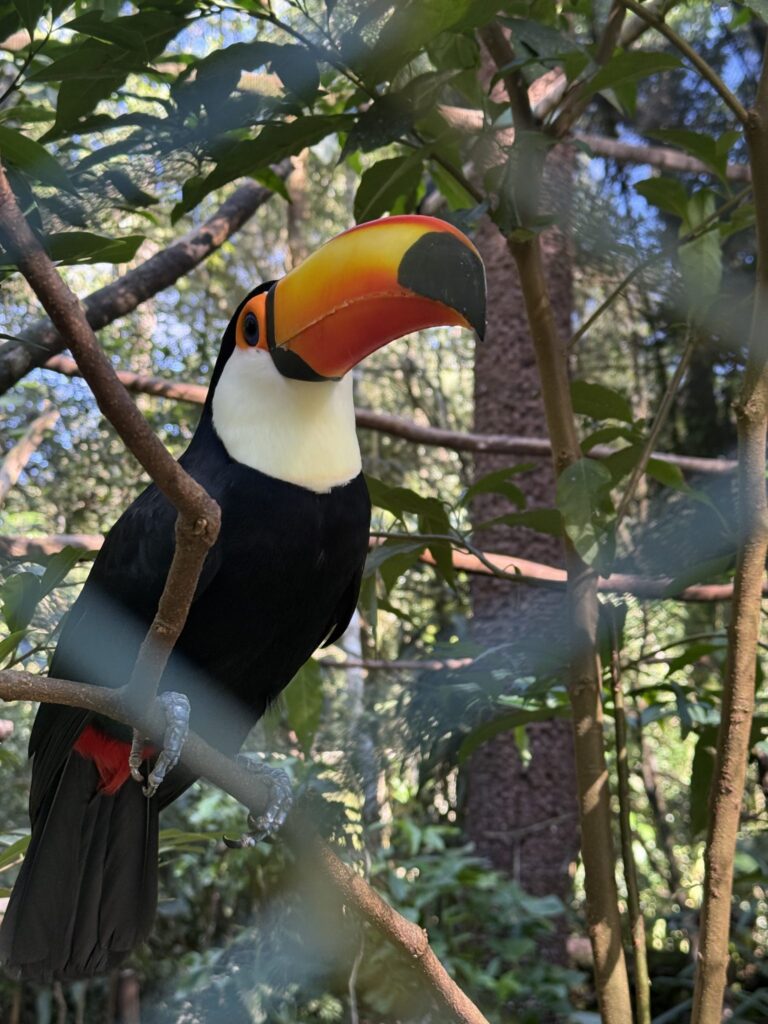
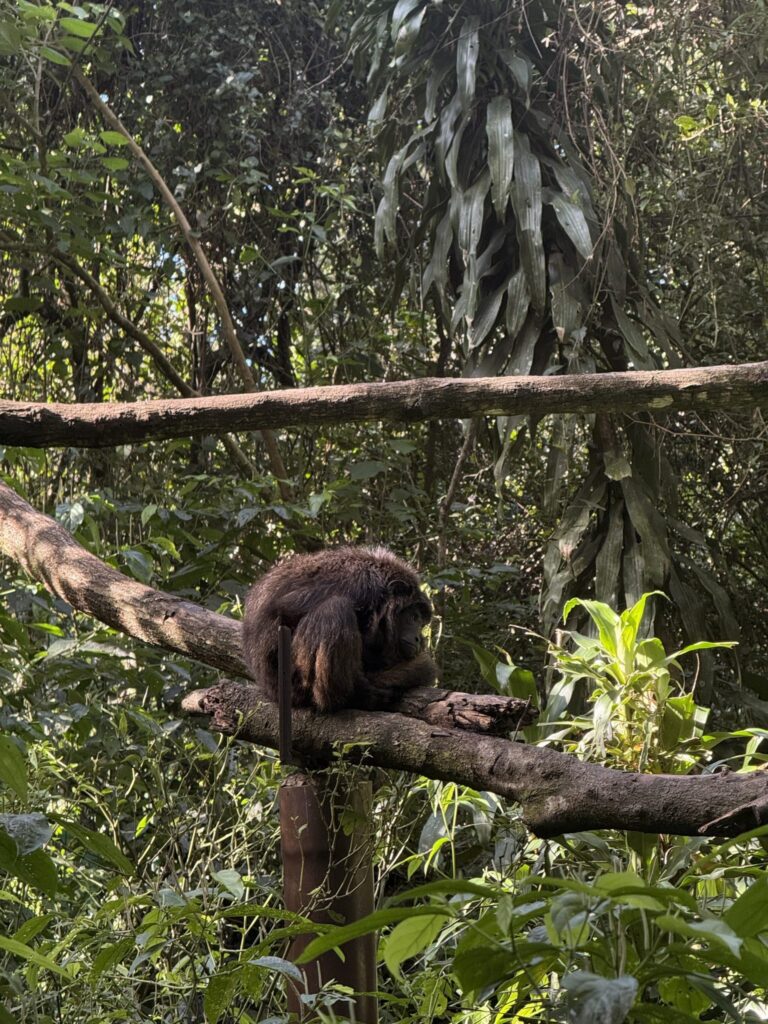
There was a howler monkey with a muscle disease that can’t jump. In the photo it sits curled up in a ball on a branch. The toucans were rescued from people. A toucan’s beak looks like someone glued a painted banana onto a bird.
Visits are guided. Going by earlier descriptions of the tour, a tractor-pulled cart takes visitors about a kilometer into the forest, and from there you continue on foot behind the guide, about an hour and a half in total. The guide speaks Spanish. The refuge is open every day from 9:30 am to 6 pm, and the first tour for individual visitors starts at 10 am. If you’ve already seen the capybaras in Nordelta, this is a completely different experience: no animal here is here without a reason.
Are zoos banned in Argentina?
We got the impression that zoos aren’t allowed in Argentina and only rescue centers are permitted. That’s not quite right. There’s no national law banning zoos. But in several big cities the old zoo has been closed and reinvented. In June 2016 Buenos Aires announced that its city zoo, more than 140 years old, would close and become the Ecoparque. Mendoza turned its zoo into an eco-park by law the same year. Córdoba started converting its zoo into a biodiversity park in 2020. The direction is clear, but there’s no ban.
The Triple Frontier
The last stop before the airport was Hito Tres Fronteras on the edge of Puerto Iguazú. This is where the Iguazu River flows into the Paraná, and three countries stare at each other across the water: Argentina, Brazil and Paraguay. Each bank has an obelisk in its country’s colors. The Argentine and Brazilian ones were inaugurated on 20 July 1903, the Paraguayan one 61 years later. Entry is free.
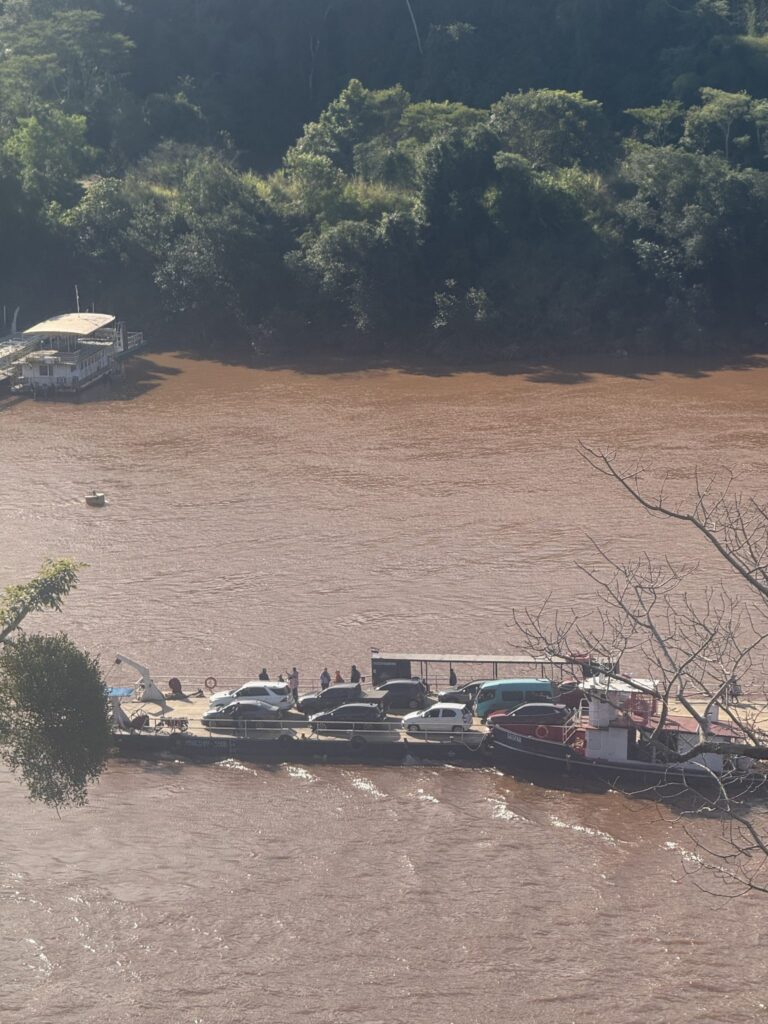
We had lunch there. It was very sunny and lovely, the river ran brown below us and a car ferry was carrying cars across.
We flew back to Buenos Aires the same day. We only had one night in Brazil and never made it to the Brazilian side of the park. If you want both sides, plan at least two full days.
For Buenos Aires, read our Buenos Aires travel guide, and my friend Dani knows where to eat there.
The Brazilian side of the park: briefly, because we didn’t go
The Brazilian Parque Nacional do Iguaçu gives you the panorama: the main trail, Trilha das Cataratas, is about 1.5 km long and runs along the edge of the canyon, with a view of a large part of the falls at once. A park bus takes you from the visitor center to the start of the trail. The park is open every day, weekdays 9 am to 4 pm, Saturday and Sunday 8:30 am to 4 pm. In September 2026 a ticket for foreigners cost 134 Brazilian reais, and tickets are sold online for a chosen date and time slot. The boardwalk above Garganta do Diabo reopened on 31 October 2026 after 20 days of closure, but some areas were still closed in early November.
When to go
Winter at Iguazu (June to August) is mild, but not dry. In Puerto Iguazú the average July high is about 22.5 °C and the low 11 °C, with an average of 145 mm of rain in June and 107 mm in July. August is the driest month of the year.
The lesson of 2026 is that the water level depends more on rain upstream in Brazil than on the calendar. In July, September and October the flow was so strong that trails were closed. So the best season is whenever the Garganta boardwalk is open. Check that before you buy your plane ticket.
For internet in two countries, an eSIM that covers both Argentina and Brazil does the job, for example the Saily Latin America plan. The network changes at the border, and you don’t want to find that out only when your navigation disappears.
Practical information
- Argentine park: Parque Nacional Iguazú, Ruta Nacional 101, Puerto Iguazú, Misiones. About 18 km from town.
- Opening hours (winter 2026): 8 am to 6 pm, ticket sales until 4 pm, trail entry until 4:45 pm.
- Ticket (from 1 June 2026): general rate 60,000 Argentine pesos (about 40 USD at the July 2026 exchange rate). A ticket for a consecutive second day is 50% cheaper. Children under 6 free.
- Payment: cash (pesos) or Visa and Mastercard credit or debit cards. You can also buy the ticket online.
- Parking: 12,500 pesos (from 1 June 2026).
- Garganta del Diablo: closed since 3 August 2026, no reopening date as of 5 November 2026.
- Time needed: a full day for the Argentine side, half a day for the Brazilian side.
- Güirá Oga: Ruta Nacional 12, km 1638, Puerto Iguazú. Every day 9:30 am to 6 pm, first tour at 10 am. About 1.5 hours.
- Hito Tres Fronteras: Puerto Iguazú, free.
- Brazilian park: every day, Mon to Fri 9 am to 4 pm, Sat and Sun 8:30 am to 4 pm. Ticket for foreigners 134 BRL (September 2026), online only.
- Getting there: flight from Buenos Aires about 1 h 50 min. From the airport by rental car, taxi or bus.
- Rental car into Brazil: only with the rental company’s written permission, ask when you book.
Frequently asked questions
Yes. The flight is under two hours and the Argentine side of the park fits into one day. We had a day and a half in total, including a night in Brazil, and that covered the Argentine park, Güirá Oga and the Triple Frontier.
On the Argentine side, the Garganta del Diablo trail has been closed since 3 August 2026, after the boardwalks were removed as a precaution because of high water. As of 5 November 2026 there was no reopening date. The upper and lower circuits were open.
Only with the rental company’s permission. Budget Argentina, for example, lets you drive from Iguazú to Foz do Iguaçu, up to 50 km into Brazil, and requires the booking at least 7 business days in advance. Get the permission in writing.
No. EU citizens can stay in Brazil visa-free for up to 90 days in any 180-day period. Bring your passport.
Argentine side 60,000 pesos (general rate from 1 June 2026), with a consecutive second day 50% cheaper. Brazilian side 134 reais for foreigners (September 2026).
No. It’s a refuge for rescued animals, where they are treated and, when possible, released back into the wild. The ones that can’t go back stay there for good.
This article contains partner links. If you book through them, I earn a small commission and your price does not change.

Disclosure: this article may contain affiliate links. If you book or buy through them, we may earn a small commission at no extra cost to you. We only recommend what we believe in.