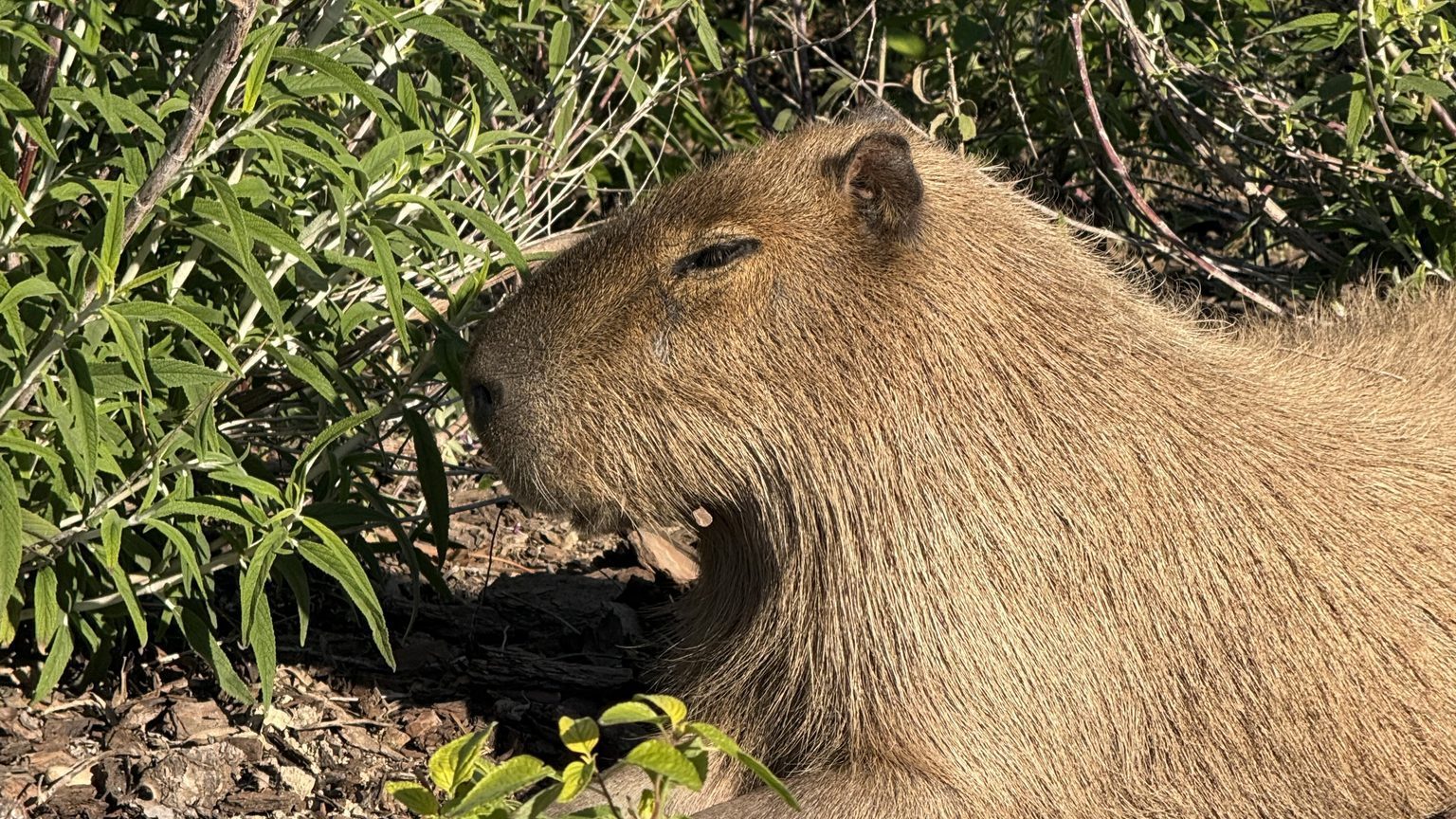
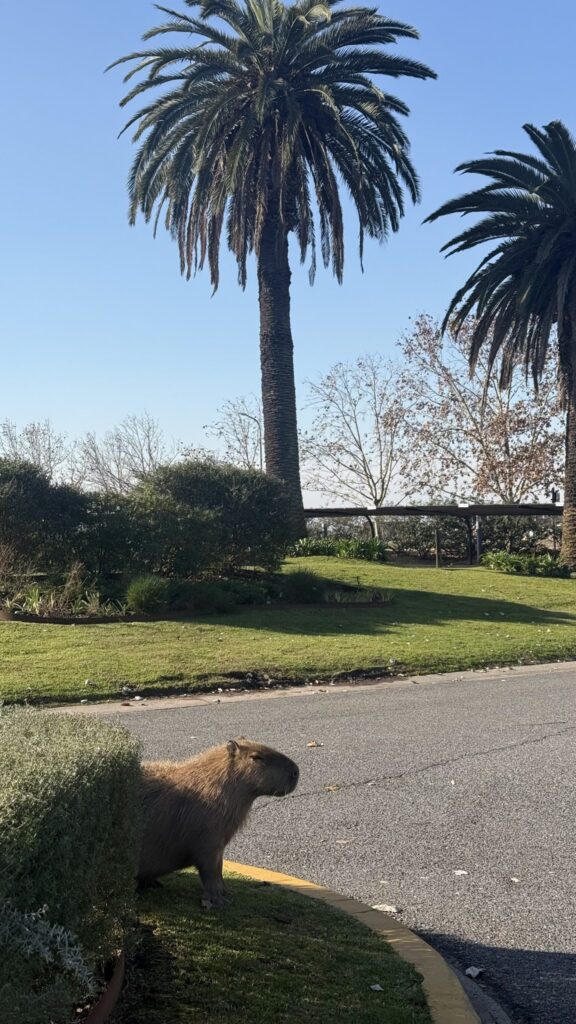
Nordelta is one of the richest neighborhoods in Buenos Aires: lakes, canals, golf-course lawns, guarded gates. And capybaras. The Nordelta capybaras are the world’s largest rodents, and they sleep on the lawns, stroll across the road and pay no HOA fees.
Trip ABC: Buenos Aires
🏨 Where to stay
- Alvear Palace Hotel: Grand French-style palace on Avenida Alvear, Recoleta’s most elegant street.
- Magnolia Hotel Boutique: Three blocks from Plaza Armenia, surrounded by Palermo Soho’s best restaurants.
- Home Hotel: Palermo Hollywood design hotel with a garden pool and a much-loved weekend brunch.
✈️ Getting there: Flights to Buenos Aires on Kiwi.com, rental car with DiscoverCars
🎟 What to do: Tours and tickets (GetYourGuide)
🛡 Travel insurance: Heymondo, 5% off for Museumist readers
These are partner links: if you book through them, we earn a small commission at no extra cost to you.
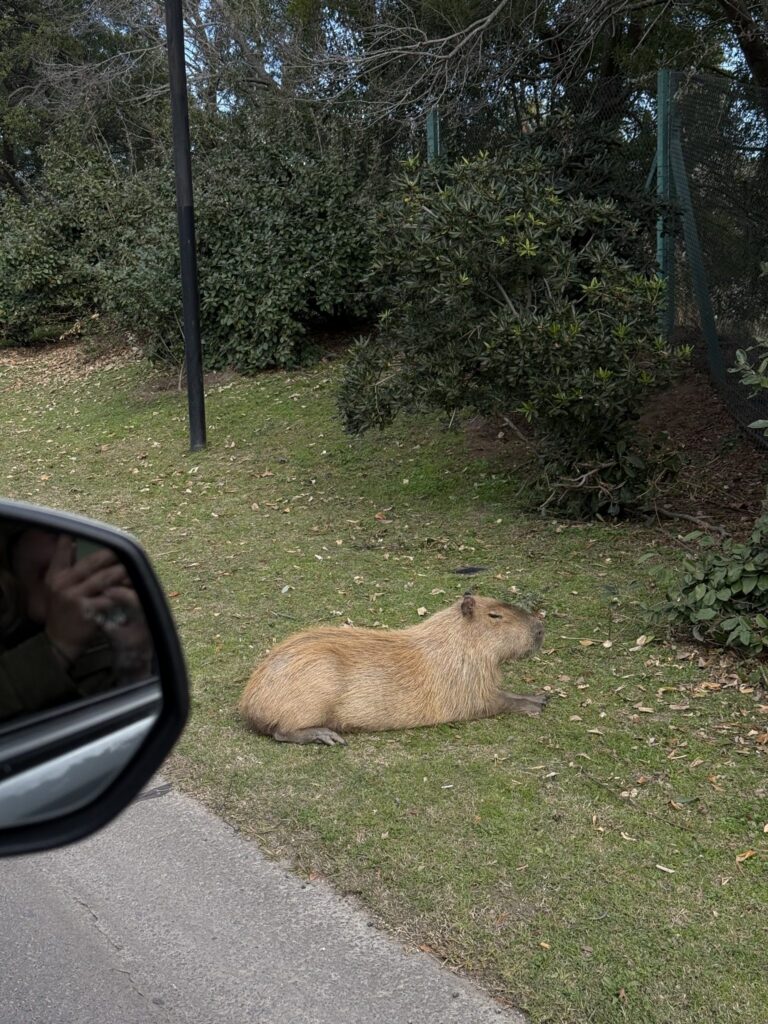
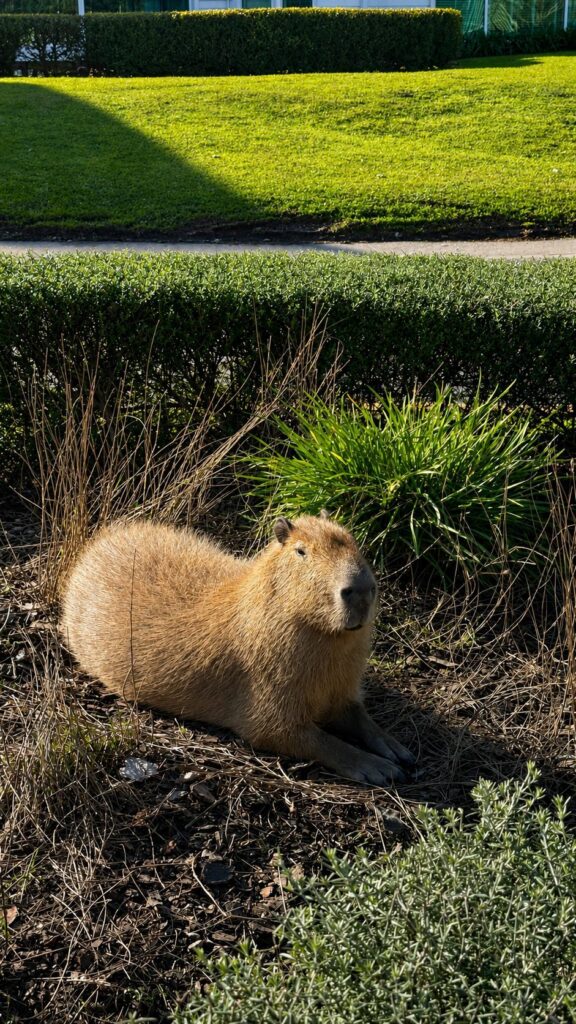
We drove there on Sunday, 28 June 2026, in a rental car, just for them. You drive in and they’re simply there: sleeping under bushes, lying by the water, wandering around. Very cute. We ended up staying the whole afternoon: lunch at García Nordelta by the lagoon, a walk, the views. On the way out we saw capybara babies too. Toward evening we reached the river in Tigre, where the boats leave for Uruguay.
That morning we’d been at the San Telmo Sunday market (more on that in my shopping story), so it all fit into one day. The Buenos Aires winter sun did its job.
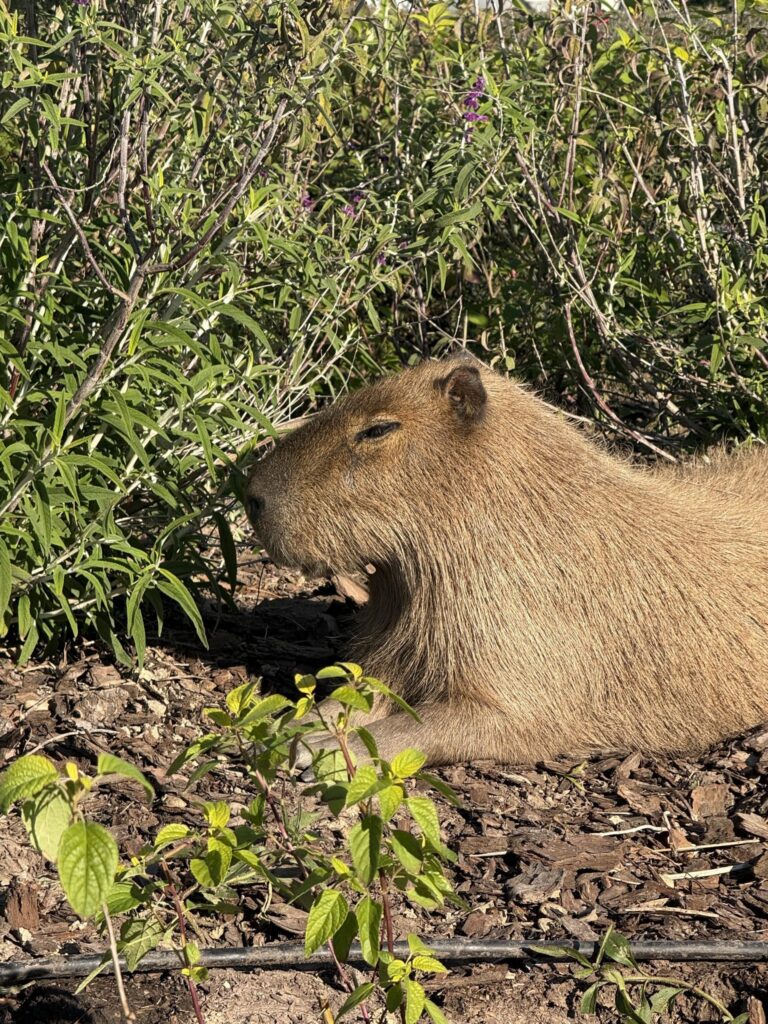
Why the Nordelta capybaras live in a neighborhood for the rich
Short answer: the capybaras were there first.
Construction of Nordelta began in 1999 on former wetland at the edge of the Paraná Delta, about 30 kilometers from downtown Buenos Aires. According to Mongabay, the area covers about 1,500 hectares, about 300 of which are lakes. The capybara is a native of this region, and to a capybara Nordelta is a five-star hotel: water to swim in, grass to eat, bushes to hide in and not a single predator. There are no caimans, jaguars or boas here, and hunting is banned. Ecologist Enrique Viale summed it up: Nordelta invaded the capybaras’ ecosystem, not the other way around.
A capybara weighs 35 to 70 kilos, eats only plants, swims well and lives in family groups. Females can give birth twice a year, 4 to 6 babies at a time. The growing numbers started to get noticed in Nordelta around 2014. In August 2021 the story of the “capybara invasion” went viral: residents complained about eaten lawns, traffic accidents and bitten dogs, and the internet turned it into an avalanche of memes.
The story isn’t over. According to the residents’ association, 43 capybaras were hit by cars in the first half of 2025, and a plan was put forward to relocate some of the animals to an island in the delta and give others a contraceptive vaccine. Relocation began in January 2026, but on 16 January the administrative court in San Martín banned any new relocations until a cumulative environmental impact assessment has been done. So the capybaras are still there. In June 2026 we saw it with our own eyes.
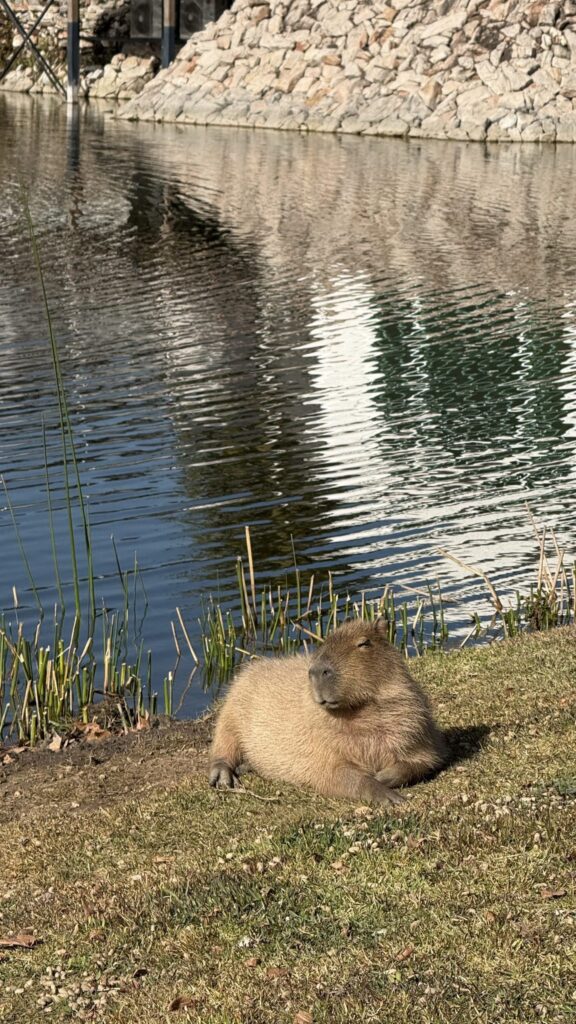
How to see the capybaras and what not to do
We went by car, and that’s the easiest way. The capybaras were lying on the grass right by the road, so I took some of the photos from the car window. Nordelta is divided into neighborhoods (barrio), each with its own gate and security, so as a visitor you can’t get in everywhere. We drove toward the center and the lagoon, where the restaurants and walking paths are, and there were plenty of capybaras there.
The capybara is a wild animal protected under Argentina’s wildlife law (Law 22.421). That means a few simple rules:
- Don’t feed or touch them. Capybaras look calm, but when cornered or protecting their babies they can bite. They can also carry leptospirosis.
- Keep away from the babies. The babies are cute. Their mother may not agree with you.
- Drive slowly. Capybaras cross the road wherever they please. In the first half of 2025 alone, 43 were hit by cars.
- Leave the dog at home. The 2021 scandal started with a run-in between a dog and a capybara.
On the way out we saw capybara babies by the road. That’s exactly when you want to get closer the most. Don’t.
Lunch by the lagoon
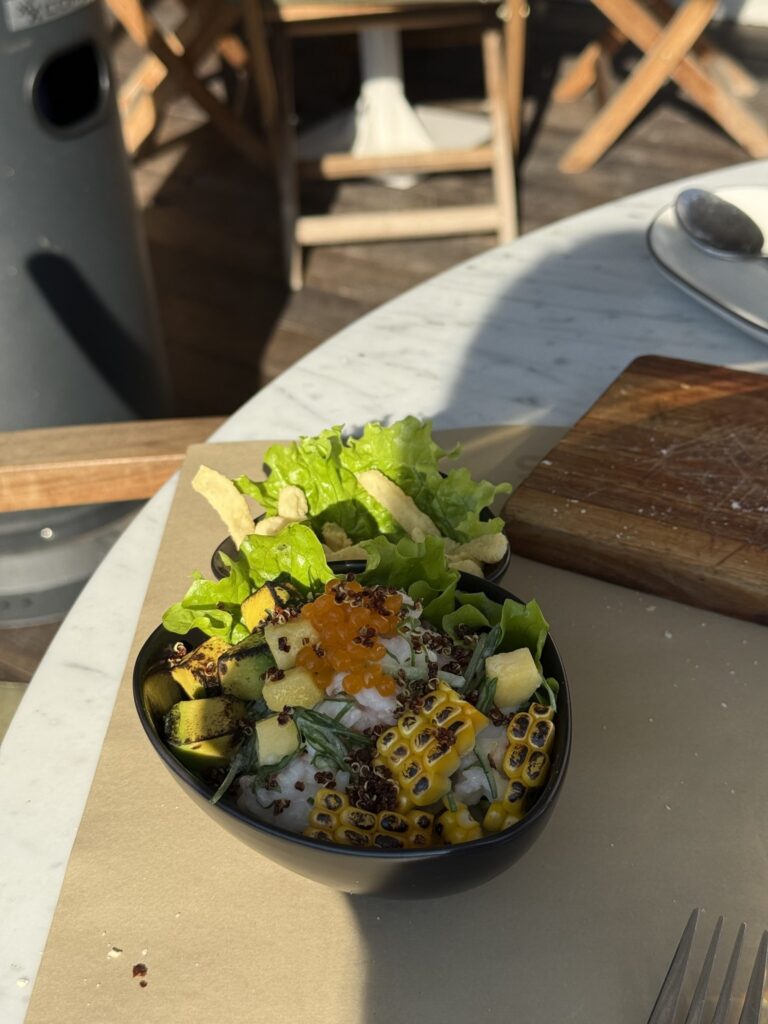
We had lunch at García Nordelta, a sushi place in the middle of Nordelta right on the lagoon. Very tasty, and the views were crazy: water, winter sun, a terrace. There are other restaurants along the lagoon too, so you won’t go hungry.
After lunch we just stayed. We walked, looked at the water and the capybaras, and before we knew it the afternoon was gone. If you’re coming here just for a quick photo, be warned that this can happen.
Tigre: the river town where boats leave for Uruguay
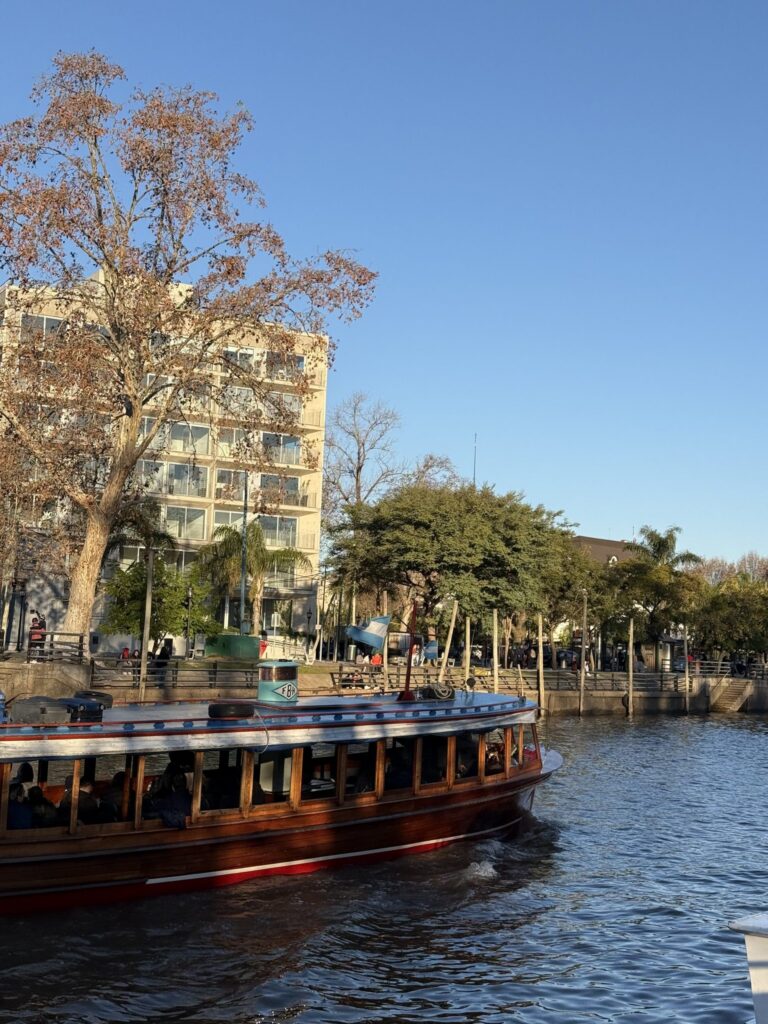
Tigre is 28 kilometers north of Buenos Aires, where the Paraná Delta begins. The town was founded in 1820 and named after the jaguars, which the locals called tigers and which were once hunted here. The port carried fruit and timber from the delta and from upriver. The old fruit port, Puerto de Frutos, is now a riverside market for crafts and homeware. Mahogany passenger boats, the lanchas colectivas, run between the islands, and for the people who live in the delta they are what the bus is for the rest of us.
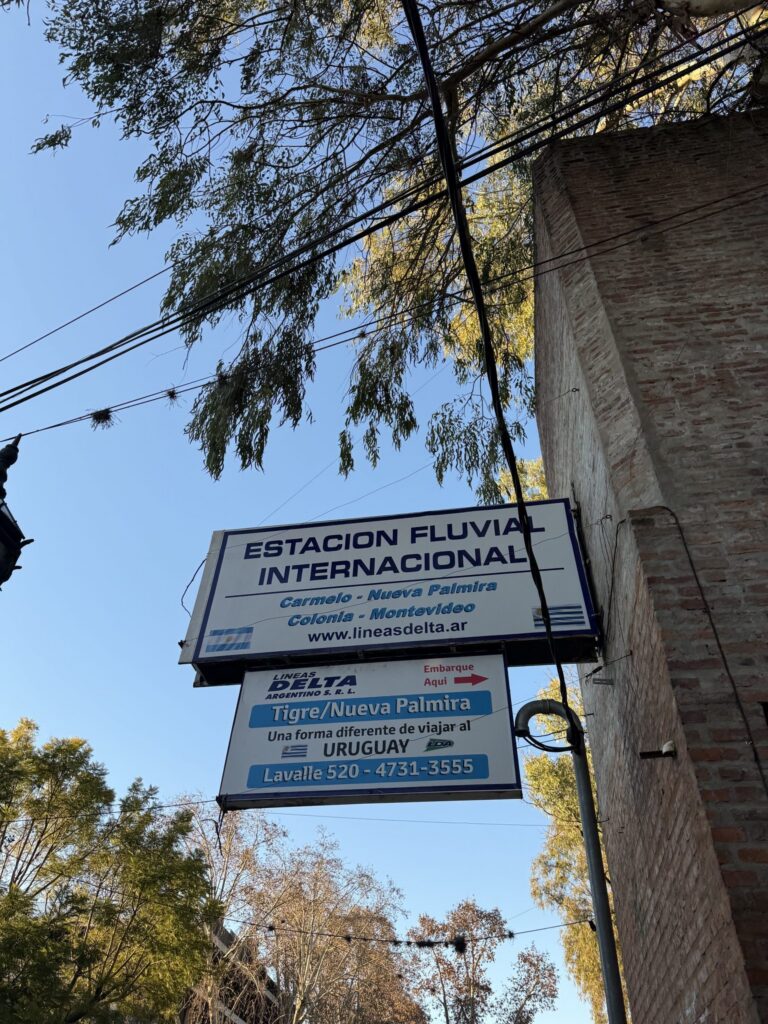
What stuck with me most about Tigre is that boats leave from here for Uruguay. From the international river terminal, Estación Fluvial Internacional, boats cross the river to Uruguay: the sign lists Carmelo, Nueva Palmira, Colonia and Montevideo. Picture yourself sitting over a coffee in a small riverside town, with another country on the other side of the water.
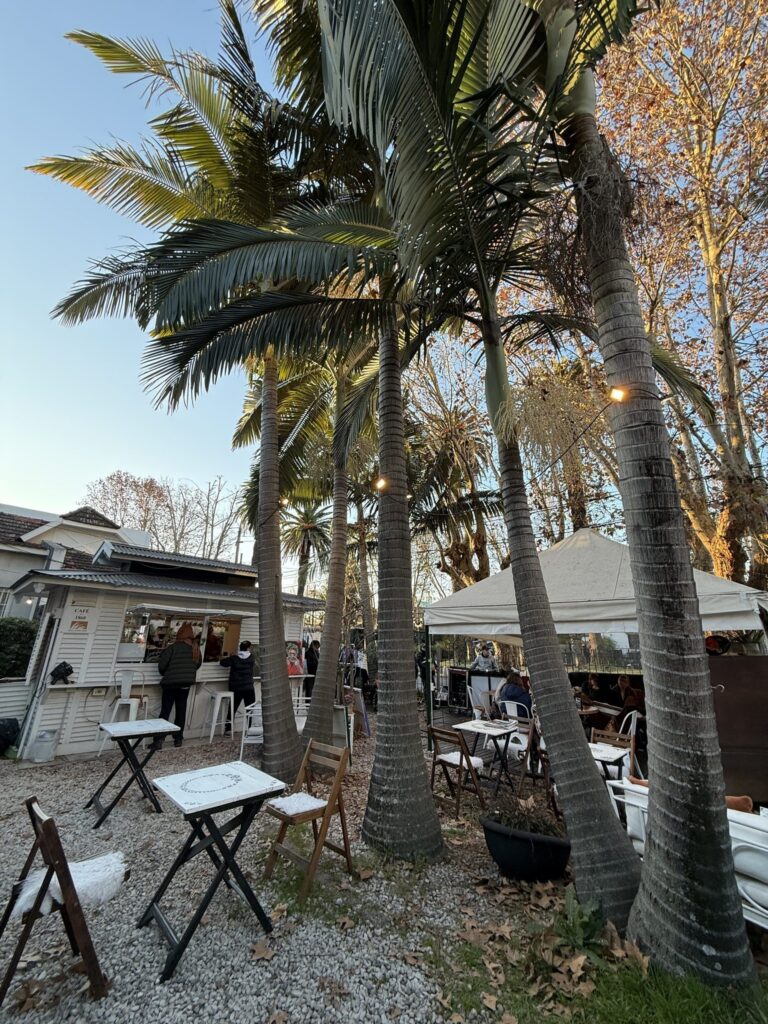
We walked along the river and sat down in a small café. A really nice end to the day.
By boat into the delta
The delta is the reason most tourists come to Tigre. Public boats leave from the Estación Fluvial Domingo Faustino Sarmiento terminal (Mitre 305). Three companies run the boat lines, you pay with a SUBE card, and tickets are valid for 30 days. Fog or low water can cancel a trip, rain doesn’t. Weekends get crowded.
If you drive to Tigre yourself like we did, the easiest option is a one-hour boat ride into the delta straight from Tigre. If you don’t have a car, a small-group tour from Buenos Aires with transport included is a good fit.
More options: Tigre Delta tours on GetYourGuide.
How to get there from Buenos Aires
By car. We rented a car right at the airport, and on a day like this it paid for itself. According to the Tigre tourist board, the fastest route is the Panamericana (Acceso Norte) and then the Ramal Tigre, about 30 minutes without traffic. Nordelta is in the same Tigre district, close to central Tigre. For the capybaras a car makes the most sense, because they are spread out all over the development. Compare rental car prices on DiscoverCars.
By train. The Mitre line train runs from Retiro to Tigre in about 50 minutes. In 2026 the Tigre branch (ramal Tigre) has been closed several times for repairs (January to March and in July), so check the Trenes Argentinos website before you go. The other option is to take the Mitre train to Mitre station, cross the bridge to Maipú station and ride the Tren de la Costa to Delta station.
By bus. Line 60 runs from Constitución station, 1.5 to 2 hours. The faster one has the green “PANAMERICANA” sign.
By boat. Sturla boats also run from Puerto Madero.
If you drive yourself, you’ll need internet for navigation. Argentina is outside the EU, so roaming on a European SIM is expensive. Saily eSIM is an easy fix.
If you’re looking for another day trip out of Buenos Aires, Estancia Santa Susana was our second, completely different day in the countryside. The route of the whole trip is in the Buenos Aires winter travel guide.
Practical info
- Where: Nordelta and Tigre are in the Tigre district (partido de Tigre), about 30 kilometers north of Buenos Aires.
- Getting there: by car about 30 minutes (Panamericana and Ramal Tigre), by train from Retiro about 50 minutes, by bus 60 from Constitución 1.5 to 2 hours.
- Capybaras: wild animals, don’t feed or touch them, drive slowly. The neighborhoods (barrios) are gated, and as a visitor you can’t get in everywhere.
- Puerto de Frutos: open daily, weekdays 10 am to 6 pm, Saturdays, Sundays and public holidays 10 am to 8 pm. Closed on 25 December and 1 January. On weekdays only about a fifth of the vendors are open (Tigre tourist board, November 2026).
- Delta boats: Estación Fluvial Domingo Faustino Sarmiento, Mitre 305, Tigre. Pay with a SUBE card, tickets valid for 30 days.
- Boats to Uruguay: Estación Fluvial Internacional, Lavalle 520, Tigre (Líneas Delta: Nueva Palmira and Colonia). Bring your passport.
- How long: 2 to 4 hours for Nordelta including lunch, 2 hours for a walk in Tigre or half a day with a boat ride. It took us the whole afternoon and early evening.
Frequently asked questions
The surest place is Nordelta, in the Tigre district about 30 km north of Buenos Aires. The capybaras lie on the lawns, on the canal banks and by the road. When we were there in June 2026, the neighborhood was full of them.
Nordelta has been built since 1999 on wetland in the Paraná Delta, which is the capybaras’ natural habitat. The lakes and lawns give them food and shelter, there are no predators and hunting is banned, so their numbers grew.
The center of Nordelta and the area around the lagoon have restaurants and shops, and we drove there by car. The individual neighborhoods have their own gates and security, and you can’t get in as a visitor.
No. The capybara is a protected wild animal, it can bite when cornered and it can carry diseases. Watch from a distance and keep well away from the babies in particular.
About 30 minutes by car, about 50 minutes on the Mitre line train from Retiro, or the Tren de la Costa from Maipú station to Delta station. Bus 60 runs from Constitución in 1.5 to 2 hours.
Yes. Boats to Uruguay leave from the Estación Fluvial Internacional in Tigre, for example to Nueva Palmira, Carmelo and Colonia.
This article contains partner links. If you book through them, I earn a small commission and your price does not change.
Disclosure: this article may contain affiliate links. If you book or buy through them, we may earn a small commission at no extra cost to you. We only recommend what we believe in.