Buenos Aires is not famous for shopping. Nobody flies here for Zara. But leather shopping in Buenos Aires is a different story. Argentina is meat country, and where there are a lot of cows, there is a lot of good leather. If you take anything home from here, make it shoes, boots and bags.
Trip ABC: Buenos Aires
🏨 Where to stay
- Alvear Palace Hotel: Grand French-style palace on Avenida Alvear, Recoleta’s most elegant street.
- Magnolia Hotel Boutique: Three blocks from Plaza Armenia, surrounded by Palermo Soho’s best restaurants.
- Home Hotel: Palermo Hollywood design hotel with a garden pool and a much-loved weekend brunch.
✈️ Getting there: Flights to Buenos Aires on Kiwi.com, rental car with DiscoverCars
🎟 What to do: Tours and tickets (GetYourGuide)
🛡 Travel insurance: Heymondo, 5% off for Museumist readers
These are partner links: if you book through them, we earn a small commission at no extra cost to you.
After ten days we flew home with boots, shoes, two leather bags, a Messi ball, Messi shirts, handmade jewelry and a pair of Havaianas bought in Brazil.
Here are the places we went, plus the practical part: how to get VAT back as a tourist in Argentina in 2026 and how much you can bring into the EU tax free.
Calzados Correa: shoemakers since 1955
Correa is a classic Buenos Aires shoemaker, the kind magazines put on their “best of shopping in Buenos Aires” lists. According to the shop’s website, the family business has been making shoes in Buenos Aires since 1955. The shop is small and the workshop is right behind it: according to a story in the Buenos Aires business paper BAE Negocios, the founder’s son Félix Correa grew up in the back room of the shop and learned the trade there.
We went into the shop and bought boots and shoes.
What stayed with us most was what happened after we paid. The owner showed us around the shop and took us into the workshop where the shoes are made. We spent a long time in there. If you are used to mall shoe stores where the salesperson is staring at a phone, this is a completely different experience: you see where your shoes are actually made, and who makes them.
The selection is mostly men’s shoes and boots, with a small collection for women. The pace is slow, and that is on purpose: the shop’s website cites a National Geographic story saying they finish only eight pairs a day. Three generations of Correas work in the same small shop. Correa also makes shoes to measure, where you choose the leather, the lining and the shape of the toe and the heel yourself. According to a 2018 story, a made-to-measure pair takes at least four weeks, so on a short trip the ready-made shoes are the realistic choice. If you want a made-to-measure pair, write to them before your trip.
Correa in brief: Mario Bravo 750, Almagro (next to Palermo). Open Monday to Friday 9:00 to 13:00 and 15:00 to 19:00, Saturday 9:00 to 13:00 (shop website, November 2026). Closed on Sundays. Website calzadoscorrea.com.ar.
Leather shopping in Buenos Aires: bags from the San Telmo Sunday fair
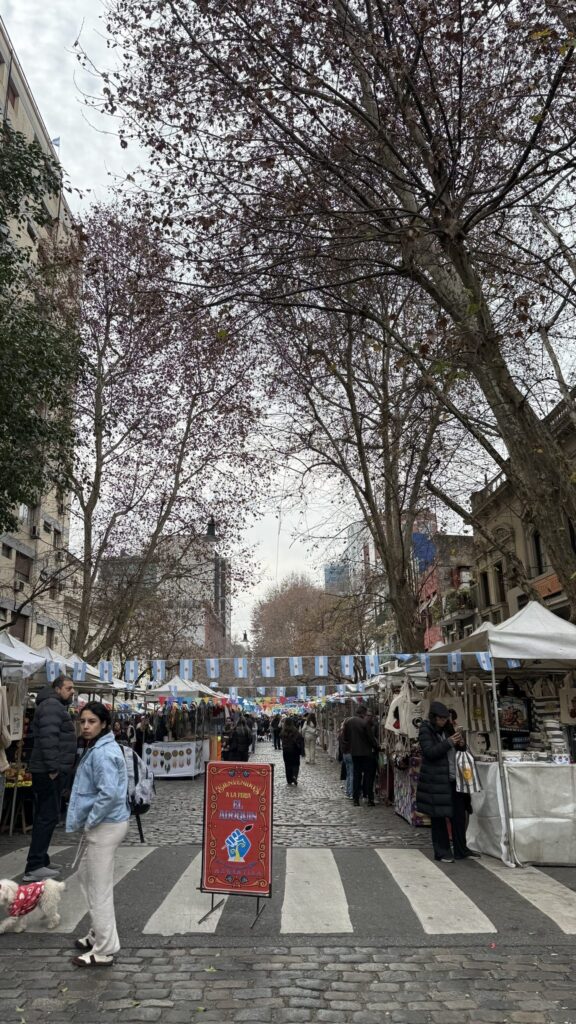
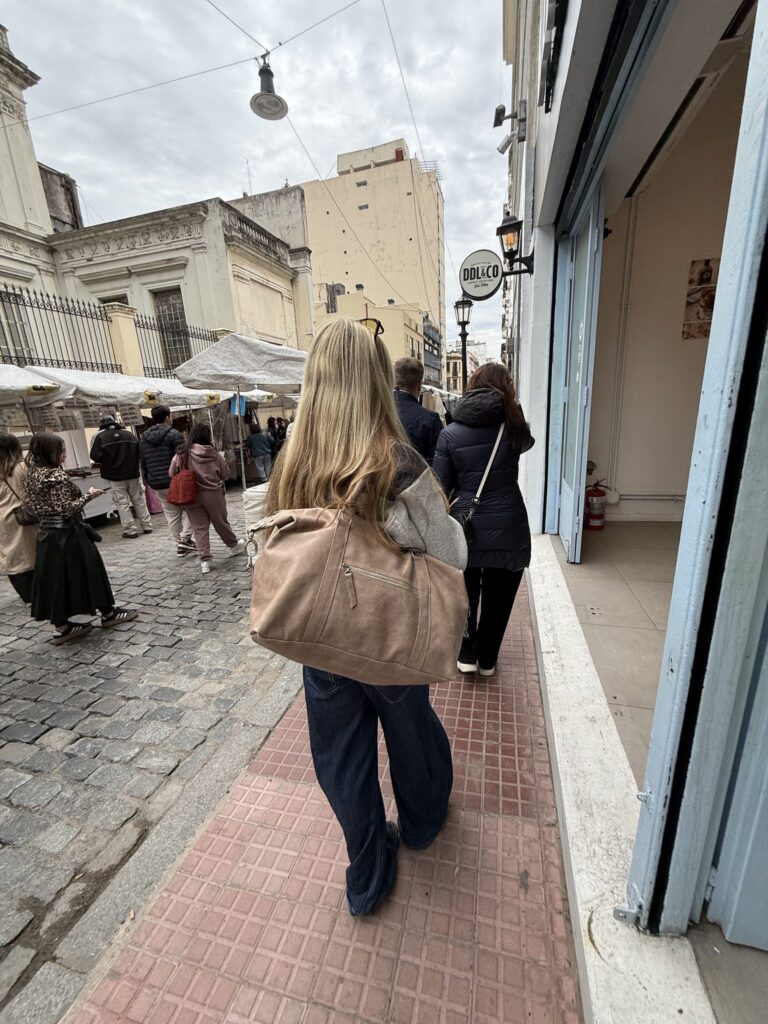
Feria de San Telmo is the most famous market in Buenos Aires. It runs every Sunday from 10:00 to 17:00 on Plaza Dorrego and Defensa street, and it has been there since 1970, when the architect José María Peña founded it as an antiques market. Today about 10,000 people come every week, most of them tourists. At first it was antiques only. Now Defensa street is lined with stalls for block after block: antiques, vinyl, silver, crafts, souvenirs and leather.
We went on our first Sunday at 11 am. Lots of people, lots of sellers. We bought two leather bags from one seller. Very good quality, and really cool. I won’t give a price here, because the peso changes faster than this article does, but when you buy from a market stall you are not paying for a shop’s rent.
A few things to know before you go:
- The smaller stalls often want cash. Bring pesos.
- Wear your bag in front. A crowded market is a pickpocket’s favorite place.
- The market goes on and on. If you like something, buy it right away, because finding your way back to the same stall is hopeless.
You can also do the market with a guide who tells you the history of the neighborhood:
Mercado de San Telmo and the vintage shops
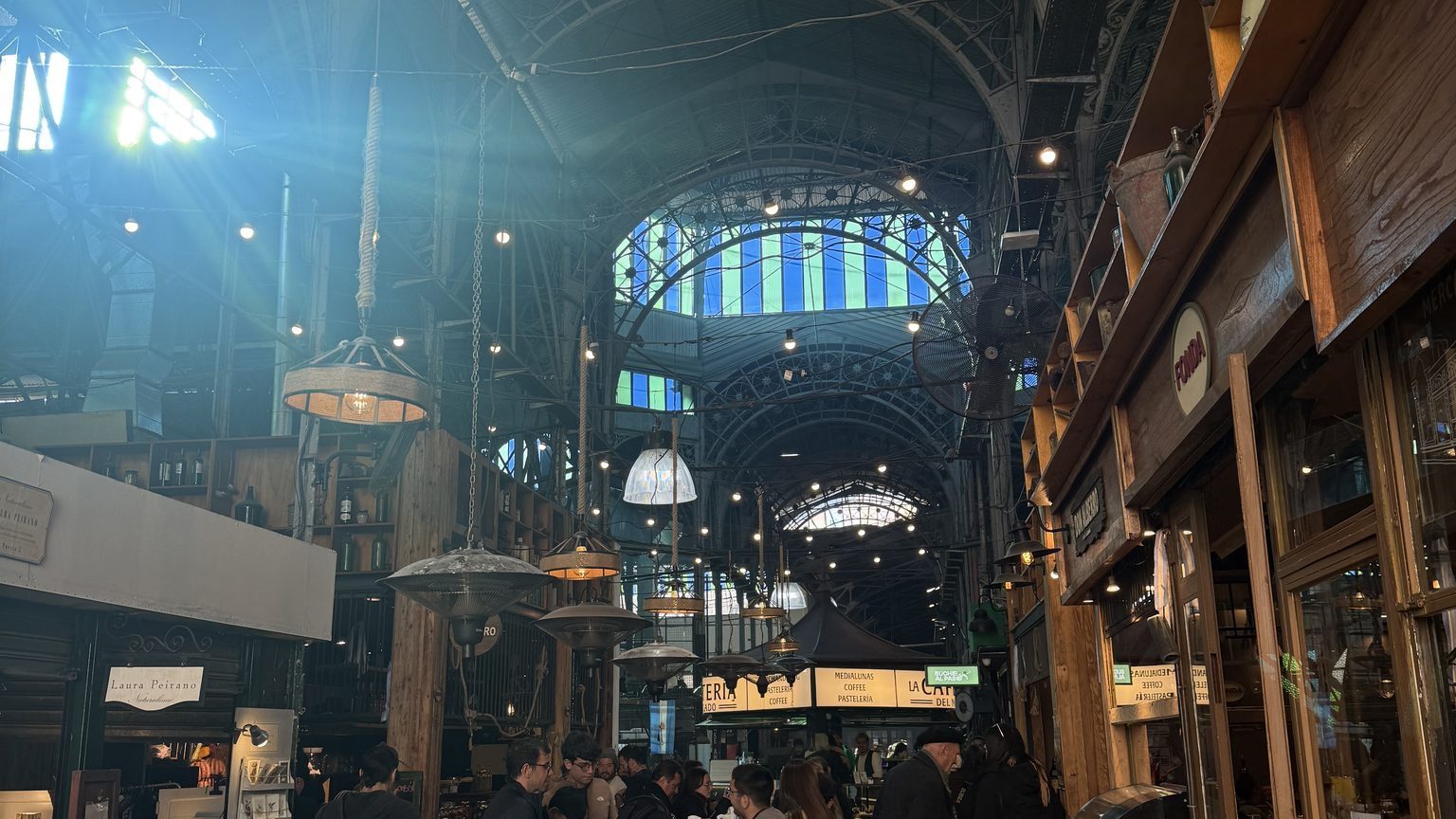
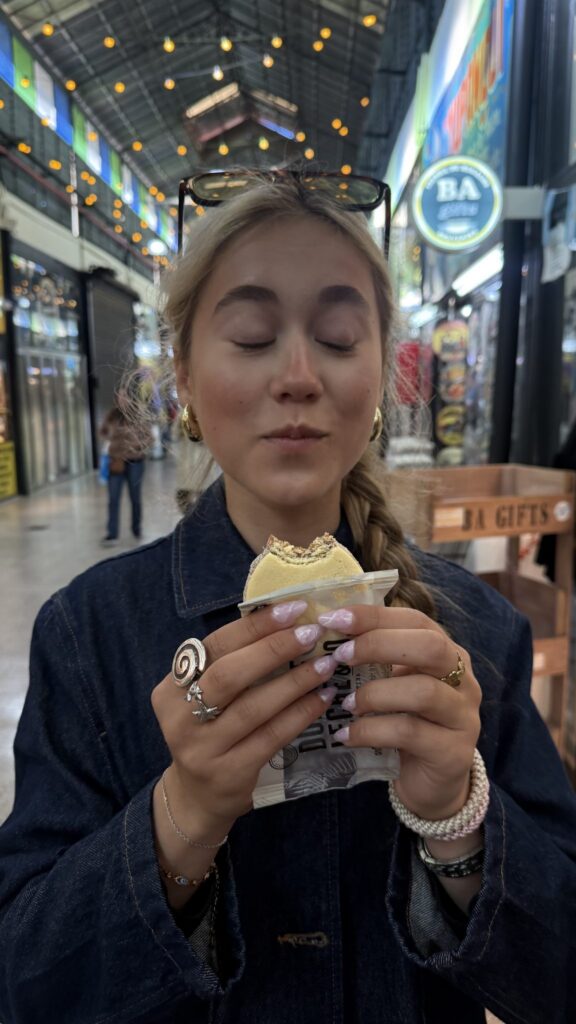
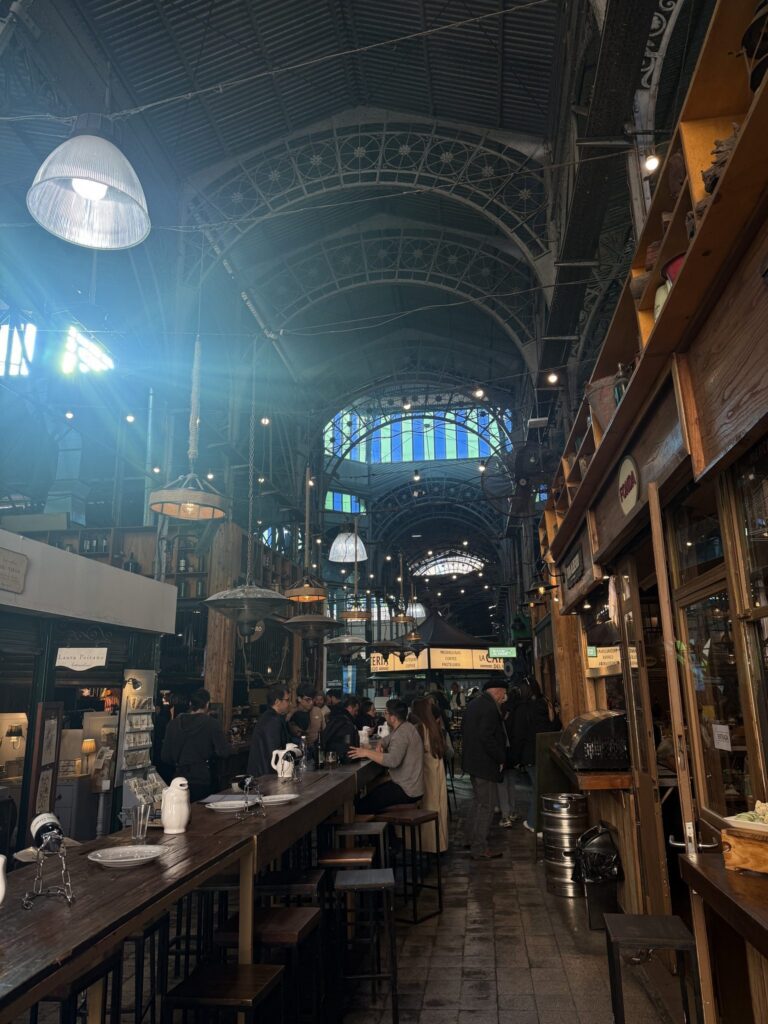
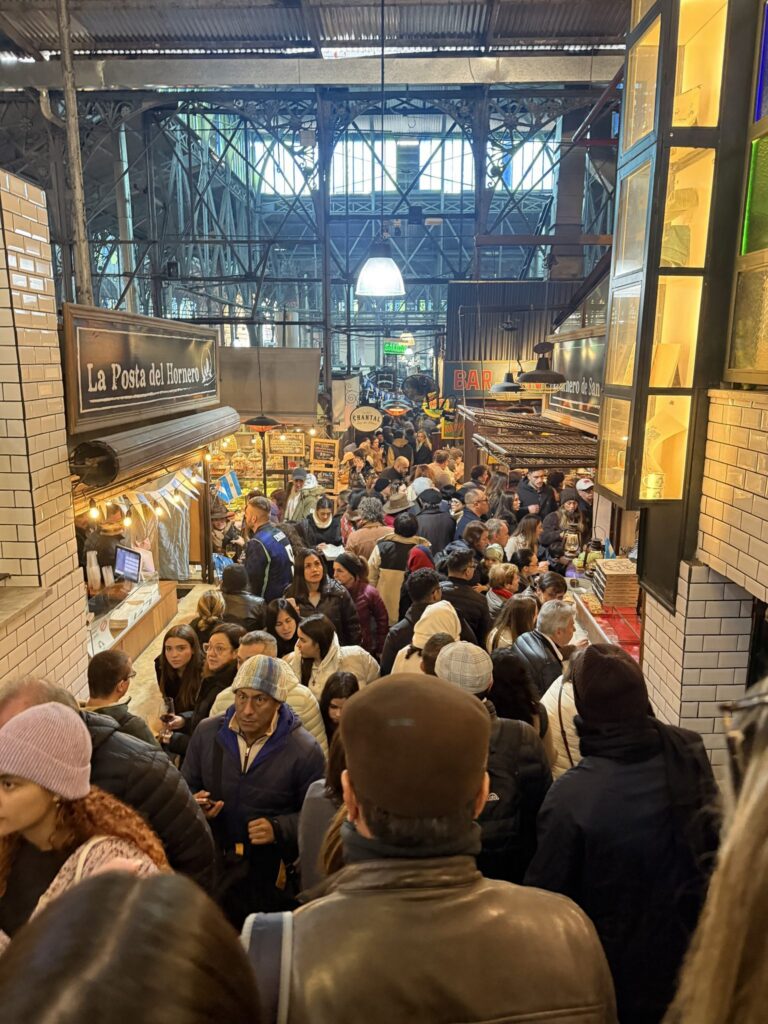
If Sunday doesn’t work for you, go to San Telmo on another day. Mercado de San Telmo (Bolívar 970) is a covered market that opened in 1897, where fruit, antiques, old glass and places to eat are all mixed together under a cast-iron roof. The streets around it are full of vintage shops. Our first day in Buenos Aires started here, and it was a really good start.
On Sundays the market hall is packed too. On a weekday you have room to look around.
La Boca: handmade jewelry from the street market
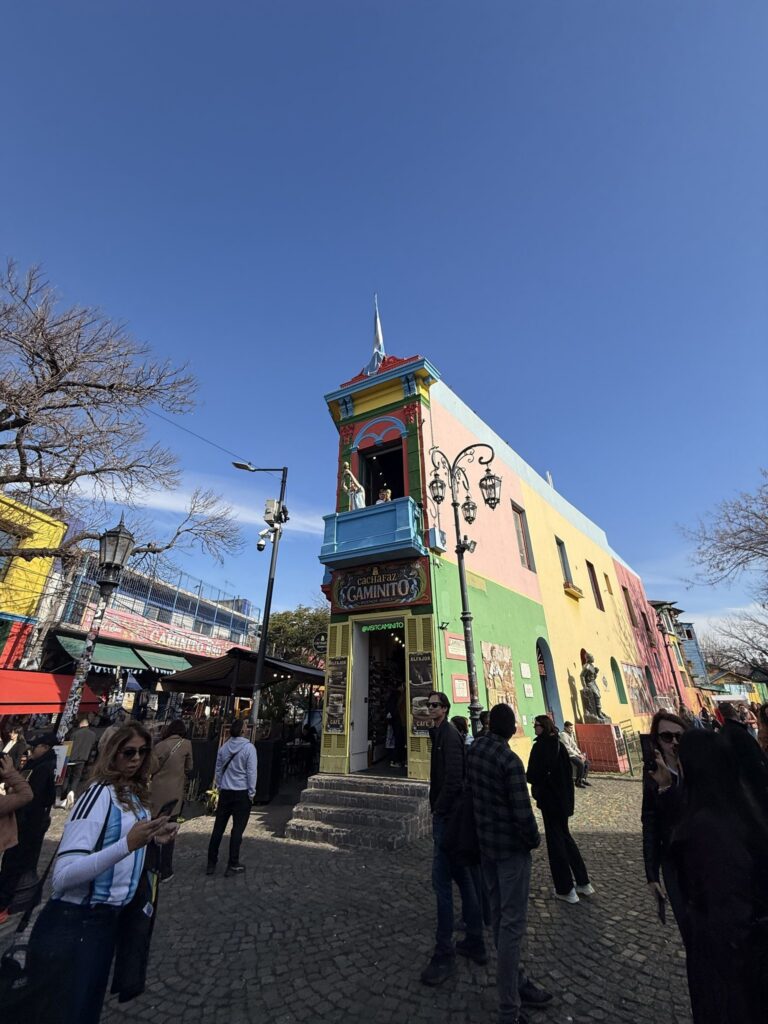
In La Boca there is a street market around Caminito selling all kinds of things. We bought handmade jewelry there. La Boca is pretty touristy, but the first time it’s worth going, and jewelry is a souvenir that fits in any suitcase.
A Messi ball and shirts during the World Cup
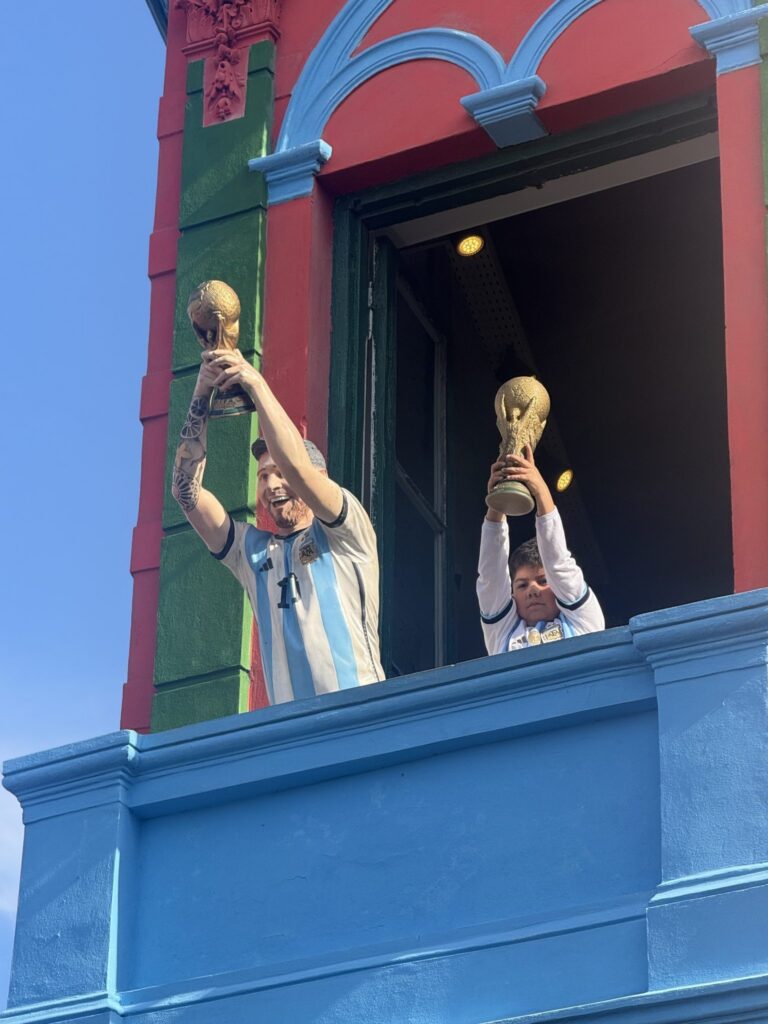
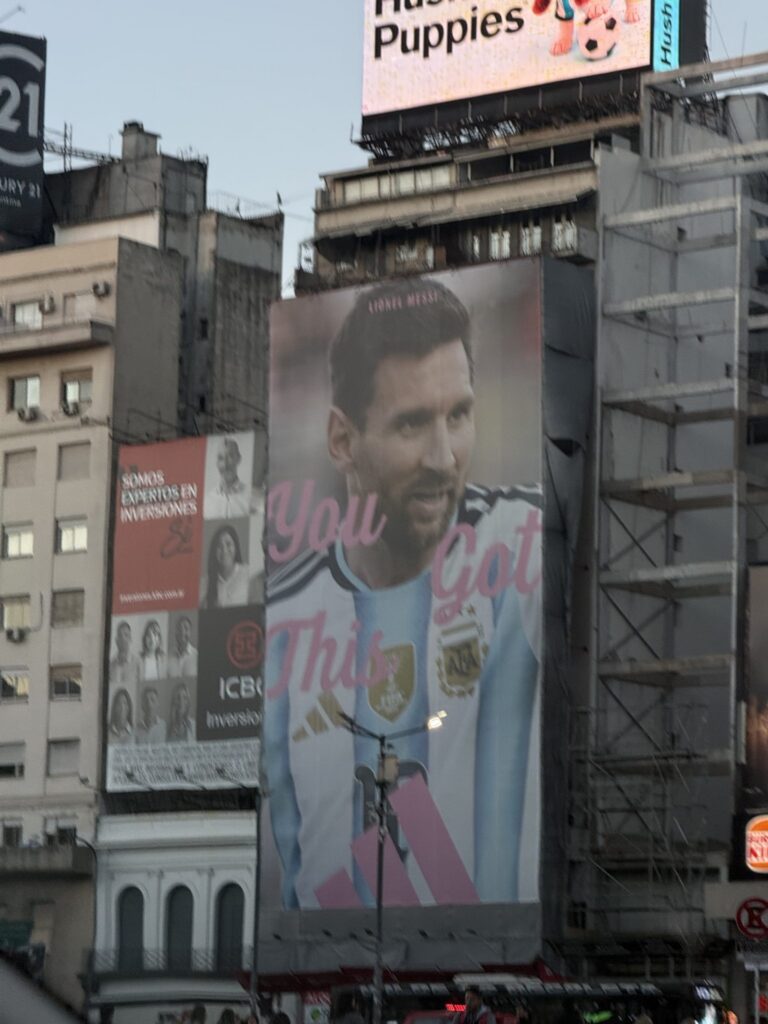
We were in Buenos Aires during the 2026 FIFA World Cup, and the whole city was full of Messi and Argentina national team gear. We bought a Messi ball and Messi shirts. We went fully Argentine. If you end up in Argentina during a big tournament, you won’t have to look for Messi merchandise. It will find you.
One thing worth remembering: a shirt bought on the street and an official shirt from a sports store are not the same thing, and neither is the price.
Havaianas in Foz do Iguaçu
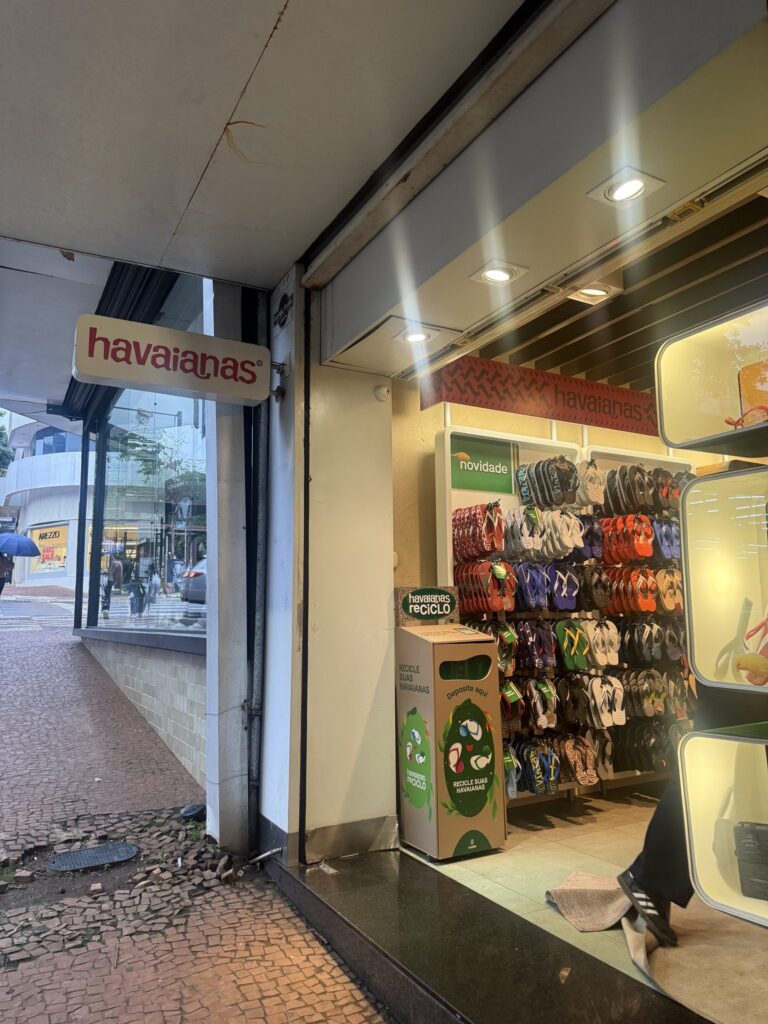
This is not Buenos Aires, but if you go to Iguazú Falls and stay on the Brazilian side like we did, there is a Havaianas shop in central Foz do Iguaçu. Havaianas is a Brazilian brand, so buying them in Brazil makes sense. We did. One more thing surprised us on the Brazilian side: the grocery store was very, very cheap. For more on the Iguazú trip, read the Iguazú story.
Souvenirs on the last day
On our last day we went back to San Telmo once more, walked around and bought souvenirs at the market. It’s a good plan: leave the smaller purchases for the end, when you know how much room is left in your suitcase.
Practical information
How to pay
In 2026, foreign Visa and Mastercard cards settle at the favorable MEP rate (about 1,587 pesos to the dollar on 5 November 2026) when you pay in pesos. If the terminal offers euros, choose pesos. Pay by card in shops and in cash at market stalls. There is more about money in the Buenos Aires travel guide.
Tax free in Argentina in 2026
In Argentina, foreign tourists can get part of the VAT (IVA) back when they buy goods made in Argentina from a shop that has joined the system. In 2026 the system went fully digital (ARCA resolution 5843/2026), and it is run by Global Blue.
- Ask the shop before you pay whether they do tax free, and ask for an electronic refund check (cheque de reintegro electrónico). It is valid for six months.
- When you leave, you confirm your purchases at the airport at a digital kiosk or in the app. The system works at Ezeiza and Aeroparque and at the ports.
- If the system sends you to the red channel, you have to show your purchases at customs. So don’t pack them at the bottom of your checked luggage.
- Tax free only works in participating shops that issue an electronic invoice. At a market stall you probably won’t get it.
What you can bring into the EU
An air traveler arriving from a non-EU country can bring in non-commercial goods worth up to 430 euros tax free (Estonian Tax and Customs Board, November 2026). The limit applies to each traveler separately. If your purchases are worth more, you have to declare them in the red channel and pay customs duty and VAT. Handmade shoes and leather bags get you to that limit fast, so keep your receipts.
With exotic leathers (caiman, also called yacaré, and stingray), check your customs authority’s list of prohibited and restricted goods before you buy, because products made from protected species may need a permit.
If you want more leather
In the Villa Crespo neighborhood, on Murillo street, there is a whole row of leather factory shops selling jackets, bags and belts straight from the factory. The city itself calls it the leather shopping circuit. We didn’t go there.
Addresses
- Calzados Correa: Mario Bravo 750, Almagro. Monday to Friday 9:00 to 13:00 and 15:00 to 19:00, Saturday 9:00 to 13:00.
- Feria de San Telmo: Defensa street and Plaza Dorrego, Sundays 10:00 to 17:00.
- Mercado de San Telmo: Bolívar 970, San Telmo.
Frequently asked questions
Leather. Handmade shoes and boots, leather bags and jackets are the best buys. Also Argentina national team shirts, alfajores and antiques from the San Telmo market.
Feria de San Telmo is held every Sunday from 10:00 to 17:00 on Defensa street and Plaza Dorrego. The Mercado de San Telmo market hall is also open during the week.
Yes. When you buy goods made in Argentina from a participating shop, ask for an electronic refund check and confirm it when you leave, at a digital kiosk at the airport or in the app.
An air traveler arriving from a non-EU country can bring in goods worth up to 430 euros tax free. Anything above that has to be declared.
Mario Bravo 750, in the Almagro neighborhood next to Palermo. The shop is open on weekdays and on Saturday mornings.
Some sellers take cards, but the smaller stalls often want cash. Bring pesos.
This article contains partner links. If you book through them, I earn a small commission and your price does not change.

Disclosure: this article may contain affiliate links. If you book or buy through them, we may earn a small commission at no extra cost to you. We only recommend what we believe in.