Most people come to San Telmo on a Sunday, buy something leather at the Defensa street market and head back to Palermo. I did exactly that and came home with two leather bags (more on that in my shopping story). But the most interesting thing in San Telmo is not on Defensa street. It is under it, and the El Zanjón de Granados tour is how you get down there.
Trip ABC: Buenos Aires
🏨 Where to stay
- Alvear Palace Hotel: Grand French-style palace on Avenida Alvear, Recoleta’s most elegant street.
- Magnolia Hotel Boutique: Three blocks from Plaza Armenia, surrounded by Palermo Soho’s best restaurants.
- Home Hotel: Palermo Hollywood design hotel with a garden pool and a much-loved weekend brunch.
✈️ Getting there: Flights to Buenos Aires on Kiwi.com, rental car with DiscoverCars
🎟 What to do: Tours and tickets (GetYourGuide)
🛡 Travel insurance: Heymondo, 5% off for Museumist readers
These are partner links: if you book through them, we earn a small commission at no extra cost to you.
From the outside, El Zanjón de Granados is just an ordinary old house at number 755. Inside are four centuries of Buenos Aires stacked in layers like a lasagna: a colonial-era creek, 18th-century brick vaults, a wealthy family’s mansion, an immigrant tenement, a garbage dump and, finally, a museum. The museum invited me as a guest on its English-language guided tour on Tuesday, 30 June 2026 at 12:00. My ticket was free and the opinions are my own. And my opinion is short: super, super interesting.
The best part is that the whole thing was found by accident. A man bought an abandoned house to turn it into a restaurant. The restaurant never happened. What happened instead was the most important private archaeology project in the city.
The creek that gave the place its name
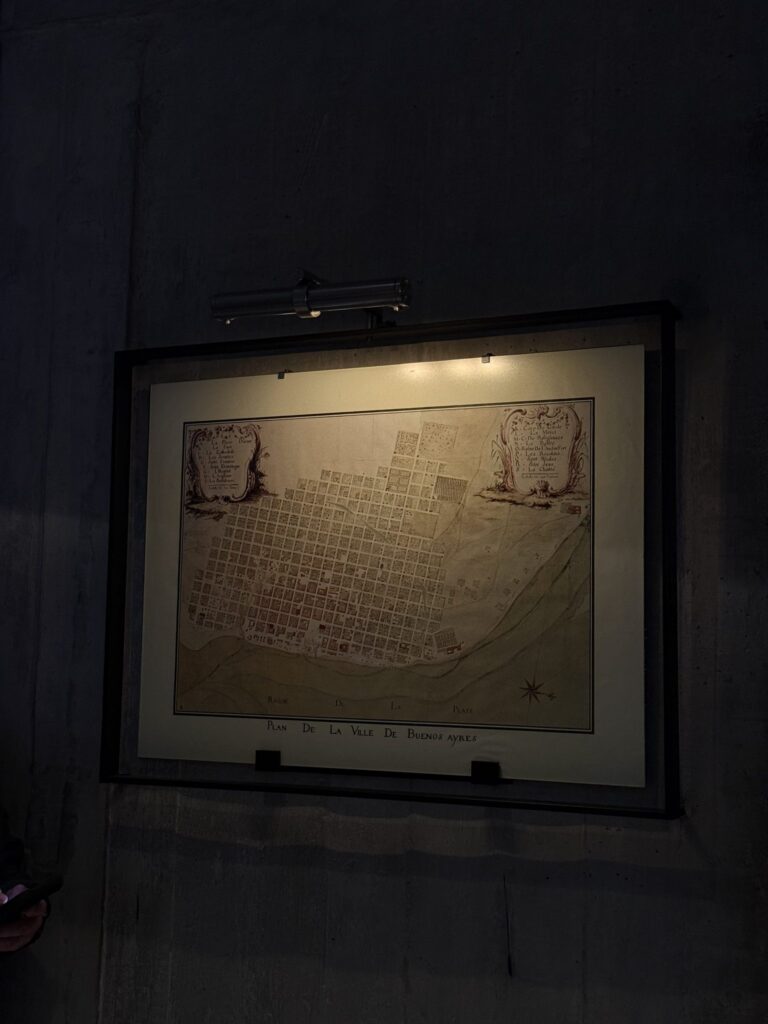
When Juan de Garay founded Buenos Aires for the second time in 1580, rainwater ran from the higher ground down to the Río de la Plata along three creeks. The Spanish simply called them “terceros”. The southern one, the Tercero del Sur, marked the southern edge of Garay’s city and ran right through the plot where El Zanjón stands today. The riverbank back then was where Paseo Colón is now, a few hundred meters away.
“Zanjón” means a ditch or a gully. As for where “Granados” came from, there are several versions. One of the more popular stories is about two Granados sisters who sold pies on the same block around 1810. I like the idea that the city’s most important archaeological site is named after two pie sellers. Could be a legend. A good legend.
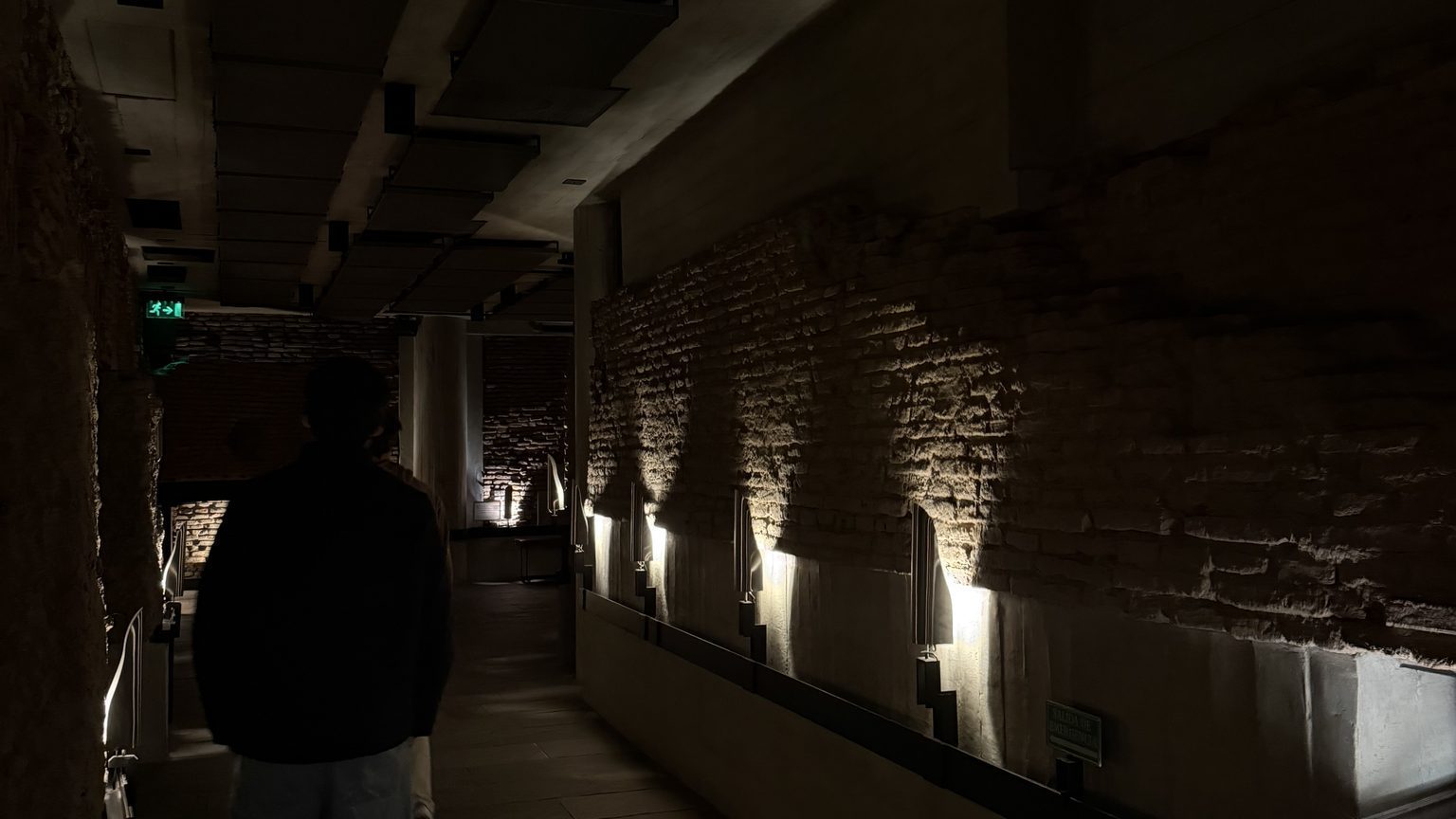
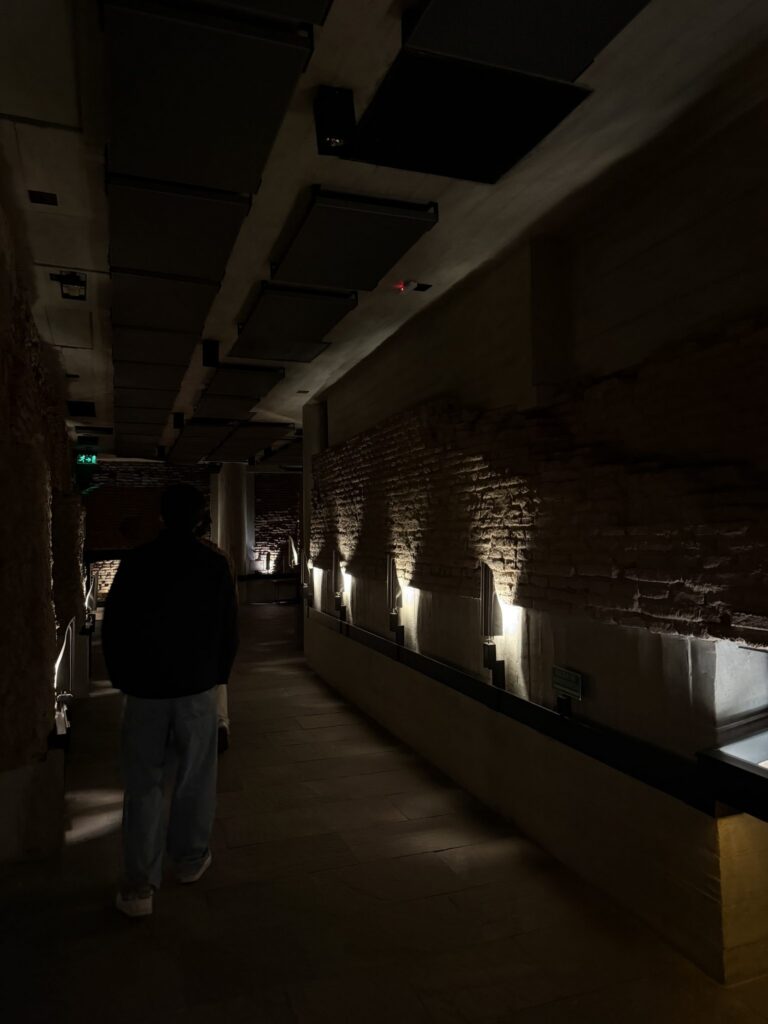
The problem was that the creek was not romantic. In heavy rain the water flooded the houses and people were stuck indoors for days. In 1787 Andrés Cajaraville had the first square brick canal on the block built to keep the water in check. Every family built its own section under its own plot, and that is how one of the first water systems in Buenos Aires was born. These are the tunnels you see today: over three meters high, the brick walls worn smooth by the water. One branch started where Constitución railway station is now, the other came from the direction of Avenida 9 de Julio, and the two met right under this house.
How people lived: wells, cisterns and turtles
There was no running water. Rainwater was collected from the roofs into underground cisterns (aljibe) and wastewater went into a well whose bottom was just bare earth (pozo ciego). Under the house, archaeologists found foundations, walls, floors, cisterns and those wells, built and demolished between roughly 1730 and 1865. According to La Nación, the house had three large underground cisterns lined with French tiles, and the family kept three sea turtles in each one to clean the water. The turtle as a water filter. I will leave that here without comment.
The history of the plot is laid out on the museum’s timeline almost year by year. Marcos Miguens, who arrived from Galicia in 1767, bought the plot with a small house in 1779. In the 1830s his descendants built a Pompeian-style mansion here with three courtyards: one for guests, one for the family, one for the servants. Archaeologists estimate it had 23 rooms. Between the second and third courtyards stood a lookout tower with a view of the river, which also told the neighbors who lived here. Enslaved people lived in the house too, six of them according to the museum, and their African dolls turned up in the excavations. Slavery was only abolished in Argentina in 1853.
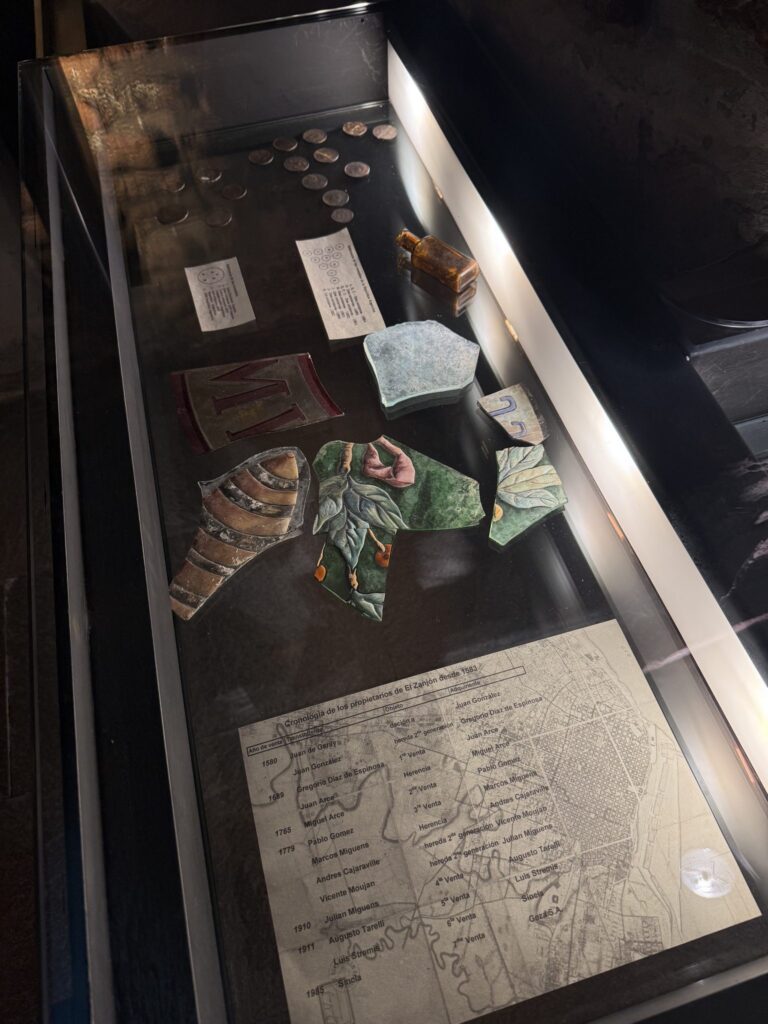
One display case holds the full line of owners going back to 1583: Juan de Garay granted the land to Juan González, and the list ends with the sale in 1985. More than four hundred years of a single plot, on a single sheet of paper.
1871: yellow fever and the big move north
In a warm, humid city where sewage seeps into the same groundwater the wells draw drinking water from, it was only a matter of time. On 27 January 1871, three cases of yellow fever were recorded in San Telmo, in two crowded blocks. Carnival went ahead anyway. At the peak of the epidemic, on 10 April, 563 people died in a single day. In total about 14,000 people died, roughly 8 percent of the city’s population, and more than a third of the residents fled the city. The government included. Nobody knew yet that mosquitoes spread the disease. People blamed “bad air”, the meat-salting plants along the Riachuelo river and the cesspits.
San Telmo’s wealthy families did what the wealthy always do: they moved. North, toward Barrio Norte and Recoleta, to higher ground. Today tourists go to Recoleta for the Parisian-style facades and the famous cemetery. More on the neighborhoods in my Buenos Aires winter travel guide.
The epidemic changed the city. The English engineer John Bateman was tasked with drawing up a plan for running water and sewers, and it was approved in 1872. Running water reached this area in 1892, the tunnels ran dry and most families simply filled them in. Some used them as cellars. And then they were forgotten.
Conventillo: 23 rooms and two bathrooms
The empty mansions became conventillos, tenements for immigrants arriving from Europe. According to the museum, Buenos Aires had about 1,770 of these houses at the time. The logic was simple and brutal: one family per room, with the courtyard, kitchen and bathrooms shared. In this house, according to the museum, that meant 23 bedrooms and two bathrooms for the whole building. According to La Nación, in the early 20th century about thirty families lived on the upper floor, with shops downstairs, including a wine shop. Thirty families, two bathrooms. Think about that the next time someone complains about their dorm.
The conventillo held on until the early 1970s, when it was shut down as unsafe. By the 1970s the house had become the neighborhood dump, abandoned and bricked up. On the ground floor there was about four meters of rubble and garbage.
The man who wanted a restaurant
On the tour I got the impression the house had been bought fairly recently. Recently is relative. Jorge Eckstein, a San Telmo local himself, bought the house in 1985. The list of owners in the display case ends with exactly this sale (the museum’s own timeline puts the purchase of the Los Patios building and the discovery of the first tunnel in 1986). The plan was a restaurant. When they started hauling out the rubble, the first tunnel appeared under the floor. An old neighbor who had played in those tunnels as a child heard the news and only said: you finally found them.
Then it went the way it always goes when someone starts a “small renovation”: the restoration took more than 15 years. Los Patios opened in 2001. Along the way Eckstein also bought the neighboring Casa Mínima (1994) and the El Puente building, which at the time housed a padel court (1996). The complex was finished in 2006. Today El Zanjón is a museum and event venue, considered the most important private archaeology project in Buenos Aires. If you want a tour with Eckstein himself, you can ask by email.
What the El Zanjón de Granados tour is like
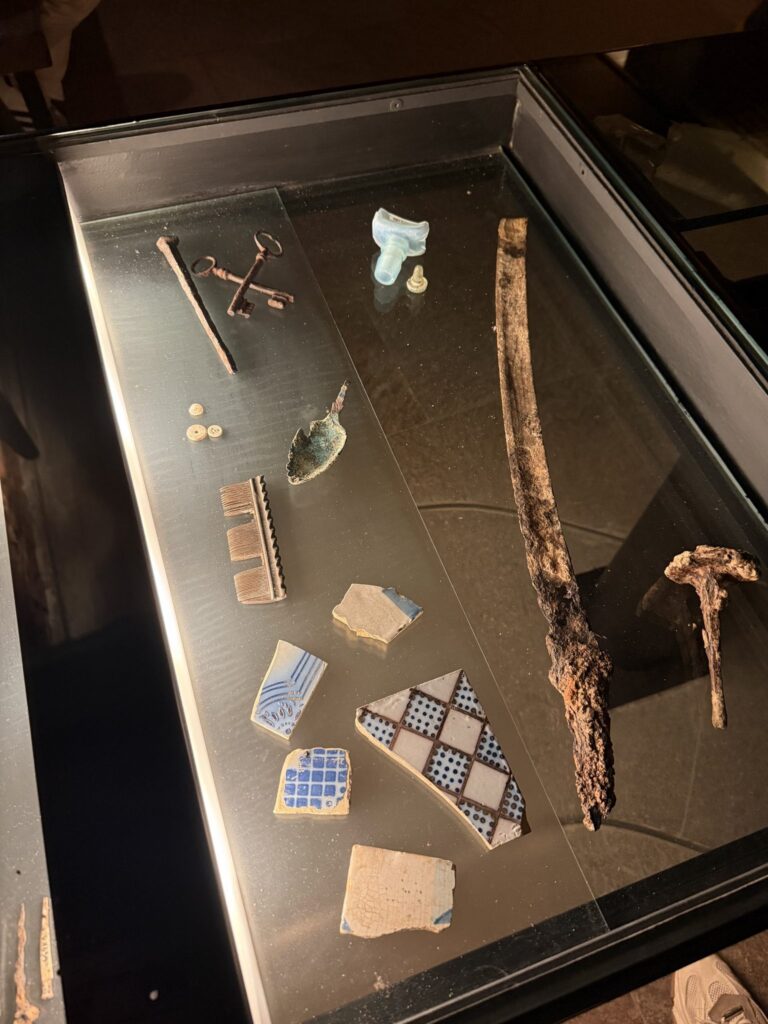
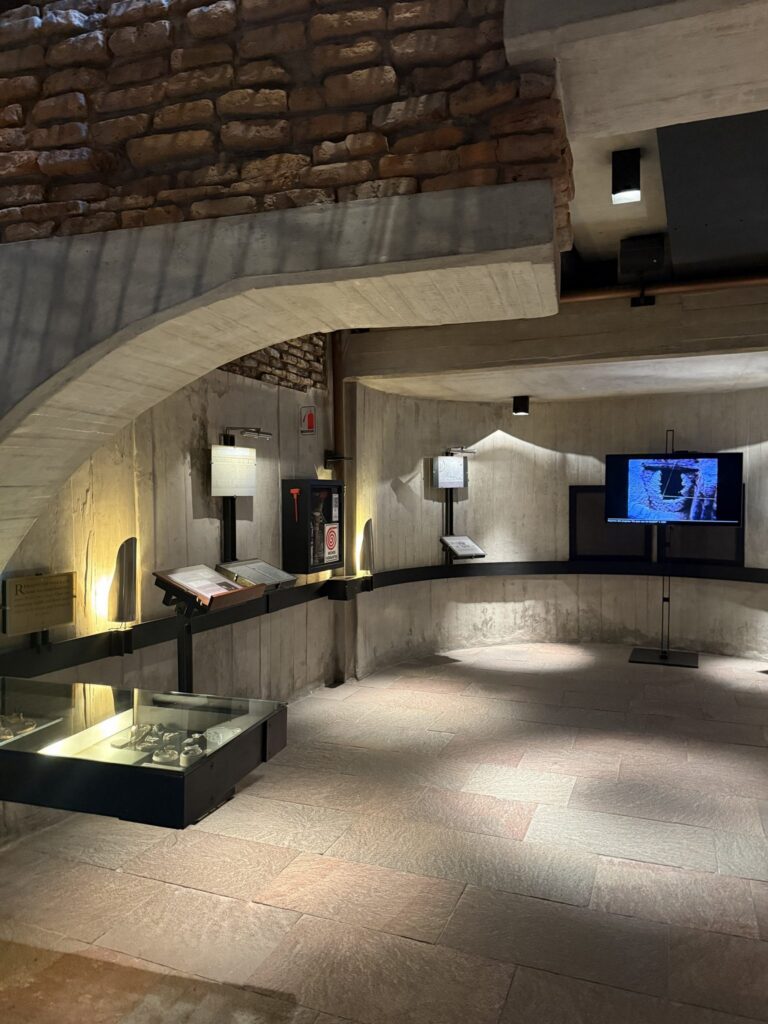
Our English-language tour took about an hour, as the official schedule promises. You cannot get in without a guide, and that is a good thing, because without the stories it would just be a pretty basement. The guide takes you through the mansion, the courtyards and down into the tunnels, where small lamps near the floor light up the brick walls. The display cases hold everything from shards, keys and coins found in the excavations to old documents. Photos for personal use are allowed.
If you are claustrophobic: the tunnels are over three meters high, there is no crawling involved. Wheelchair users can reach every floor by elevator, except for part of the tunnels.
Is it worth the money if you are not invited? I think so. In November 2026 a standard tour costs a foreign visitor 39,000 pesos, about 25 USD at the current rate. For a history buff, that is an hour very well spent.
The cheapest option is to book directly through the museum’s ticketing system. If you want free cancellation and a guaranteed English-language slot, the tour is also on GetYourGuide, but there it costs from 42 USD in November 2026, and one reviewer honestly writes that booking direct cost them about half as much.
Casa Mínima: the narrowest house in the city
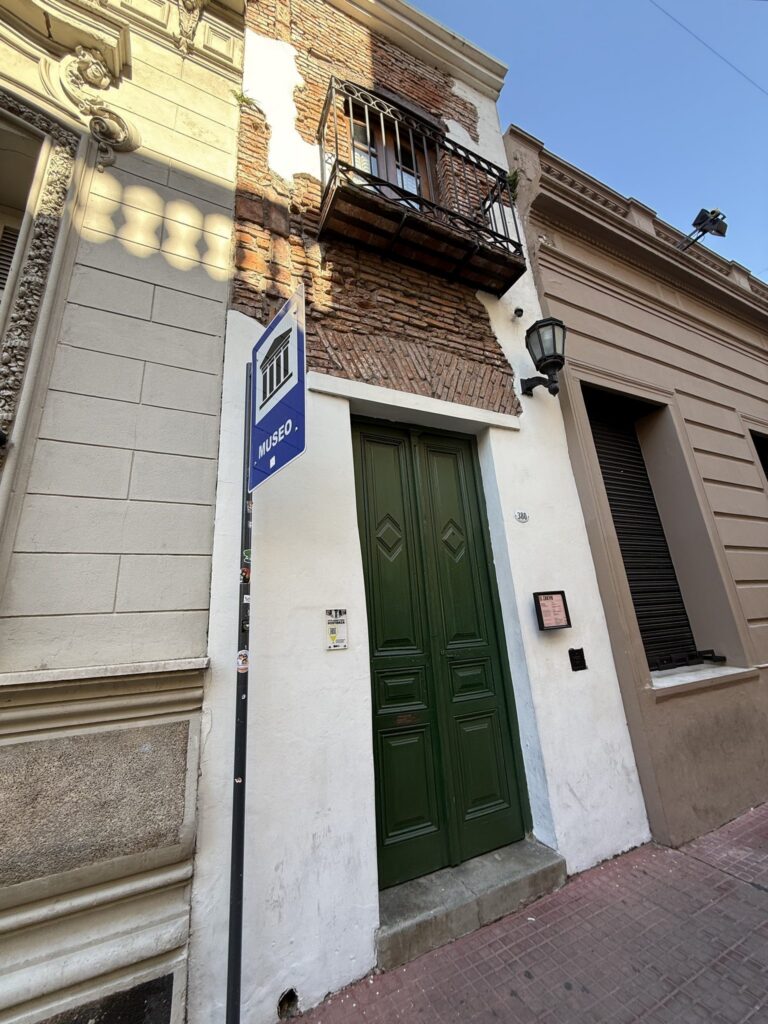
A few steps further on, at Pasaje San Lorenzo 380, is a house with a green door, barely two and a half meters wide and 13 meters deep. This is Casa Mínima, the narrowest house in Buenos Aires and part of the El Zanjón complex since 1994. Legend links the house to a freed enslaved man said to have belonged to General Urquiza. The Casa Mínima tour covers slavery and the birth of tango and runs on weekends and public holidays at 13:00.
What else to do in San Telmo
San Telmo is the oldest neighborhood in Buenos Aires and we went there four times during the trip. On the first day, at the Mercado de San Telmo market hall, we ordered a big platter of different meats so we could try everything, and bought alfajores. Very tasty. On Sundays Defensa street is lined with stalls for about ten blocks, packed with people and vendors, and I write about it in my shopping story. The vintage shops along the streets are open on weekdays too.
If you want to eat outside San Telmo, check out my friend Dani’s restaurant recommendations. We watched tango at Café de los Angelitos and there is a separate story about that. If you want to walk San Telmo with a guide, GetYourGuide has a two-hour English-language walking tour that includes the market.
Where to stay: everyone told us to stay in Palermo, not San Telmo, and that is what we did. In the low season prices were very low. See Palermo hotels on Booking. The full trip route, neighborhoods and weather are in my Buenos Aires winter travel guide.
Practical information
- Address: Defensa 755, San Telmo, Buenos Aires. About seven blocks south of Plaza de Mayo along Defensa street.
- Open: daily 11:00 to 17:00, guided visits only (official website, November 2026).
- El Zanjón tour (60 min): weekdays at 12:00 and 16:00, weekends and public holidays at 12:00, 14:00 and 16:00. I went on the English-language tour on a Tuesday at 12:00. The tour language is shown in the ticketing system, so pick an English-language slot there.
- Prices in November 2026: foreign visitors 39,000 ARS (about 25 USD depending on the exchange rate), residents of neighboring countries 34,000 ARS, Argentine residents 26,000 ARS. Children under 8 free.
- Premium tour (90 min, empanadas and Malbec): weekdays at 12:00, 105,000 ARS.
- Casa Mínima (45 to 50 min): weekends and public holidays at 13:00, 28,000 ARS for foreign visitors. Flash Tour (El Zanjón and Casa Mínima, 60 min): weekdays at 14:00, 54,000 ARS.
- Booking: tickets.elzanjon.com.ar. If you buy on site, get your ticket at least 15 minutes before the tour starts. Bring your passport.
- Contact: turismo@elzanjon.com.ar, +54 11 7078 1542 (weekdays).
- Accessibility: elevator to all floors, part of the tunnels is not wheelchair accessible. No food or drinks allowed.
- How long: an hour for the tour, half a day with lunch at Mercado de San Telmo.
- Getting there: we flew to Buenos Aires from Tallinn via Amsterdam and Paris. Search flights on Kiwi.
Frequently asked questions
A museum and archaeological site in San Telmo, at Defensa 755. Under the house are 18th-century brick water tunnels built to tame the Tercero del Sur creek, and an 1830s mansion that later became a conventillo for immigrants.
Yes, there are English-language tours. I went on the English tour on a Tuesday at 12:00. You can choose the language in the museum’s ticketing system at tickets.elzanjon.com.ar, and there is also an English-language tour on GetYourGuide.
In November 2026 the standard one-hour tour costs a foreign visitor 39,000 pesos, or about 25 USD. The premium tour with empanadas and wine costs 105,000 pesos.
Jorge Eckstein, who bought the abandoned house in 1985 to turn it into a restaurant. A tunnel turned up while the rubble was being cleared, and the restoration took more than 15 years. The museum opened in 2001.
The 1871 yellow fever epidemic started in San Telmo and killed about 14,000 people. Wealthy families moved north toward Barrio Norte and Recoleta, and their houses became tenements for immigrants, the conventillos.
No. The tunnels are over three meters high and you walk through them standing up. The elevator reaches every floor, but part of the tunnels is not wheelchair accessible.
This article contains partner links. If you book through them, I earn a small commission and your price does not change.

Disclosure: this article may contain affiliate links. If you book or buy through them, we may earn a small commission at no extra cost to you. We only recommend what we believe in.