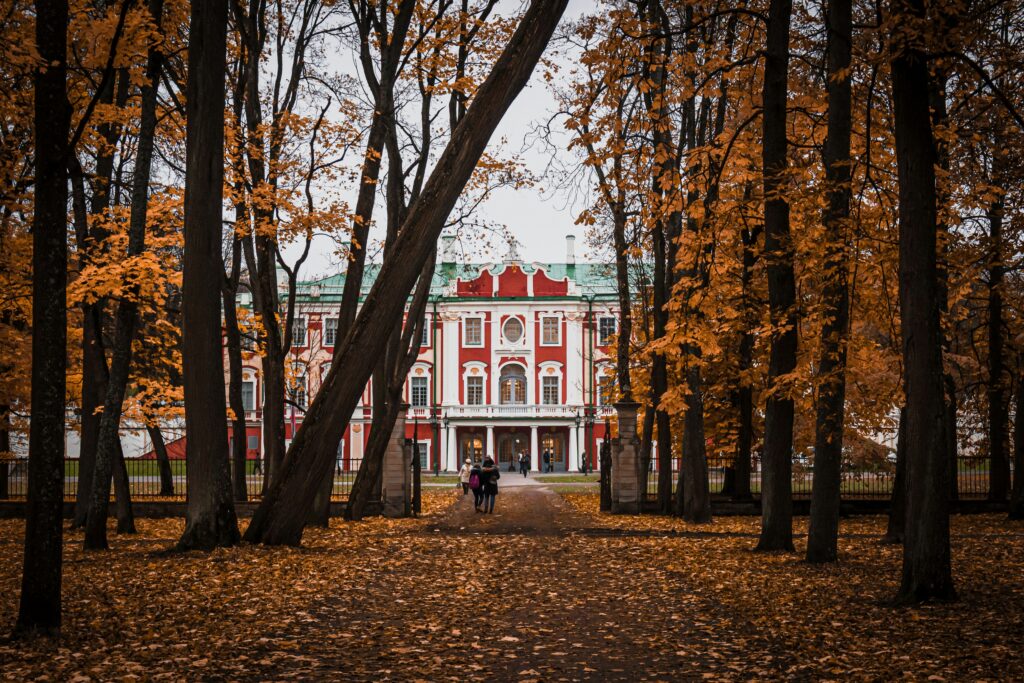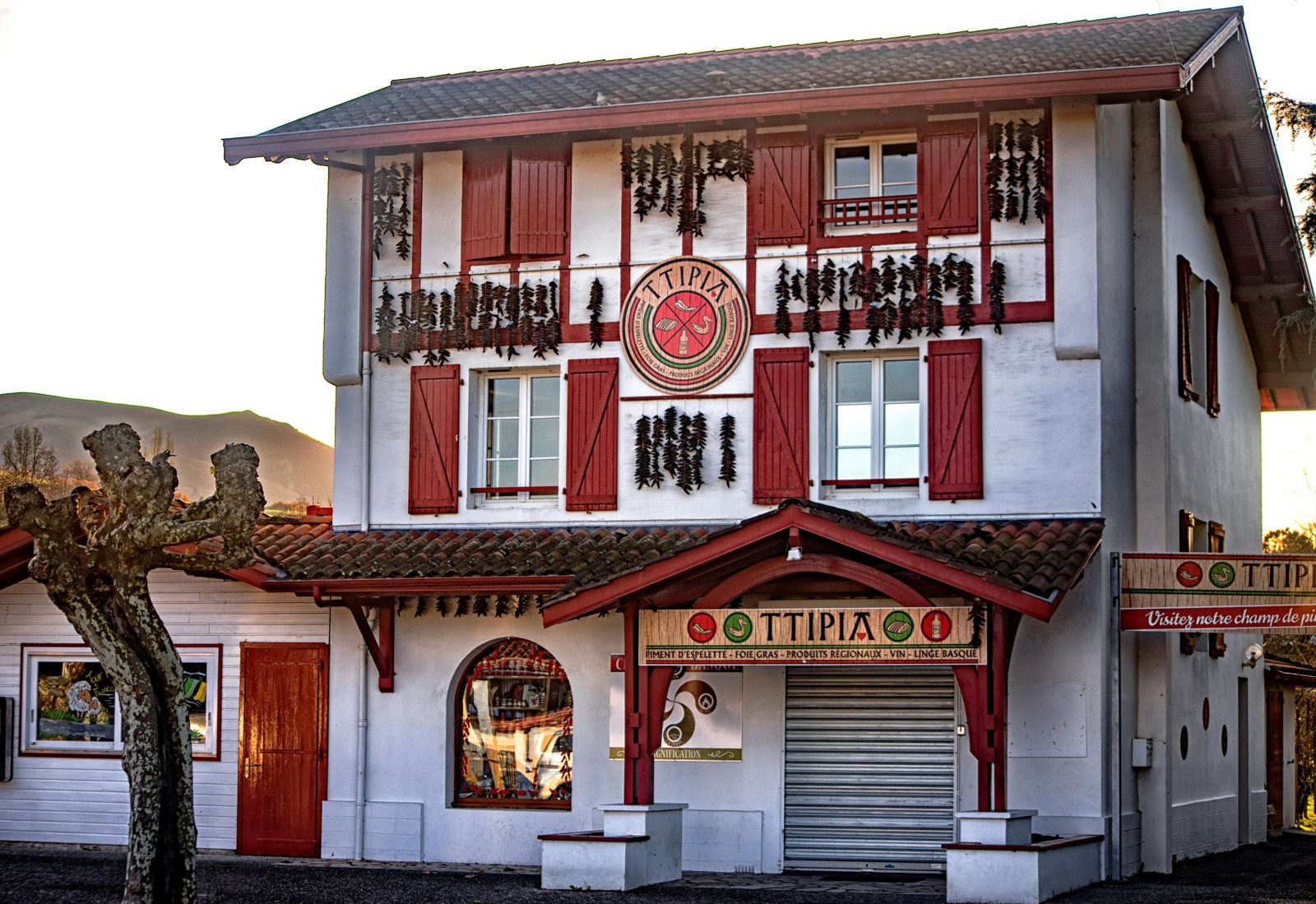
I am going to the Espelette pepper festival this year, and I have not been this excited about a village party in a long time. The Espelette pepper festival 2026 happens half an hour from my front door: two days, one small Basque village, around 20,000 people and house fronts hung with drying red peppers like laundry.
I like a party built around one thing somebody spent a year growing. Not a brand, not a sponsor, not an “experience”. A pepper. Picked by hand, threaded on a cord, hung on the wall of the family house. Then a priest turns up and blesses the harvest, and people in robes who have sworn an oath to defend a ham or a cheese march through the village behind a brass band. Nobody invented this for tourists. It is theirs.
I live in Biarritz this winter and this is the first big date in my autumn calendar. I had to dig through five French websites to find out when the mass starts, so I have put everything in one place. I am writing this before the festival, from official sources, with every detail marked as confirmed for 2026 or carried over from 2025. After 25 October I will come back and tell you what it was really like.
Espelette pepper festival 2026: dates and the short version
| What | Details |
|---|---|
| Dates | Saturday 24 and Sunday 25 October 2026 (confirmed) |
| Entry | Free (confirmed) |
| Where | Espelette, French Basque Country, 28 km from Biarritz |
| Organiser | Confrérie du Piment et du Axoa d’Espelette |
| Main day | Sunday: mass, blessing of the peppers, parade of the brotherhoods |
| 2026 programme | Not published yet. The tourist office page still says “waiting for the 2026 programme”. |
The dates and free entry are confirmed by the regional tourism board. The hour-by-hour schedule below is the 2025 one, which has barely changed in years. I will update it the day the official page publishes the new one.
What happens on Saturday
Saturday is the loose, loud day. Stalls sell peppers and regional products from morning, and brass bands called bandas march through the streets all day. In 2025 there were Basque dances at the fronton at 15:30, a men’s choir in Saint-Étienne church at 17:00 and a big communal dinner with music under the market hall at 20:00.
If you want to eat, shop and wander without ceremony, come on Saturday. If you want to see why this is more than a food market, come on Sunday.
What happens on Sunday
Sunday is the reason the festival exists. At 10:00 there is a solemn mass with the village choir and the Ezpeletarrak brass band, and at the end of it the priest blesses the year’s pepper harvest. At 11:00 the brotherhoods parade through the village in their robes. These are food guilds from all over France, each one sworn to defend a cheese, a ham or a bean, and they take it exactly as seriously as it sounds.
At noon the Espelette brotherhood inducts its new members on the open-air stage and hands out the annual pepper prize. After that the whole village sits down to eat. In 2025 the afternoon continued with the Makilaris stick dancers at 15:30 and a bare-hand pelota match at 16:30. The fair and the bandas run all day.
Why a village throws a party for a pepper
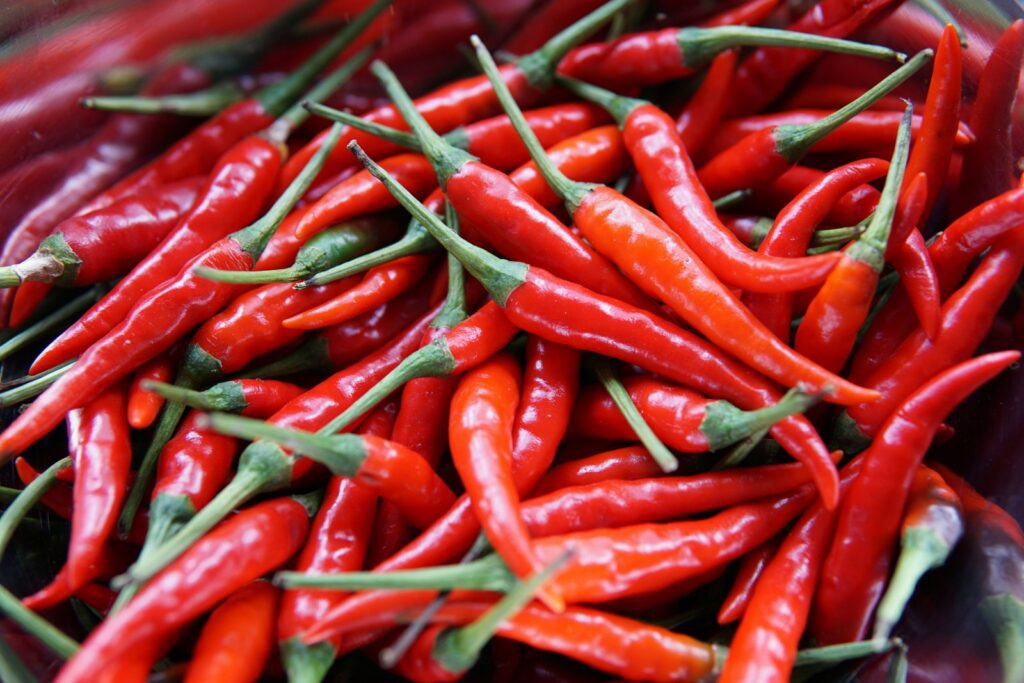
The pepper came from the Americas, and the first traces of it being grown around Espelette date to about 1650. Since 2002 it has had a protected designation of origin, the only spice in France to hold one. It can be grown in just ten communes: Ainhoa, Cambo-les-Bains, Espelette, Halsou, Itxassou, Jatxou, Larressore, Saint-Pée-sur-Nivelle, Souraïde and Ustaritz.
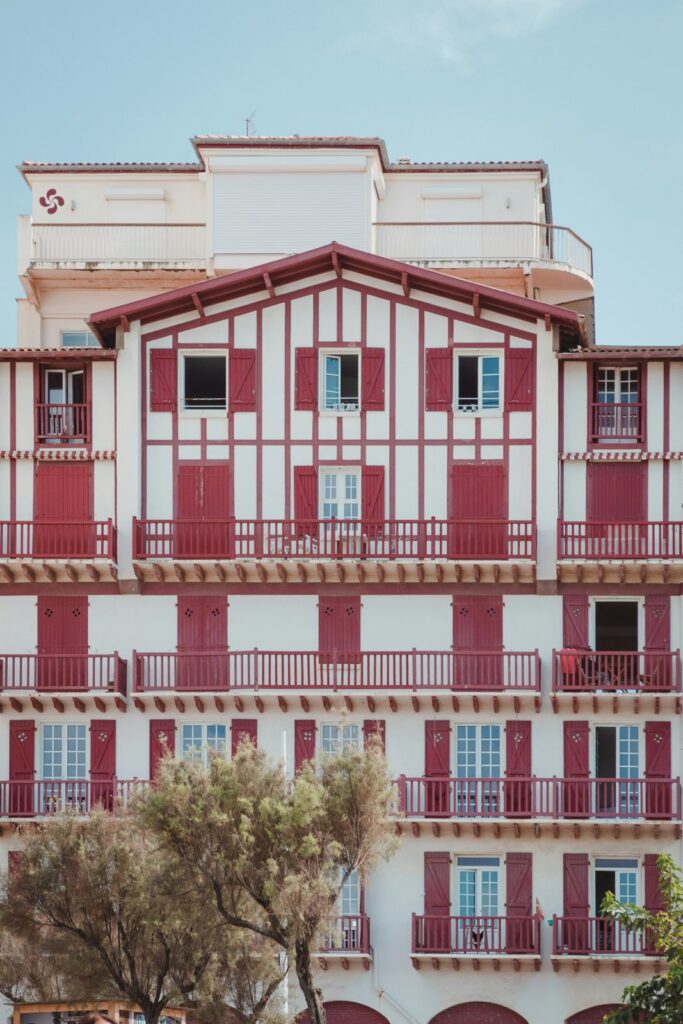
The peppers are picked by hand from August to mid-December, strung on cords of 20 to 100 and hung on the farm walls to mature for at least fifteen days. That is what you see on the white house fronts all autumn. Then they are dried in an oven and ground. On the heat scale it sits at about 4 out of 10. This is not a chilli that hurts you. It is warm, a little sweet, slightly smoky, and the Basques use it where the rest of France uses black pepper.
What to buy and what to eat
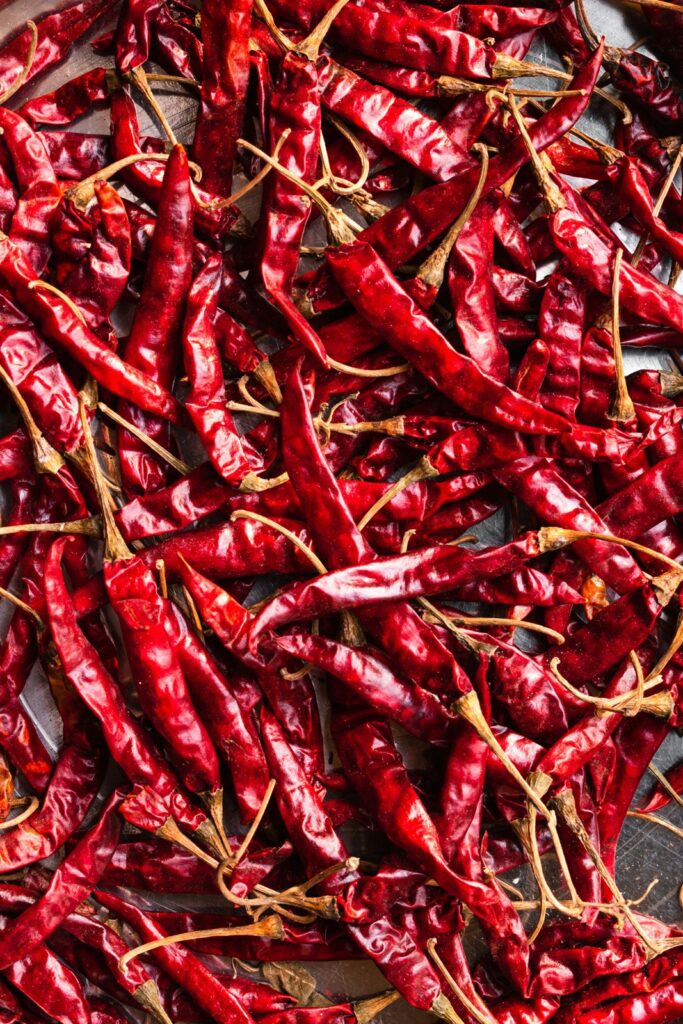
The protected forms are fresh peppers, cords and powder. Powder is what you will actually use at home, and a cord is what you will hang in your kitchen and never touch. Nobody publishes festival prices, but as a reference one producer sells a 40 g jar of powder for 7.20 euros and a dried cord of about 150 g for 16 euros in its online shop. If a stall is far above that, walk on.
Axoa is what I am really going for, and the first thing I will order. To eat: axoa, the local veal stew with peppers that the brotherhood is literally named after, piperade, chipirons and Basque chicken. Antton, the chocolate maker in the village, sells dark chocolate with Espelette pepper, and it works better than it should. In 2025 one farm stall sold a “Kebask”, a Basque kebab with pepper sausage. I respect that.
If you want to see how the powder is made, Atelier du Piment runs free guided tours with a tasting, about an hour, no booking needed. Until 30 October 2026 they start at 10:30 and 14:30. Whether they run on the festival weekend itself is not confirmed.
Getting there from Biarritz, Bayonne and San Sebastián
By car it is 28 km and about half an hour from Biarritz, 24 km from Bayonne and 55 km, roughly 47 minutes, from San Sebastián. Do not try to drive into the village. In 2025 the organisers ran shuttle buses from five park-and-ride points: Saint-Pée-sur-Nivelle, the church in Souraïde, the bus station in Cambo-les-Bains, Ferme Erreka in Itxassou and Larressore. A ride cost 2 to 2.50 euros, cash, so bring coins. Shuttles ran 08:00 to midnight on Saturday and 08:00 to 20:00 on Sunday. The 2026 shuttle plan is not out yet.
Without a car, Txik Txak line 40 connects Bayonne and Espelette roughly hourly. Festival-weekend timetables are not published yet. From San Sebastián there is no direct bus, and the combination via Saint-Jean-de-Luz takes about two hours, so rent a car.
When to arrive and what to wear
My plan is simple arithmetic. The mass starts at 10:00 and the shuttles start at 08:00, so I will be at a park-and-ride by 09:00 on Sunday. By noon a village of two thousand people is holding ten times that.
Late October here means highs around 20 degrees, lows around 11, and rain on about half the days of the month. The climate is oceanic and has no dry season. Bring a rain jacket and shoes that survive a wet field, because that is what the car parks are. One more thing: the clocks go back on the night between Saturday and Sunday, so you get an extra hour of sleep before the mass.
And then I eat. Axoa first, then something I cannot pronounce, and enough powder in my bag to last until spring.
What to combine with the festival
Ainhoa, one of the official Most Beautiful Villages of France, is a few minutes away and will be far calmer. Villa Arnaga in Cambo-les-Bains, the house of the playwright Edmond Rostand, is open on October weekends from 10:00 to 18:00, 10 euros, and closes for the season on 8 November. The little rack railway up La Rhune runs until 1 November 2026, with October departures at 9:30, 10:50, 12:10, 14:10 and 15:30, 26 euros return.
If you are building a longer trip around this, my seven-day Basque Country road trip passes right through here, Guéthary is the quiet coastal village I would sleep in, and I have ranked the best spa hotels in the Basque Country for the rainy day that will come.
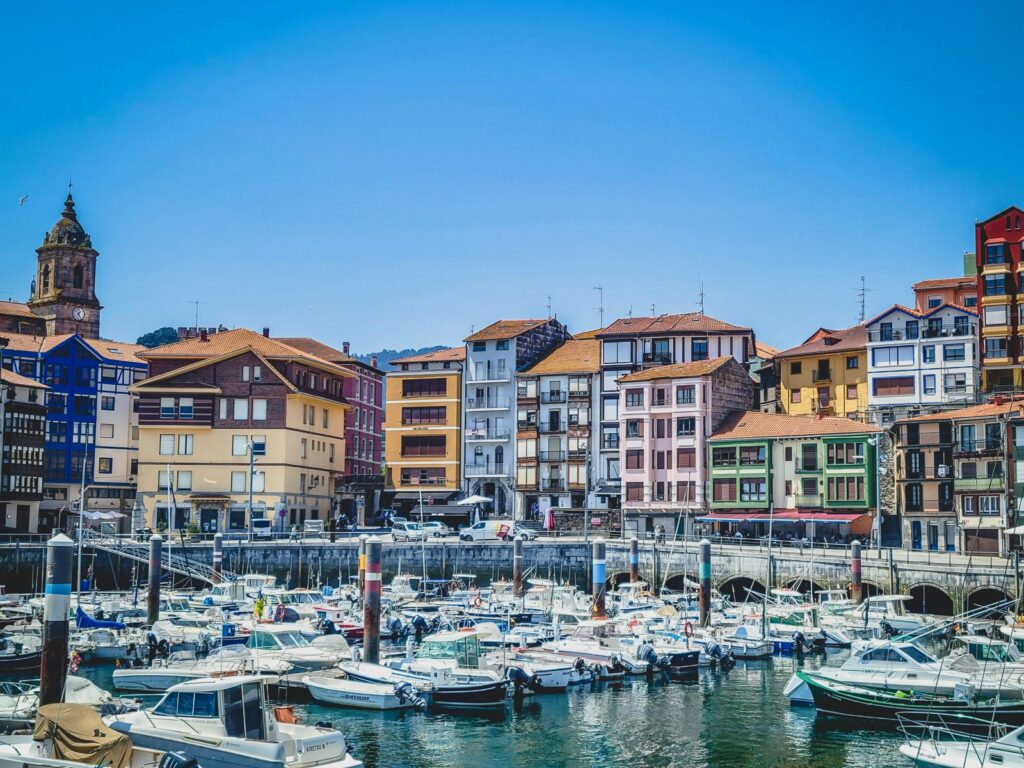
And if the pepper is what gets you hooked on the Basque Country, keep driving to the Spanish side. Bermeo is the fishing town next to Gaztelugatxe, the rocky islet reached by a stone bridge of 241 steps. I wrote about that day in day two of my Basque Country road trip.
Tours and experiences in the Basque Country
Espelette pepper festival 2026: questions people ask
Is the Espelette pepper festival free?
Yes. Entry to the village, the market and all the public events is free. You pay for the shuttle, the food and whatever peppers follow you home.
Which day is better, Saturday or Sunday?
Sunday for the mass, the blessing and the parade of the brotherhoods. Saturday for shopping with fewer robes and the evening dinner under the market hall.
Can you visit Espelette outside the festival?
Yes, and the peppers hang on the house fronts from August to December, so the village looks like this for months. The festival adds the rituals and the crowd.
Information checked on 20 September 2026. Dates and free entry are confirmed for 2026. The schedule, shuttle points and shuttle prices are from 2025 and will be updated when the official 2026 programme is published.

Disclosure: this article may contain affiliate links. If you book or buy through them, we may earn a small commission at no extra cost to you. We only recommend what we believe in.