Adriana can argue for hours that Peru has the best food in the world. No joke. Hours. And every time some ranking confirms it, when Peruvian cuisine wins another award or beats the Italians, she sends me the news the same minute. I have never seen that kind of pride in one’s national food from anyone else.
And the facts are on her side. Peru has been crowned the World’s Leading Culinary Destination year after year, a title that has been almost a permanent fixture since 2012. So when Adriana argues, she isn’t bluffing.
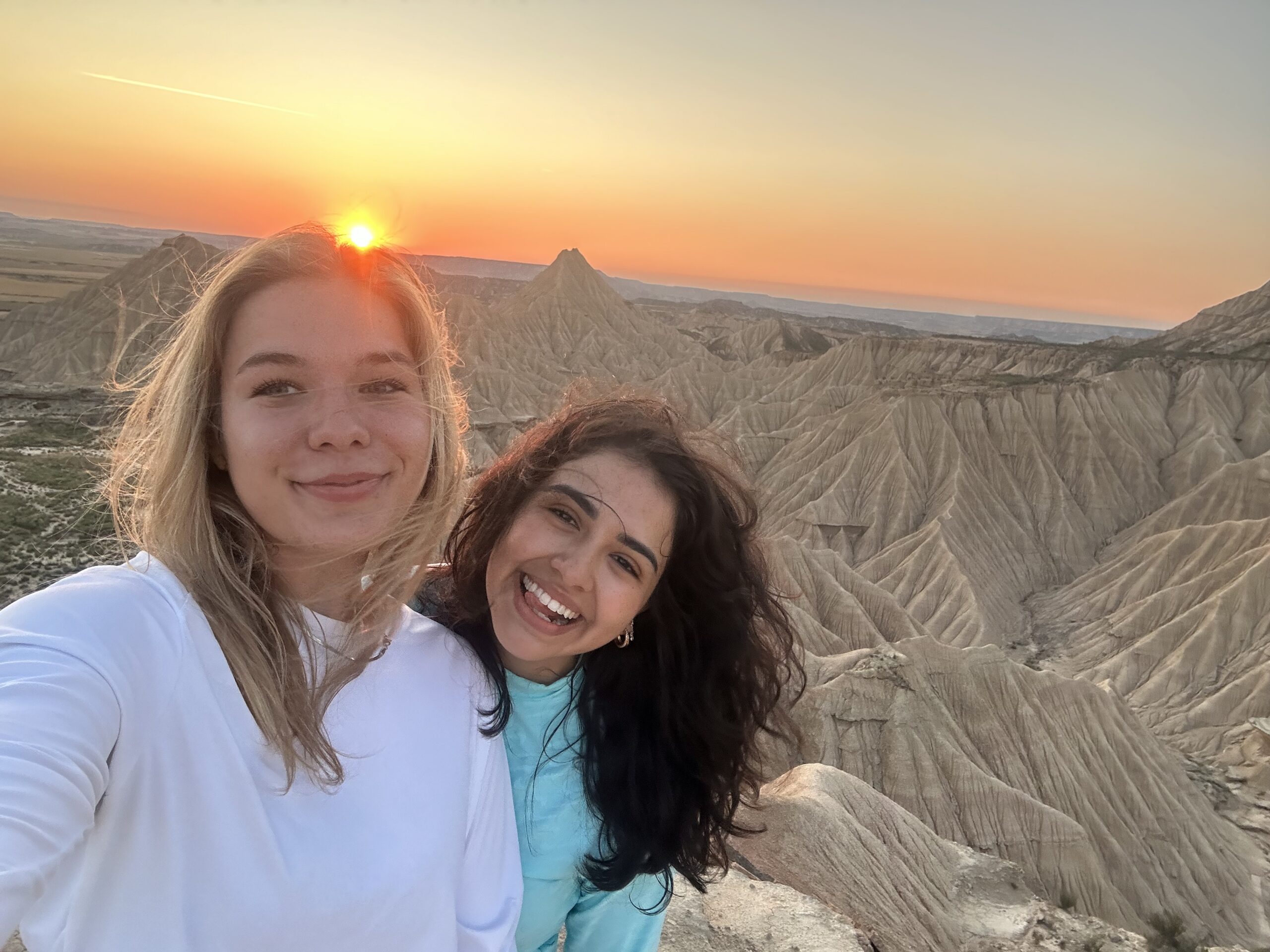
Adriana is my roommate. We studied at the same school and rode at the same stable, and from the very first year she was my official translator. I moved to Spain without speaking a single word of Spanish. Hola, buenos días, gracias, and then nothing. Adriana dragged me through every document, from the apartment search all the way to the two of us visiting the local Ministry of Agriculture, because the stable owner had left my horse’s papers unfiled. The whole town knew us as that blonde and her Peruvian translator.
So when a person like that sends you her list of Lima restaurants, you don’t argue. You take it and say thank you. I haven’t been to Lima myself yet, I’ll be honest. But I am going, Adriana’s family has invited me, and when that day comes I’ll have in my pocket the best list one person can give. It doesn’t come from a guidebook. It comes from a limeña who values fresh food the way only a Peruvian can.
If you like an honest food list straight from a local, I have one more from across the continent: my friend Dani’s Buenos Aires recommendations.
Why Lima
Before the names, it’s worth asking for a moment why Lima at all. Adriana’s answer is always the same: because Peru has three pantries. There is the coast with its cold ocean and endless fish. There are the Andes with their potatoes, corn and highland harvest. And there is the Amazon jungle with its fruits and ingredients whose names we don’t even know here. Add centuries of immigrants, Japanese, Chinese, Italians, Africans, and you have a cuisine that never repeats itself.
Lima doesn’t have good food because it’s lucky. It has good food because it has more to say than almost any other cuisine in the world. And when you sit down at the table there, you aren’t just eating a dish. You are eating all that geography and history at once.
First, two that are literally the best in the world
Let’s start at the top, because Lima can take it. Maido (official site) was crowned the world’s best restaurant in 2025. It is mainly nikkei cuisine, and Adriana says one thing about it: don’t be afraid to order anything off the menu, because it is all fiery. There are dishes that are simply insane. If you get a table at Maido, you don’t think about the price, you just go.
Central (official site) was the world’s best restaurant in 2023, and Adriana went there even before that title. She was floored, by both the food and the service. The menu isn’t a dinner, it is a journey through Peru’s ecosystems, from sea level to the peaks of the Andes. Each course corresponds to one altitude, one place in this land. It is expensive and to get a table you have to book three to four months ahead. But when you get it, it is out of this world.
Note what this means. Two of the world’s number-one restaurants, both in one city. Lima doesn’t play at food, Lima wins.
Nikkei, Adriana’s great love
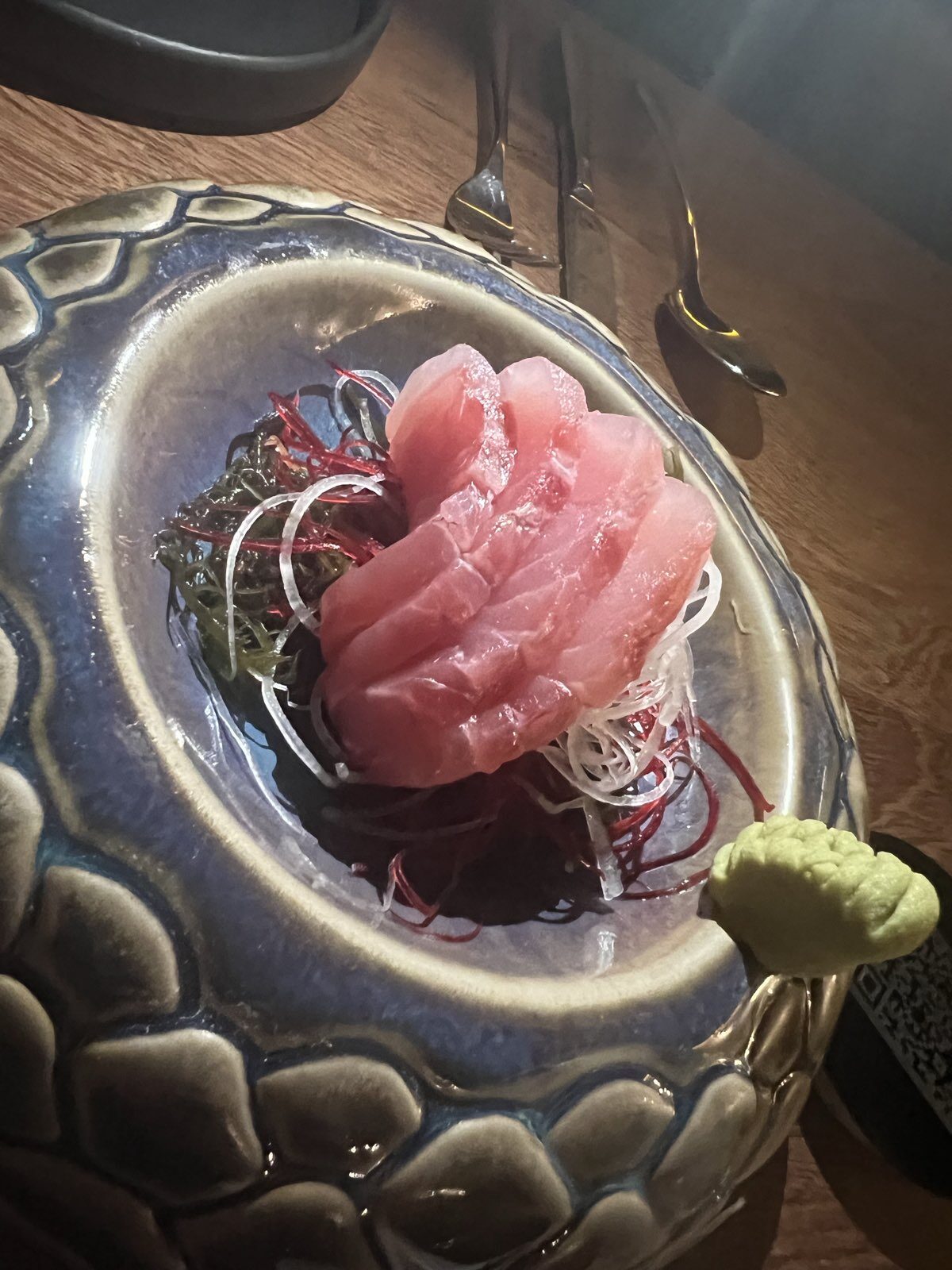
When Adriana talks about food, she always arrives at nikkei. This cuisine was born when the first Japanese immigrants reached Peru in 1899 and started doing with local ingredients what they knew how to do at home. Japanese precision met Peruvian chili and fish, and a century later it is one of the most exciting cuisines in the world. Her favorite in all of Lima is Osaka, hands down the best nikkei in the city, a place she says you simply have to go to.
Tomo is another strong choice, and there Adriana asks you to order the razor clams, navajas, which she says are wonderful. Kimo is good for its food and atmosphere, and she recommends going in the evening, because then the view is most beautiful. If your appetite holds, her list also includes Fan, Makoto and Shi-Nua, all nikkei, all with her seal of approval.
A little fact Adriana loves: Chifa, the Peruvian-Chinese cuisine, got its name from Cantonese, chī fàn, which simply means “eat rice.” If you want to try it, Madam Tusan is a safe and excellent choice.
Traditional Peru, where the heart is
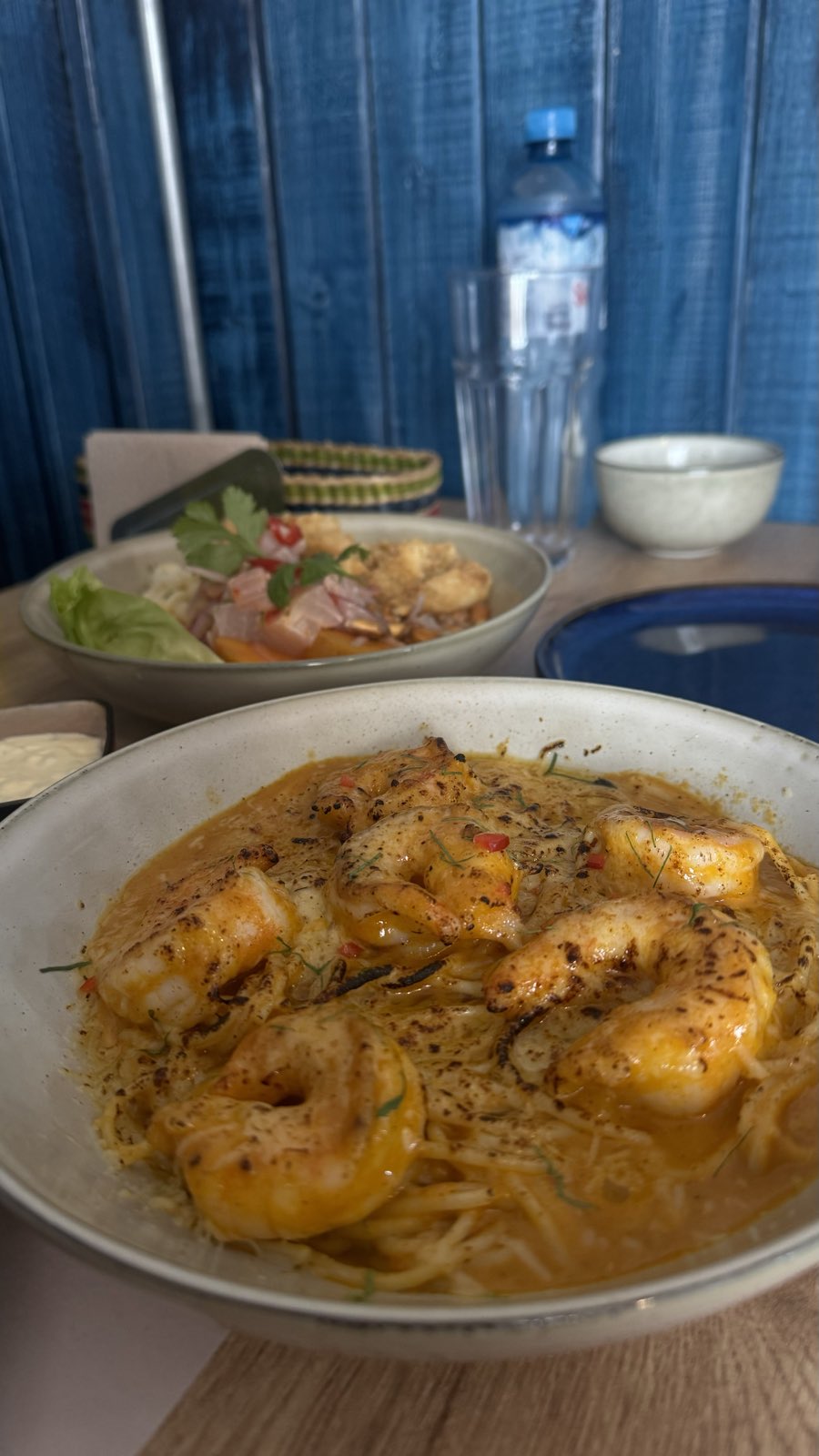
Here the list gets long, and that’s a good sign. La Picantería is one of Adriana’s favorites for Peruvian seafood, and it sounds like the most fun place to eat of all. You pick your own fish for each dish, and since they use only the day’s catch, everything is ultra-fresh.
And here is why Lima’s fish is so absurdly fresh. The Humboldt Current flows along Peru’s coast, cold and nutrient-rich, one of the most fertile sea areas on the planet. The fish doesn’t have to come from far. It is simply there, all year round.
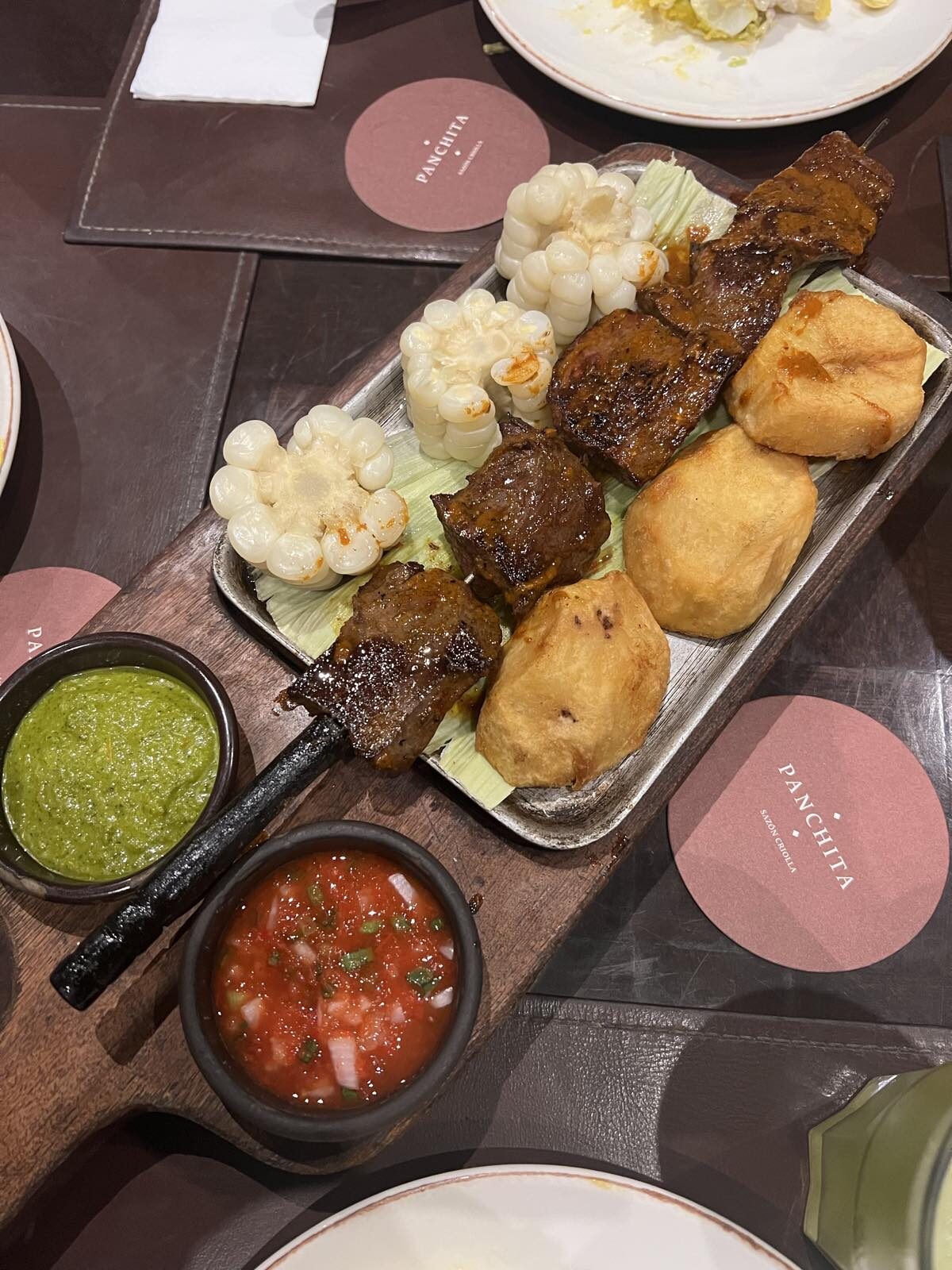
Panchita is so good that the portions are gigantic, so go hungry. At Cosme, Adriana has one clear order: for dessert, order the crema volteada. I quote her directly, you’ll thank me later. Isolina, Astrid y Gastón (official site), La Mar, Kjolle, Mayta and Casa Tambo are all on her list, each for its own reason. Astrid y Gastón is almost an institution, one of the places that put Peruvian cuisine on the world map. Mérito is the only one she hasn’t been to herself yet, but she has heard wonderful things about it, and I trust her ear. Tanta is a good place for simply decent Peruvian food without much ceremony.
Chicharrón, cafés and things you mustn’t skip
Chicharrón is the traditional Peruvian pork sandwich, and for it Adriana sends you to two places: La Lucha and El Chinito. Simple, greasy, perfect. Exactly the kind of thing you eat standing up and think about for a week afterward.
For breakfast, her cafés are Pan Sal Aire and El Pan de la Chola. And if you should tire of Peruvian food, which Adriana seriously doubts, there is Italian cuisine with a Peruvian twist: Troppo and Pasta.
And then there are the things you find on every corner. Anticuchos, grilled skewers, are actually made from beef heart, and they were born in the kitchens of the working class and enslaved Africans, who took the cheapest cuts and made something the whole city now queues for. And pollo a la brasa, the famous Peruvian rotisserie chicken, is so beloved that it has its own national holiday, the third Sunday of July. According to Adriana these aren’t restaurant food, they are simply life.
What to order when you can’t read the menu
Adriana knew I’d get into trouble there, so she also gave me a little cheat sheet. When you sit down at a table in Lima and don’t know where to start, here it is.
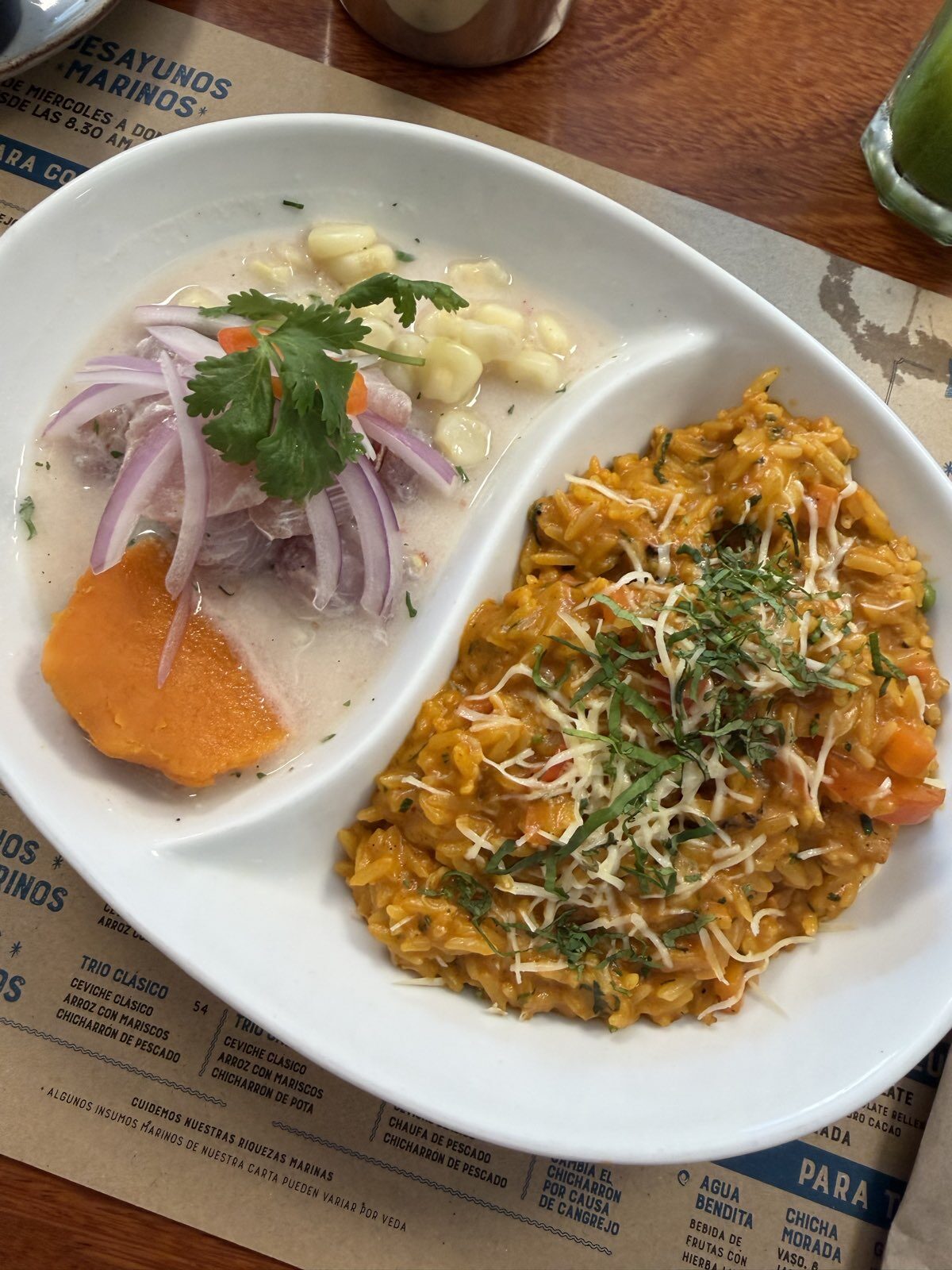
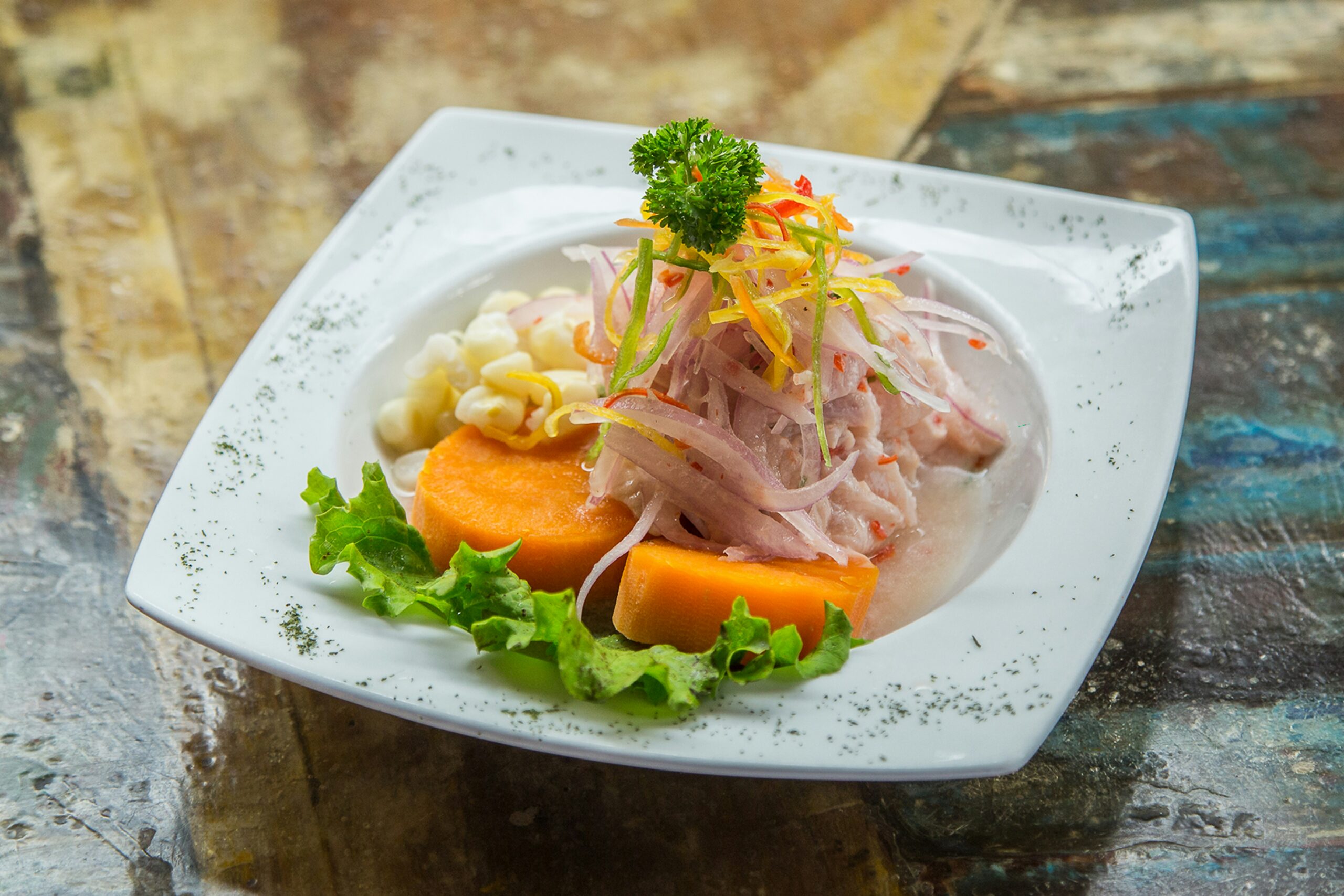
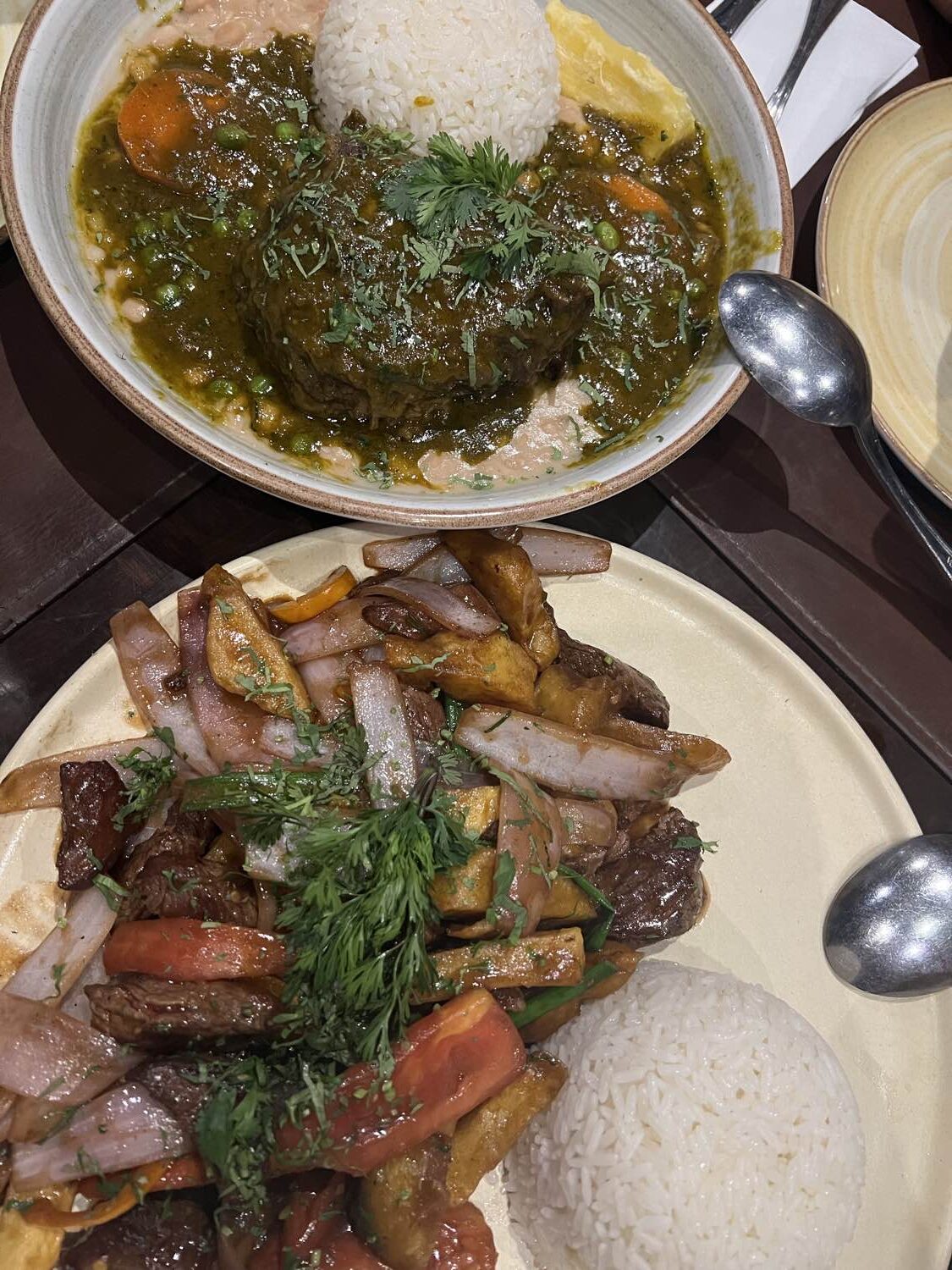
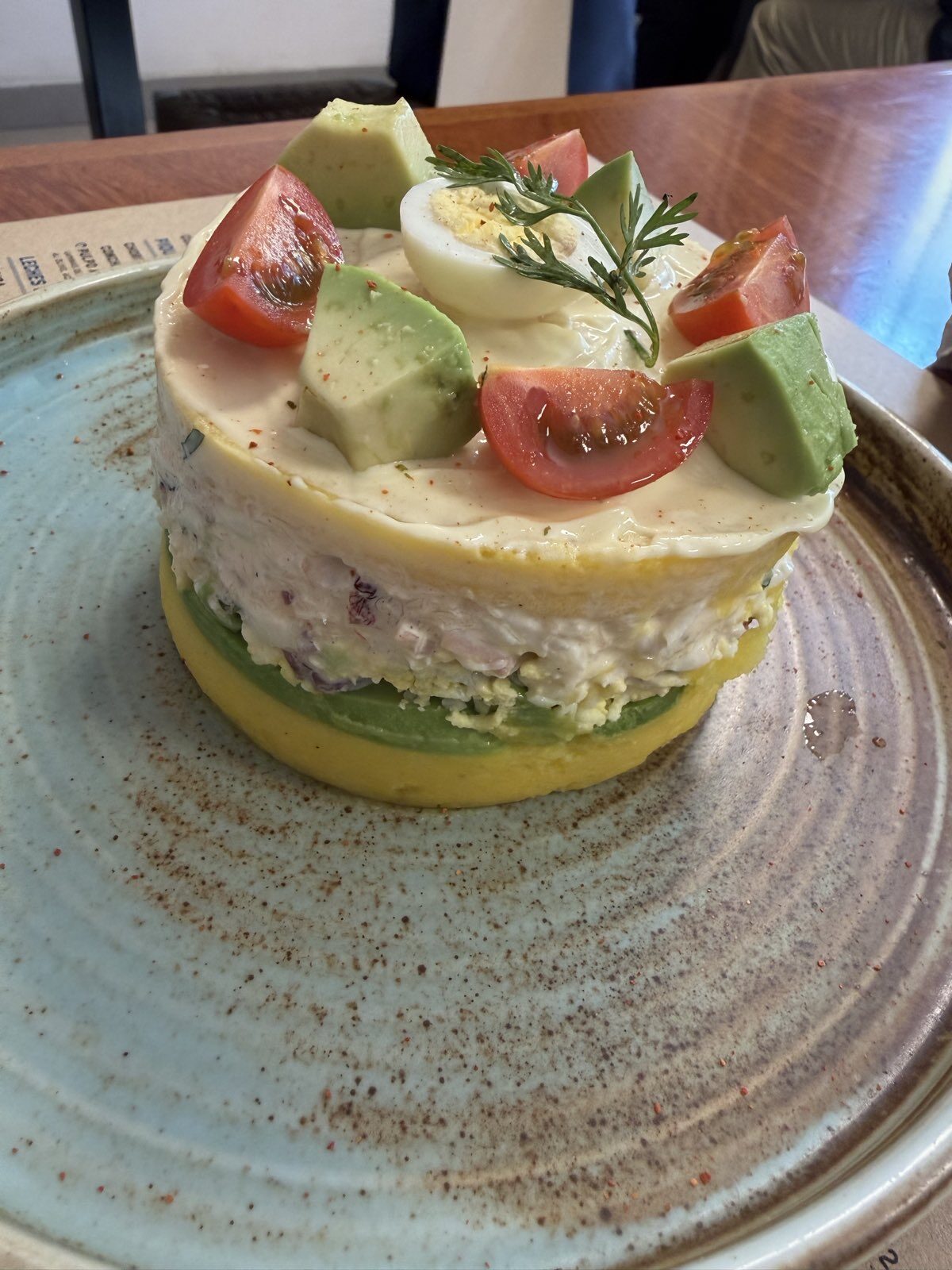
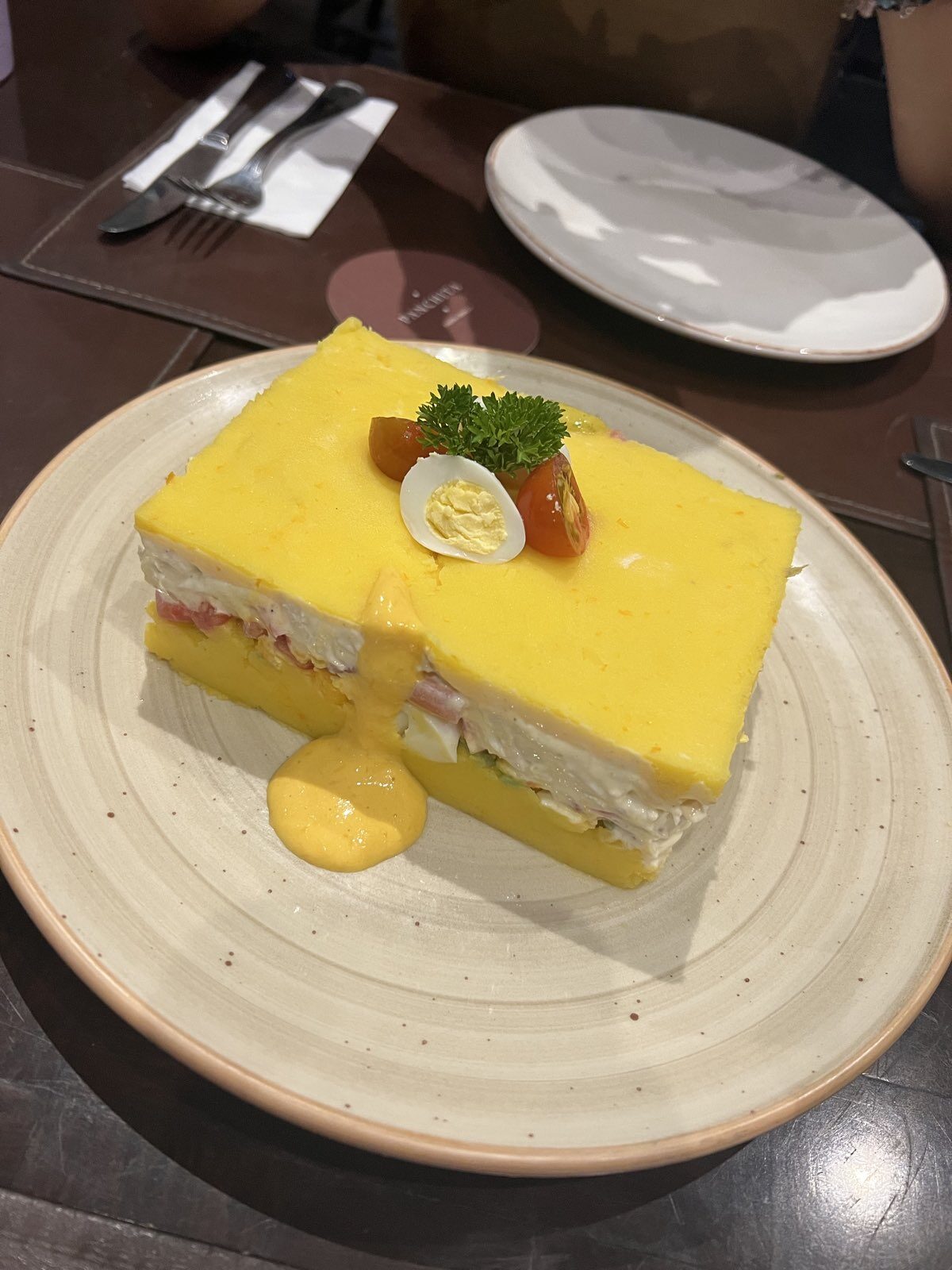
Ceviche is of course number one, fresh fish in lime and chili, marinated so briefly that it is almost raw, and served with sweet potato and corn. Tiradito is its sister, fish cut into finer slices, more Japanese in style. Lomo saltado is the child of Peru and China, beef in the pan with onion, tomato and fries, something so good you can’t understand why it isn’t made elsewhere in the world. Ají de gallina is a creamy chicken stew with yellow chili, comfort food in its purest form. Causa is a cold potato cake, layered with filling, beautiful and simple at once.
Alongside lomo saltado it’s worth trying seco, slow-stewed meat with cilantro, and arroz con pollo, the Peruvian version of the chicken-and-rice classic. If you see the word rocoto relleno on the menu, it is a stuffed spicy red pepper, careful, it bites back. And tacu tacu, a cake of fried rice and beans, is what Peruvians eat when they just want to be full and happy.
And leave room for dessert. Suspiro a la limeña is so sweet that its name means the sigh of a Lima woman. Picarones are pumpkin doughnuts in syrup. Simple things, made for centuries, still better than most of what we call dessert here.
One evening, one drink: Lady Bee
If you want to make one evening more special, Adriana sends you to the Lady Bee cocktail bar. It is in Barranco, Lima’s bohemian district, and it is on the list of the world’s 50 best bars. The idea is brilliant: they showcase Peru’s biodiversity through cocktails and small dishes, ingredients from the coast, the Andes and the Amazon. Intimate, refined, and exactly the kind of place you thank a local for.
Practical: tables, districts and money, honestly
A few things Adriana would tell you before you go. Maido and Central must be booked months ahead, not days, so if they’re on your list, do it right after buying your flights. Most of the good places are in Miraflores, Barranco and San Isidro, the three districts where you’ll probably be staying anyway, so dinners are often within walking distance.
About money Adriana is honest. Top restaurants like Central and Maido are expensive, the same price as elsewhere at the world’s top. But at a huarique, a small family eatery, you eat like royalty for a few euros, and many Peruvians would say that food is just as good or better. So do yourself a favor and mix them. One big evening at the top, and all the rest at the locals’ places. To get around, use Uber or an official taxi, it’s easy and cheap.
When to go: Lima’s summer, December to April, is sunny and warm. The rest of the year the city is covered by garúa, that soft grey mist over the sea. The food is good year-round, but if you also want sun on the seaside promenade, come in summer.
How Lima reached the top of the world
One thing worth knowing: Lima was not always a pilgrimage destination for food lovers. Just a couple of decades ago Peruvian cuisine was almost invisible in the world, something eaten at home, not something you boarded a plane for. Then came a generation of chefs, led by Gastón Acurio, and they did something simple and powerful. They stopped being ashamed of their food and started being proud of it. They took street food, huarique dishes and grandmothers’ recipes and put them on white linen, without turning them into something else.
The result is what you see today. Top restaurants of the world that tell Peru’s story in Peru’s language. Adriana is from that generation that grew up with this pride, and you hear it every time she talks about food. It is not just good food. It is a country that finally understood how rich its table is.
Peruvian drinks, not just pisco
And while we’re at the table, the drinks can’t go unmentioned. Chicha morada is a drink made from purple corn, sweet, with cinnamon, deep purple like something magical, and everyone drinks it, from child to grandmother. Emoliente is a warm herbal drink sold from street carts, especially in the morning, and Peruvians swear by its healing power.
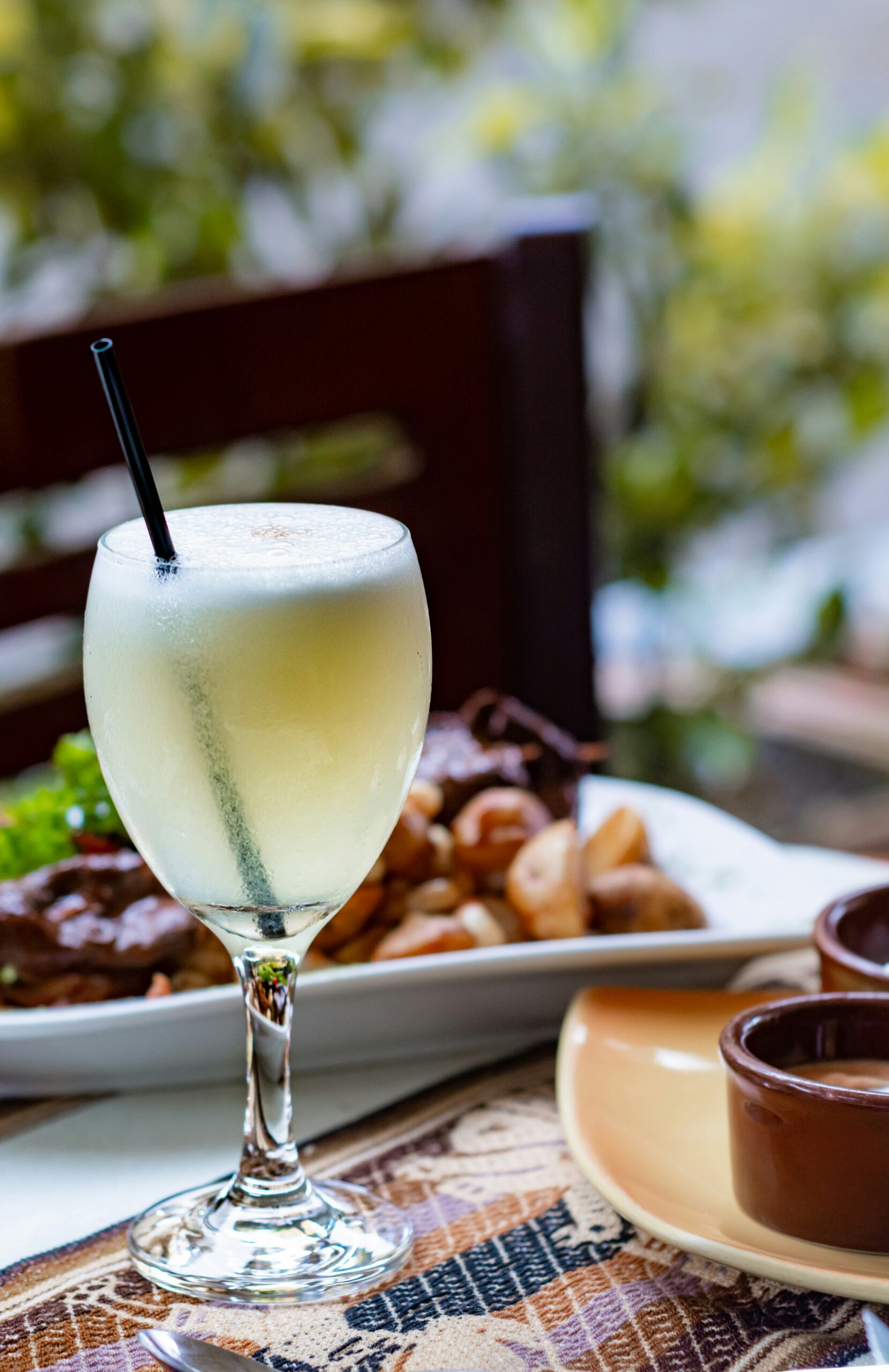
And then there is Inca Kola. A bright yellow, bubblegum-flavored soda, so beloved in Peru that it outsells Coca-Cola on the local market. It is one of the few countries in the world where the local soda beats the global giant. Adriana laughs about it, but she still drinks it, because it is the taste of home.
Ingredients you won’t find at home
The secret of Peruvian cuisine is its pantry. Ají amarillo, the yellow chili, is in almost every dish, and without it Peruvian food is not Peruvian food. Lúcuma is a fruit you’ll hardly see in the West, sweet and creamy, and the Peruvians’ favorite ice cream flavor, not vanilla. Quinoa, which we now buy as a superfood from the supermarket, has grown in the Andes for thousands of years, long before it became a fad in the West. And cacao, grown in the Amazon, is among the best in the world.
Adriana says that when you leave Lima, have lúcuma ice cream as the very last thing, so it lingers on your tongue all the way to the airport. It is exactly these ingredients, hard to find elsewhere in the world, that make Peruvian food what it is. You can’t really replicate it anywhere else. You have to go where it grows.
Flights: Lima’s airport is Jorge Chávez (LIM). From Europe most routes connect through Madrid, Amsterdam or Paris, and you can compare them on Kiwi.com.
Outside the EU your regular roaming plan does not apply and data gets expensive. You can buy an eSIM and install it before you fly.
If you are planning more than one stop, read these next: Direct Flights From Tallinn: 9 City Breaks for Autumn 2026, Lofoten Islands: What It’s Really Like at the Edge of the World and Mallorca Secret Beaches and Hidden Gems. From the same series: Sagres & Lagos: Portugal’s End of the World.
In closing, honestly
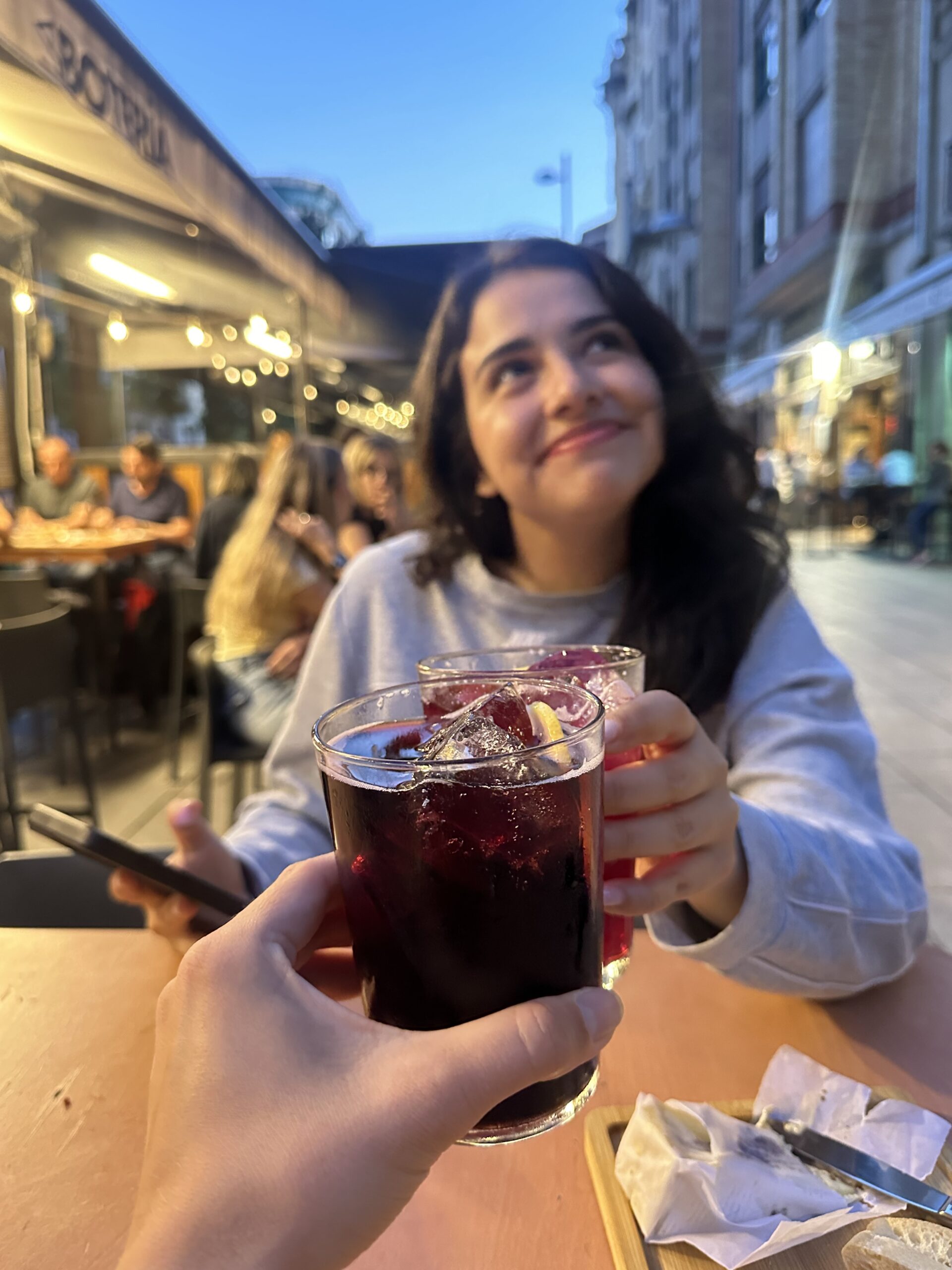
I have not been to Lima. But I know exactly whose list I’ll take with me when that day comes. Adriana’s family has invited me, and I am going, and I will eat my way through that entire list without shame.
Because when someone is your translator in a foreign land, when someone takes you to a ministry over your horse and always orders the very best things at the table, you don’t doubt their food recommendations. You simply trust. And when that person tells you Peru has the best food in the world, she is probably right.

Disclosure: this article may contain affiliate links. If you book or buy through them, we may earn a small commission at no extra cost to you. We only recommend what we believe in.