The Seaplane Harbour is the kind of place you walk into for an hour and leave three hours later. I have watched it happen again and again. You step inside, think you will breeze through, and suddenly you are standing in the iron belly of a submarine, ducking under low pipes, realising you are not getting out any time soon. And honestly, you do not want to.
This is the jewel of the Estonian Maritime Museum and one of the coolest museums in Tallinn. If I am blunt about it, the Seaplane Harbour (Lennusadam in Estonian) is one of the few places I can visit over and over and still find something new. This is not a look-behind-glass museum. This is a put-your-hands-on-it museum, and that is exactly why nobody, especially the kids, wants to leave.
Submarine Lembit, where it all begins
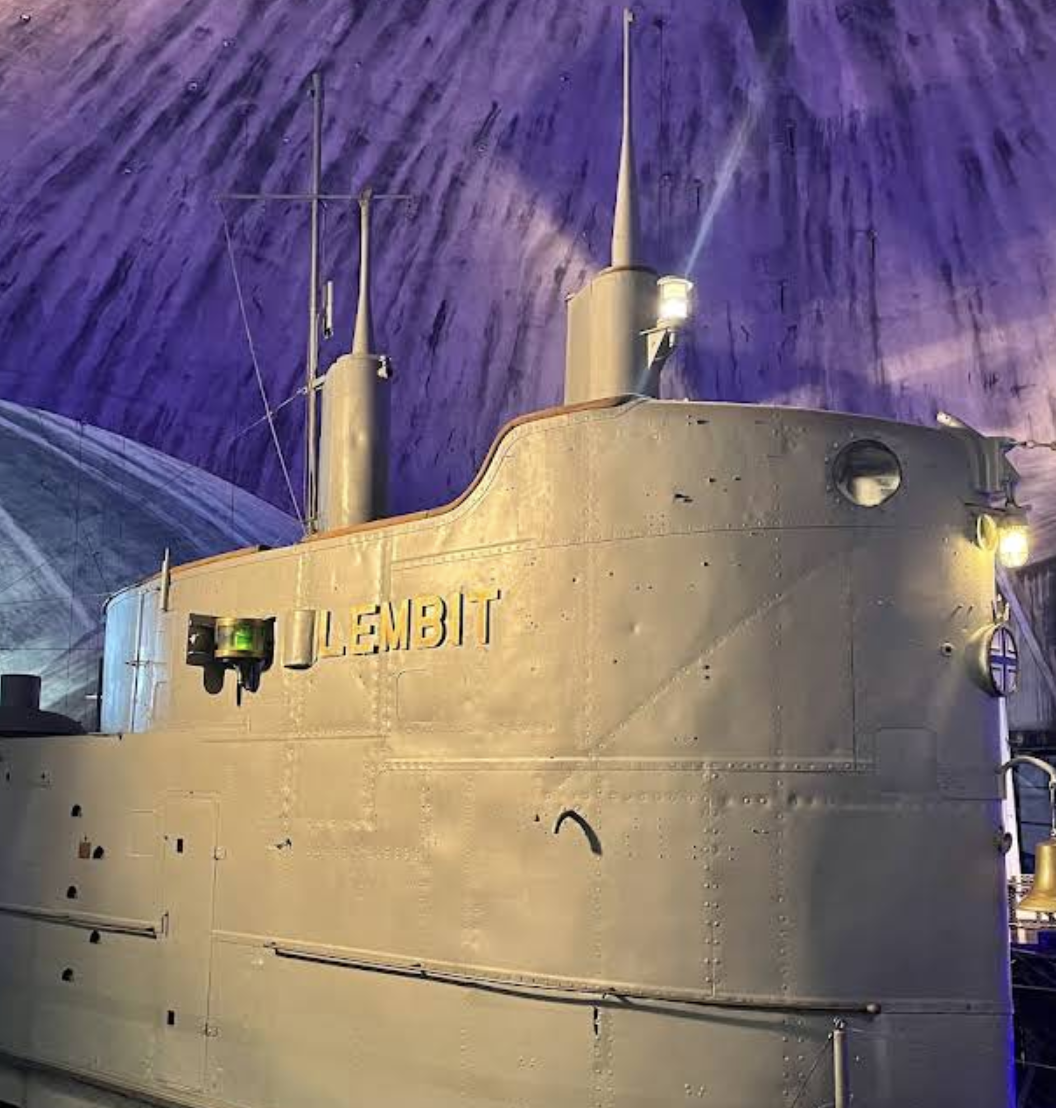
If you do only one thing at the Seaplane Harbour, go inside the submarine. Lembit was built in 1936 in England for the Estonian state, before the war, and it served for decades. Today you can climb into its iron belly and walk through the same narrow corridor where the crew lived, slept and worked, in a space barely a shoulder wide, with pipes and valves hanging overhead.
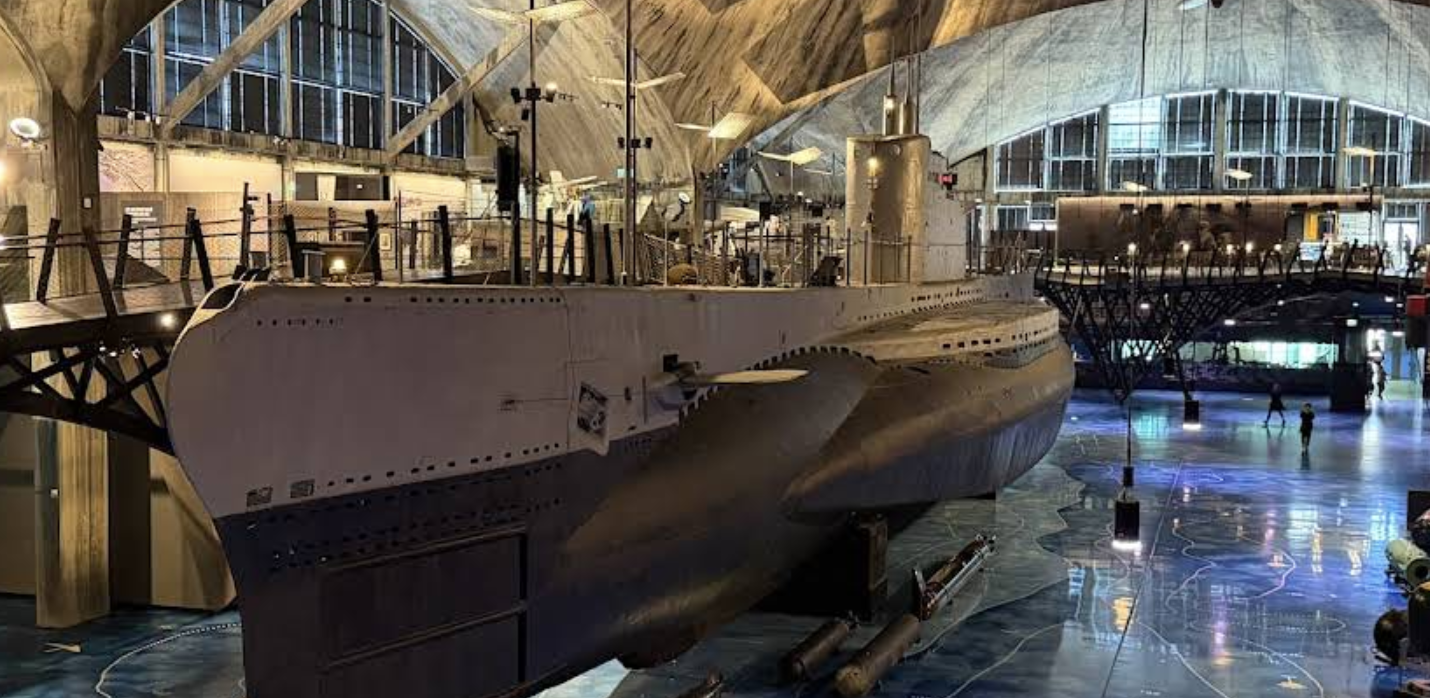
It is an eerie experience in the best sense. You smell metal and engine oil, put a hand on the torpedo tubes and understand that this is not a model. It is a real war machine, where every centimetre was thought through, and where people had to trust their lives to that slab of iron for hours underwater. After that, you look at everything else differently. Lembit is what makes the Seaplane Harbour the Seaplane Harbour.
The hangars are the biggest exhibit
Before you even reach a single ship or plane, look up. The Seaplane Harbour sits in the old seaplane hangars built in 1916 and 1917, and the buildings themselves are a wonder. They are thin-shell reinforced concrete domes, the peak of the engineering of their day, something almost nobody else in the world knew how to build back then. For decades they stood in ruins, wind and water doing their work, until they were finally restored and opened as a museum in 2012.
Stand in the middle of the hall and look up into the dome. The room is like a cathedral, except that instead of prayer, planes hang from the ceiling and ships sit under your feet. It is exactly this contrast, old military engineering and a vast open space, that makes the place something more than a warehouse of exhibits. The building tells a story long before you read a single label.
Planes, ships and an icebreaker outside
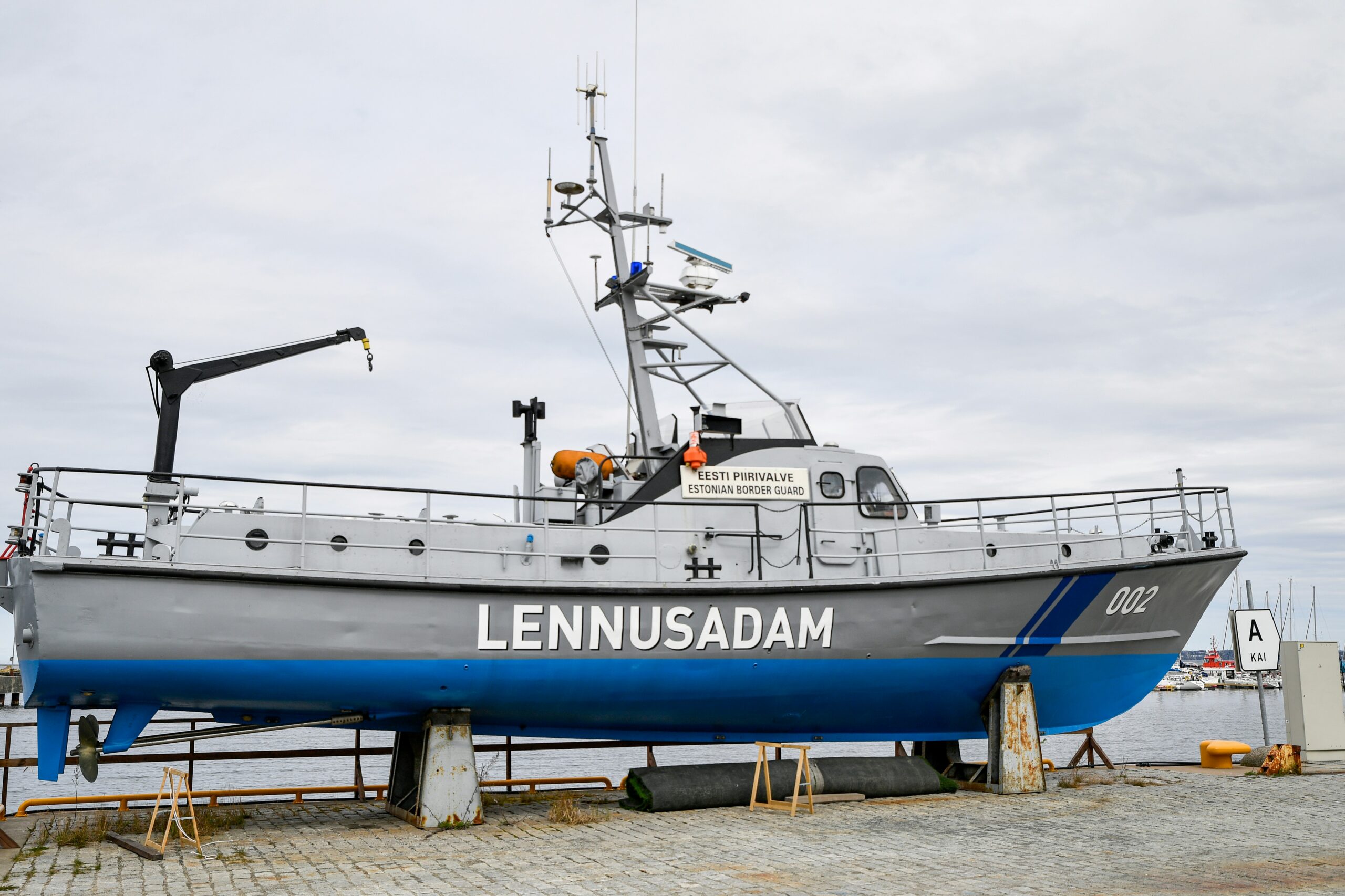
Lembit and the hangars are the stars, but there is a whole world around them. A seaplane hangs from the ceiling, smaller boats and vessels stand around you, ice yachts, mines, cannons and hundreds of smaller things that each tell their own story. The Seaplane Harbour covers all of Estonian maritime history, from fishing boat to warship, and does it in a way that never tires you out.
And then go outside. In the harbour, right next to the museum, stands the steam icebreaker Suur Tõll, the largest surviving pre-war steam icebreaker in the world. You can go aboard, walk the deck, look into the engine room and imagine what it was like to break ice in the Baltic a century ago. Many people skip it because it is outdoors and takes a couple of extra minutes. Do not make that mistake. Suur Tõll is part of the experience.
The Seaplane Harbour with kids: why they will not leave
If you have children, the Seaplane Harbour is practically a sure win. It is one of the few museums where you do not have to keep saying “do not touch”. Here the whole point is to touch. Flight simulators where you can fly a plane yourself, a shooting range, things you can climb into and onto, buttons to press. A child does not stand here bored, they run from one thing to the next.
That is what makes the Seaplane Harbour a place where a family can go and everyone is happy. The adult gets their history and engineering, the child gets their adventure. Expect the visit to take longer with kids, not because it is boring, but because they do not want to move on. A pushchair fits inside, and there is a café where you can sit and rest your feet.
Practical: tickets, opening times and getting there
The Seaplane Harbour is in Kalamaja, by the sea, at the northern edge of Tallinn. From the old town you can walk there in about twenty-five minutes along the coast, and that walk is lovely in itself. Trams and buses get you close too, and there is parking if you come by car. If you plan to explore Estonia more widely, compare rental cars on Discover Cars.
The museum is usually open Tuesday to Sunday, generally closed on Mondays, but check the opening hours on the official Estonian Maritime Museum website before you go, as they change by season. There are tickets for adults, students and families, and the family ticket is clearly the best value for a bigger group. Exact prices change from time to time, so check those before your visit too.
How long to plan and when to go
Plan at least two hours, and three with kids. The Seaplane Harbour is big and dense, and if you rush, you leave half the experience unseen. It is also a perfect rainy-day plan, because you are under a roof and it can pour outside as much as it likes.
The calmest time is a weekday morning, right after opening, before the school groups arrive, when you can have the submarine and the simulators to yourself. Weekends and school holidays are busier, especially in bad weather, when the whole city looks for something to do indoors. If you can choose, choose the morning.
Is the Seaplane Harbour worth it
I will be honest, as always. The Seaplane Harbour is not cheap, especially with a whole family. But it is one of the few museums in Tallinn where I have never heard anyone say afterwards that the money was wasted. You get a submarine to climb inside, a century-old icebreaker to stand on, and a building that is an engineering monument in its own right. This is not a museum you look at. It is a museum you live through.
If you are in Tallinn with half a day to spare, especially with kids, especially in bad weather, the Seaplane Harbour is simply the right answer for me. Go in the morning, plan more time than you think, and do not forget Suur Tõll standing outside.
A bit of history: from ruins to museum
It is worth knowing where these hangars came from. They were built during the First World War, in 1916 and 1917, as part of the tsarist naval fortress that was meant to defend Tallinn. The seaplanes that took off from here were the high technology of their time, and the hangars themselves were an engineering gamble: huge thin reinforced-concrete domes without internal columns. Back then it was almost unprecedented.
Then came war, occupation and decades of neglect. The hangars stood empty for a long time, roofs leaked, concrete crumbled, and the whole structure was on the edge of collapse. Only in the early 2010s was a major restoration carried out, and in 2012 the Seaplane Harbour opened as a museum. Today it is one of Estonia’s most visited museums. When you stand in that enormous room, think for a moment that not long ago it was a ruin. It makes the experience even better.
What else to see, from seaplane to ice yacht
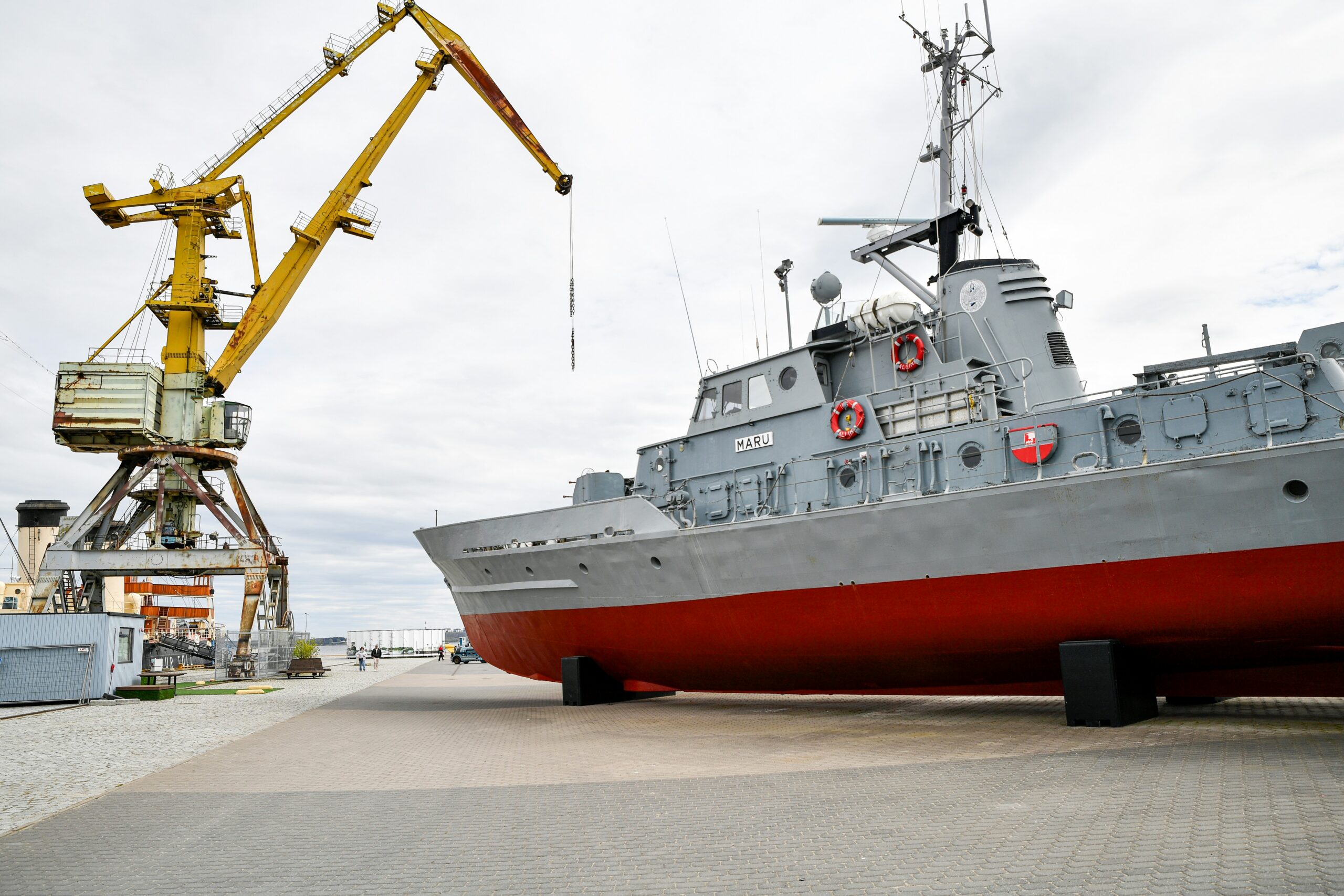
Lembit and the hangars easily overshadow everything else, but there are hundreds of things worth stopping for. A seaplane hangs from the ceiling, taking you back to when planes landed on water rather than a runway. On the floor stand ice yachts, those strange sledges with sails that once raced across the frozen sea. There are mines, cannons, an old car, boats of every size and shape, and a whole crowd of smaller exhibits that each tell their own story.
It is exactly this variety that makes the Seaplane Harbour a place where two hours disappear without you noticing. You are not looking at one narrow theme, you are looking at all of Estonian maritime history, from fishing boat to war machine, all under one roof. Take your time, read the labels, press the buttons. The point here is to wander and discover, not to run through.
Suur Tõll, the icebreaker you must not skip
I mentioned it already, but Suur Tõll deserves its own section, because too many people skip it. This steam icebreaker stands right next to the museum in the harbour, and it is the largest surviving pre-war steam icebreaker in the world. You go aboard, walk the deck, look down into the enormous engine room and picture what it was like to break Baltic ice a century ago, with coal, steam and human muscle.
It is an experience of its own, in the open air, in the wind, and it gives the Seaplane Harbour story a physical dimension that no label inside can. Put on something warm, go outside and step aboard Suur Tõll. You will not regret it, and it is this giant standing outside that stays with many people the most.
Combine the visit: Kalamaja, the sea and Telliskivi
One of the best things about the Seaplane Harbour is where it sits. You are in Kalamaja, Tallinn’s coolest district, among old wooden houses, the sea and a creative buzz. Make a whole day of the Seaplane Harbour, not a quick museum stop. Walk there along the coast from the old town, and after the museum head to the Telliskivi Creative City, with its cafés, restaurants and shops. Nearby, in Noblessner, you also find Proto Discovery Factory, if there is energy for one more.
That way you get a museum, sea air and city life in one go, without having to travel anywhere. That is what makes the Seaplane Harbour a good anchor for a whole day. If you are looking for somewhere to stay nearby, check hotels in Tallinn. Coming from Helsinki across the gulf, see our day trip from Helsinki to Tallinn.
The Seaplane Harbour as a rainy-day rescue
One thing locals especially love the Seaplane Harbour for is the weather. When it rains or a cold sea wind blows, it is one of the best places in the whole city to take kids. You are under a roof, there is plenty of space, hours of activity, and nobody has to suffer in a cold park. On a rainy school holiday it is of course busier, so come early. But keep the Seaplane Harbour in mind for the next grey day when you do not know where to take the kids. See also our best museums in Tallinn.
You can book ahead: Seaplane Harbour tickets on Tiqets. If you plan other stops the same day, look at the Tallinn Card.
If you are planning more than one stop, read these next: Museums Open on Monday in Tallinn and Tartu (2026), Free Museums in Tallinn 2026: Dates, Always-Free Picks, Tips and Halloween in Tallinn 2026: 5 Events Worth Going To. From the same series: Tallinn Christmas Market 2026: Dates, Prices and Hours and Tallinn Maritime Days 2026: Dates, Harbours and Tips From a Local.
Read also
- Computer Museum in Tallinn: Retro Tech & Nostalgia
- Kumu Art Museum Tallinn: Honest Review by a Non-Art Person
- PROTO Invention Factory Tallinn: Tickets, Tips & Honest Guide
- Tallinn Photography Museum — A Hidden Gem by Town Hall Square
- Free Museums in Tartu 2026: Tips, Dates, and Routes
Frequently asked questions
How long does the Seaplane Harbour take?
Plan at least two hours, three with kids. It is a big museum and rushing leaves half of it unseen.
Is the Seaplane Harbour good with children?
Yes, it is one of the best family museums in Tallinn. There is a lot of interactive content, flight simulators, a shooting range and things to climb into, so a child will not get bored.
Can you go inside submarine Lembit?
Yes, and that is exactly what you should do. You can climb into the submarine and walk through the narrow corridor where the crew lived. It is the best part of the Seaplane Harbour.
How do you get to the Seaplane Harbour?
It is in Kalamaja, by the sea. From the old town it is about a twenty-five-minute walk along the coast, and you can also get there by tram, bus or car.
When is the Seaplane Harbour open?
Usually Tuesday to Sunday, generally closed on Mondays. Opening hours change by season, so check them on the official Estonian Maritime Museum website before you go.
Can you go aboard Suur Tõll?
Yes. The steam icebreaker Suur Tõll stands outside in the harbour and you can go aboard, walk the deck and see the engine room. Dress warm, as this part is outdoors.
Is the Seaplane Harbour good in rainy weather?
Ideal. You are under a roof with plenty of space and hours of activity, so it is one of the best bad-weather plans with kids in Tallinn.
How much do Seaplane Harbour tickets cost?
Prices change from time to time, and the family ticket is the best value for a bigger group. Check exact prices on the official Estonian Maritime Museum website before your visit.
Is the Seaplane Harbour worth it for adults without kids?
Absolutely. The submarine, the icebreaker and the engineered building are interesting at any age, and the interactive side is simply a bonus.
Is the Seaplane Harbour accessible with a pushchair?
Yes, a pushchair fits inside and most of the exhibition is accessible. The narrow submarine interior can be visited in turns. There is also a café and a museum shop.
Is the Seaplane Harbour the same as the Estonian Maritime Museum?
The Seaplane Harbour is part of the Estonian Maritime Museum. The museum also has a second house, Fat Margaret in the old town, but the Seaplane Harbour is the big interactive experience most people come for.
In the end, the Seaplane Harbour is one of those rare places you can return to again and again. The submarine, the icebreaker and the hangars, which are a historic monument in themselves, make it a museum you do not just look at, but live through. Go in the morning, plan more time than you think, and do not forget Suur Tõll standing outside.

Disclosure: this article may contain affiliate links. If you book or buy through them, we may earn a small commission at no extra cost to you. We only recommend what we believe in.